




Google’s AI Search Expansion Signals a New Era for SEO and Digital Visibility
Google search is undergoing its biggest transformation in two decades. With Google AI Search — AI Overviews and increasingly conversational results — the familiar list of ten blue links is being reshaped into AI-generated answers that sit above everything else. For businesses that depend on organic visibility, this is not a minor tweak; it’s a structural shift in how people discover information, and how brands get found. Understanding what’s changing, and adapting early, is the difference between thriving and quietly disappearing from search.
The good news is that the fundamentals of good SEO still matter — arguably more than ever. But the way they’re applied, and the signals Google now rewards, are evolving fast. This guide breaks down what Google’s AI search expansion actually means, how it changes the rules of visibility, and the practical steps you can take to stay ahead.
What Google’s AI Search Expansion Really Means
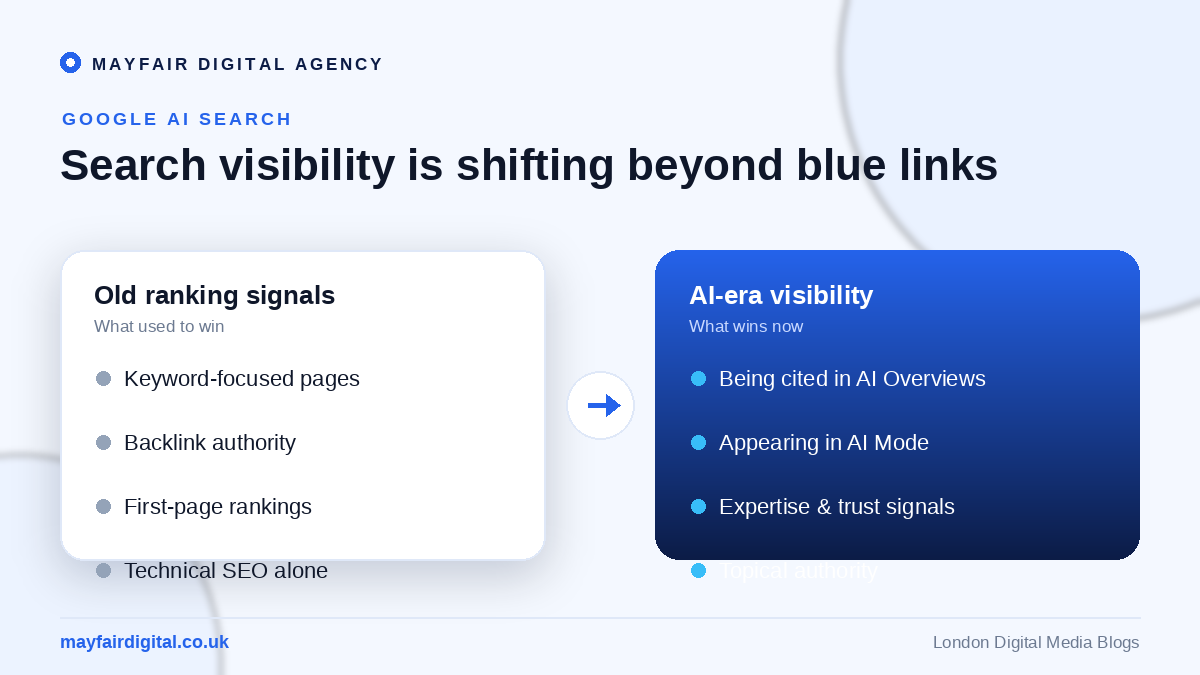
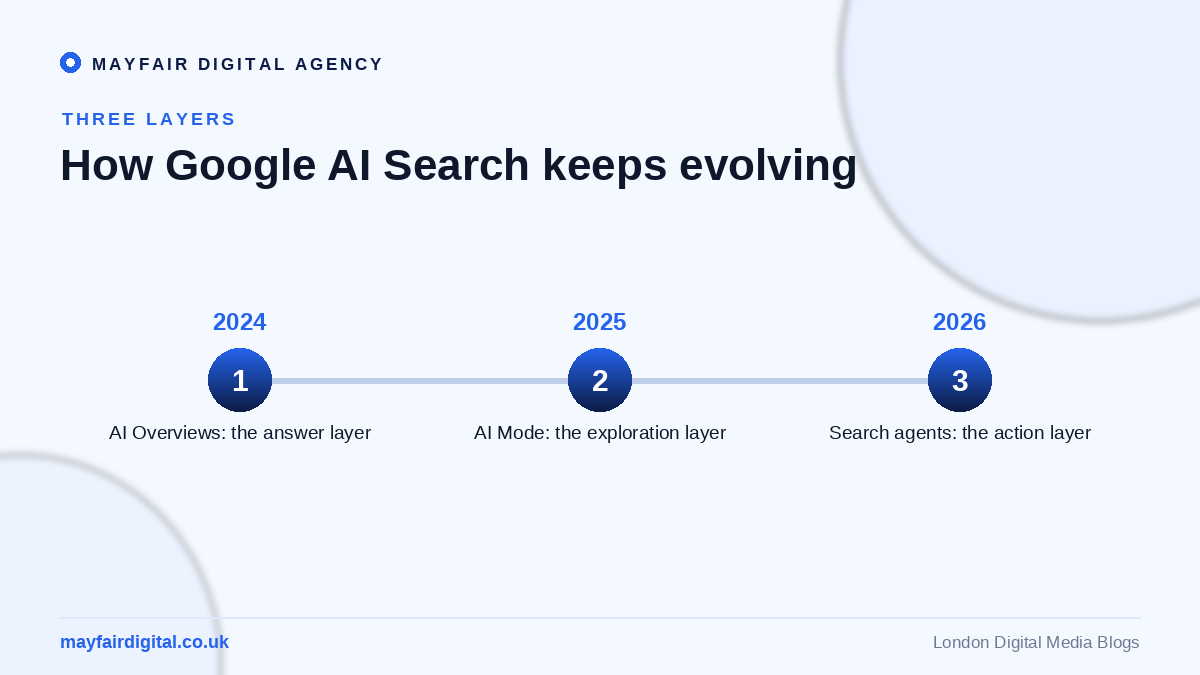
At its core, Google AI Search uses generative AI to summarise answers directly on the results page, pulling from multiple sources and presenting a synthesised response. Instead of clicking through to a single website, users increasingly get their answer immediately — with links to supporting sources alongside. This means the battle for visibility is no longer just about ranking first; it’s about being one of the trusted sources the AI chooses to cite.
For some informational queries this reduces click-through rates, since users get what they need without leaving Google. But it also creates a powerful new opportunity: brands cited in AI answers gain authority and exposure at the very top of the page. The winners in this new era will be the sites that AI systems consistently trust, understand and reference.
How It Changes the Rules of SEO
Traditional SEO optimised for keywords and rankings. AI search rewards something deeper: genuine expertise, clarity and structure. Content that directly answers questions, is well-organised with clear headings, and demonstrates real authority is far more likely to be surfaced and cited. Vague, thin or purely keyword-stuffed pages — already weak — become almost invisible in an AI-first results page.
This is why concepts like E-E-A-T (experience, expertise, authoritativeness and trust), structured data, and concise question-and-answer formatting now carry so much weight. The shift also overlaps with the rise of emerging SEO technologies and the broader move toward answer engines, where being the clearest, most trustworthy source wins.
Why Digital Visibility Is at Stake
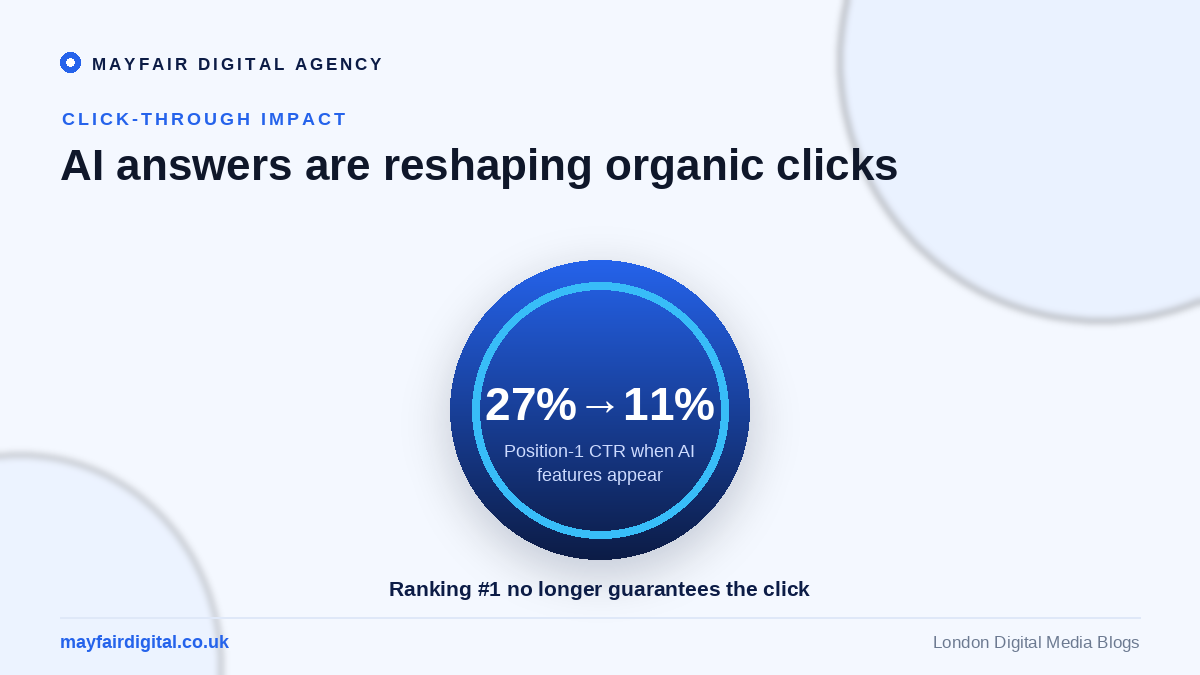
Search remains the front door to most businesses online, so any change to how results are presented directly affects traffic, leads and revenue. As AI answers capture more attention at the top of the page, the brands that adapt will consolidate visibility, while those that ignore the shift will see organic traffic erode — even if their old rankings technically hold. In other words, standing still is itself a risk.
That’s why AI search needs to be treated as a core part of your wider strategy, not a side experiment. It connects directly to how you build a durable online presence — one that’s resilient to algorithm changes because it’s built on genuine authority and helpful content rather than loopholes.
How to Adapt and Stay Visible
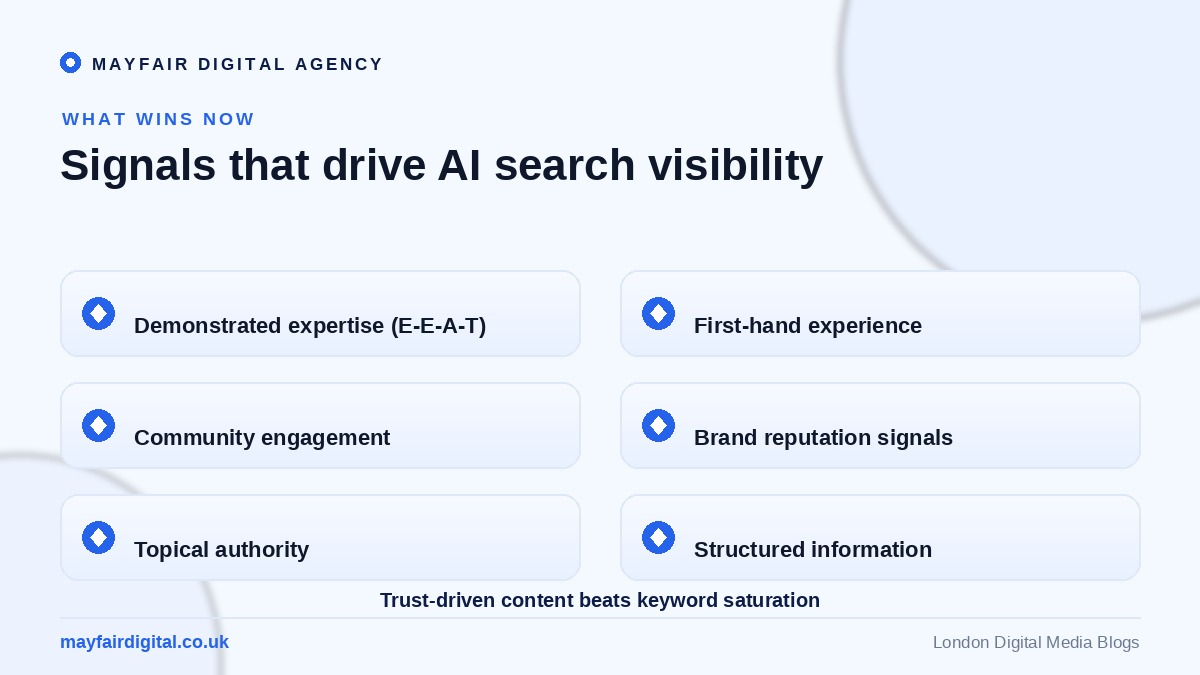
Start by creating genuinely helpful, in-depth content that answers the real questions your audience asks, structured with clear headings and concise summaries that AI can easily parse. Strengthen your topical authority by covering subjects thoroughly rather than superficially, and back claims with evidence and experience. Add structured data so search engines understand your content, and keep your technical foundations — speed, mobile-friendliness, crawlability — in excellent shape.
Finally, think beyond Google alone: the same principles help you appear in other AI assistants and answer engines too. It’s a lot to manage as the landscape shifts, which is why many brands partner with a specialist team. Our SEO services are built to keep you visible through exactly this kind of change.
Frequently Asked Questions
Will AI search kill SEO?
No — but it’s reshaping it. Keyword tricks matter less, while genuine expertise, clear structure and trust matter more. SEO is evolving into optimising to be a cited, trusted source in AI answers.
How do I get cited in Google’s AI Overviews?
Publish authoritative, well-structured content that directly answers questions, demonstrate real expertise, use structured data, and earn quality links. AI tends to cite sources it can clearly understand and trust.
Should I change my SEO strategy now?
Yes. Begin shifting toward depth, clarity and authority rather than chasing keywords alone. Adapting early positions you to win visibility as AI search continues to expand.
Want to stay visible as Google AI Search evolves? Talk to Mayfair Digital Agency or explore our SEO services.
Need expert help? Mayfair Digital Agency is a digital agency in London and full-service digital agency in London offering global SEO agency and more. Get in touch for a free consultation.


