




How to Choose the Right WordPress Theme for Your Blog
Your blog’s theme shapes everything about how readers experience your content — how it looks, how fast it loads, how easy it is to read and navigate. Choosing the right WordPress theme for your blog is therefore far more than an aesthetic decision; it influences your readership, your search rankings and your ability to grow. With thousands of themes available, knowing how to choose well saves you from a frustrating rebuild later.
This guide walks through exactly what to look for in a blog theme, the trade-offs between free and premium options, and the features that matter most for readability, speed and growth. By the end you will be able to choose a theme with confidence rather than guesswork.
Why Your Blog Theme Matters
A theme is the framework that controls your blog’s design and functionality — its layout, typography, colours and navigation. Because readers judge a site within seconds, a clean, professional and readable theme encourages them to stay and explore, while a cluttered or dated one drives them away. The theme sets the tone for how your content is received before a single word is read.
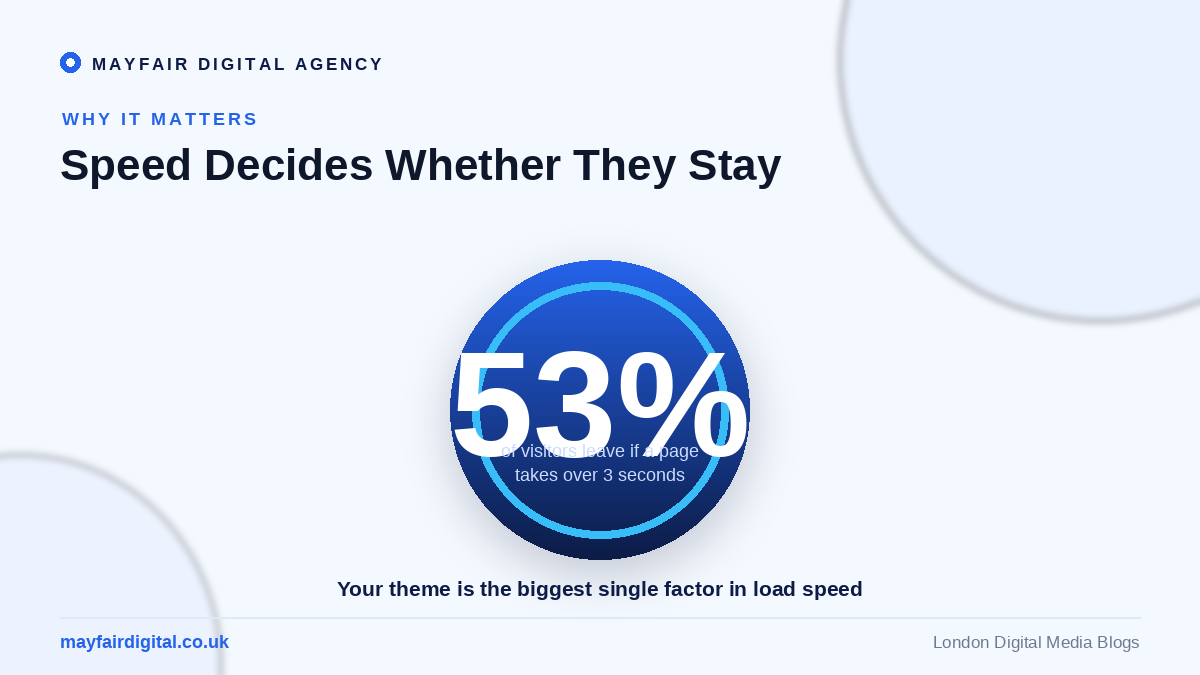
The theme also affects performance and SEO. A bloated, poorly coded theme slows your blog, frustrates readers and harms your search rankings, while a well-built one loads quickly and works flawlessly across devices. The right choice quietly supports every goal you have for your blog.
Prioritise Readability and Clean Design
A blog lives or dies by readability. Look for a theme with clear, legible typography, comfortable line spacing, and a layout that puts your content front and centre without distractions. Generous white space, sensible font sizes and an uncluttered design make reading a pleasure and keep visitors engaged for longer, which in turn signals quality to search engines.
Simplicity often wins here. The best blog themes get out of the way of your writing, presenting it beautifully rather than competing with it through busy designs and unnecessary elements.
Ensure Mobile Responsiveness
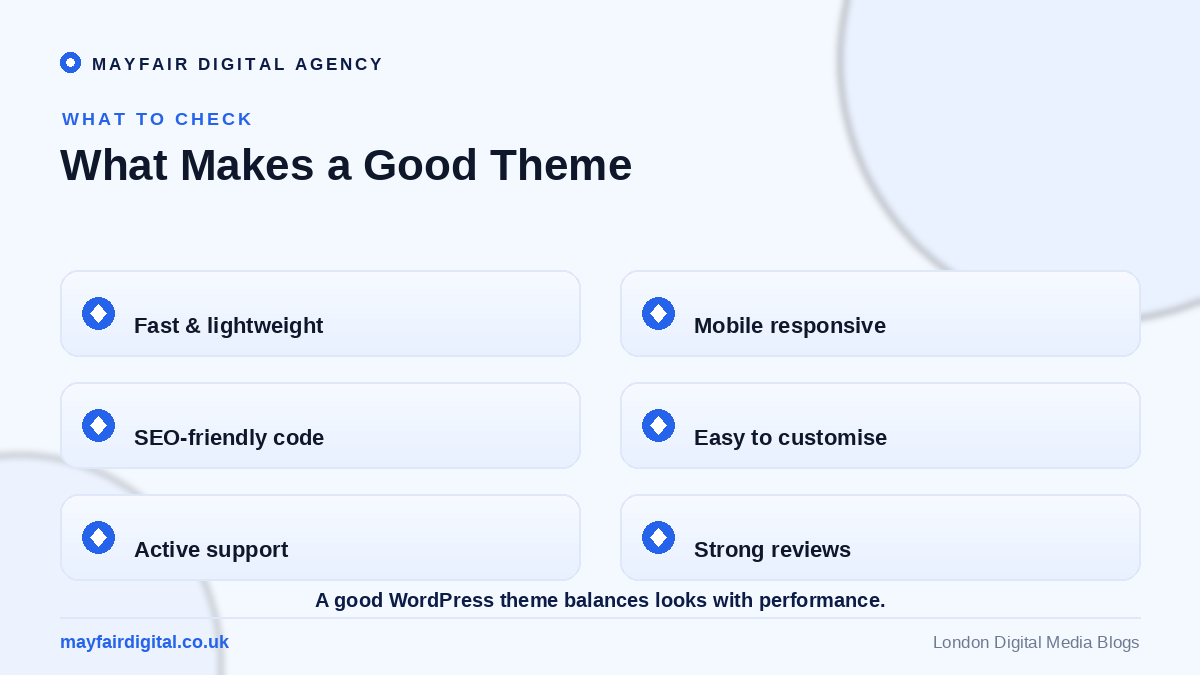
A large share of blog readers arrive on mobile devices, so your theme must look and work perfectly on phones and tablets, not just desktops. Always preview how a theme handles mobile reading, navigation and images before committing. A genuinely mobile-first theme ensures the majority of your audience enjoys a seamless experience, which also benefits your search rankings.
Check Speed and Performance
Speed matters enormously for both readers and SEO. A fast-loading theme keeps impatient visitors from leaving and is rewarded by search engines. Before choosing, test a theme’s demo for loading speed and look for lightweight, well-coded options rather than feature-heavy themes that slow your blog down. Resist the temptation to choose a theme crammed with features you will never use.
Look for Customisation and Essential Features
Your theme should let you reflect your brand through customisable colours, fonts and layouts, without requiring you to touch code. Look for useful blogging features too: clear post layouts, related-post displays, social sharing, search functionality and space for email sign-ups. These features help readers engage with your content and help you grow your audience.
Frequently Asked Questions
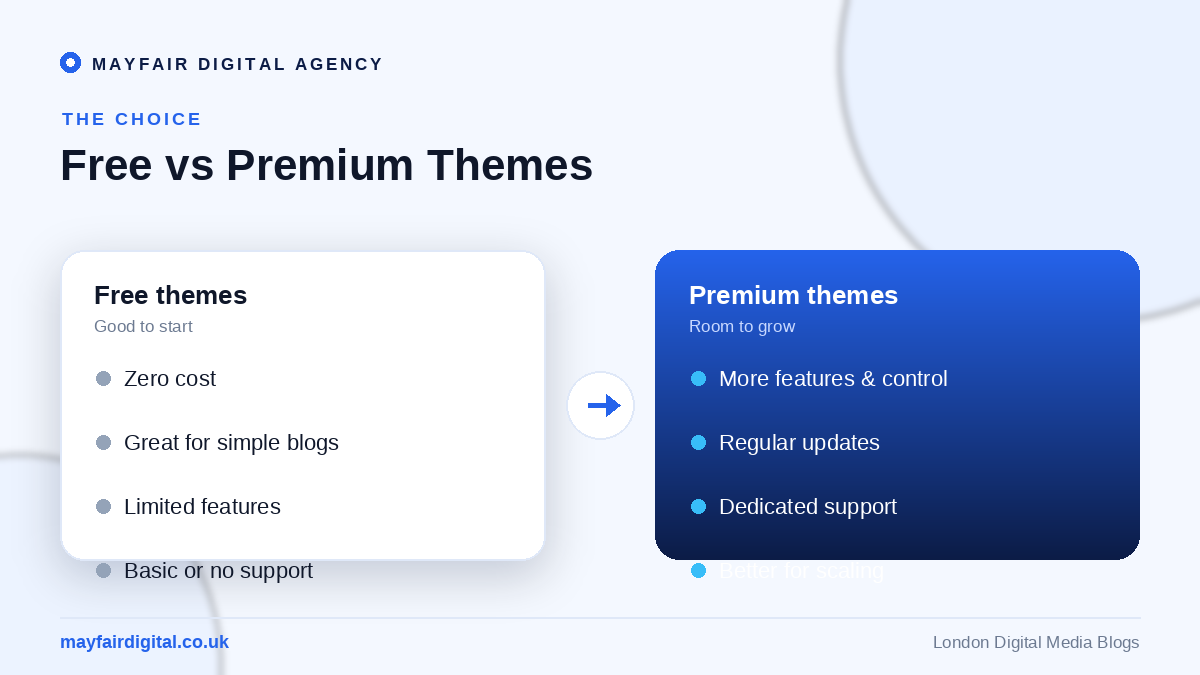
Should I use a free or premium WordPress theme for my blog? Free themes are great for starting out and many are excellent, while premium themes offer more features and flexibility. Choose based on your needs rather than price alone.
What is the most important factor in a blog theme? Readability, speed and mobile responsiveness. A fast, easy-to-read theme that works on every device will always outperform a prettier but slower alternative.
Can I change my blog theme later? Yes, though it requires some reconfiguration. It is better to choose well from the start to avoid the disruption of switching later.
Build a Better Blog With Mayfair
The right WordPress theme makes your blog readable, fast and engaging, supporting everything from reader experience to search rankings. As a full-service digital media agency, Mayfair Digital Agency helps you choose, customise and optimise themes that bring your content to life and grow your audience. If you want a blog built to perform, get in touch and let’s create something readers love.
Free vs Premium Blog Themes
WordPress offers a vast selection of free themes, many of which are well-built, fast and perfectly suited to a new or budget-conscious blog. They are a sensible place to start, letting you launch quickly without spending a penny. The trade-offs are more limited customisation, fewer features and the fact that many other blogs may use the same theme, making it harder to stand out. For many bloggers, however, a quality free theme is more than enough to begin building an audience.
Premium themes, by contrast, typically offer more layouts, advanced features, regular updates and dedicated support. For an established blog or one with specific design needs, the modest one-off cost is usually a worthwhile investment in a distinctive, well-supported site. The key is to choose based on the features you genuinely need rather than being dazzled by an impressive demo full of tools you will never use.
Don’t Overlook SEO-Friendly Themes
Some themes are built with search engine optimisation in mind, featuring clean, well-structured code, fast loading, proper heading structures and compatibility with popular SEO plugins. Choosing an SEO-friendly theme gives your blog a strong technical foundation that makes ranking easier from the outset. While great content and on-page optimisation matter most, a well-coded theme removes technical obstacles that could otherwise hold your blog back in search results.
When evaluating a theme, check that it follows web standards, loads quickly and works smoothly with the tools you plan to use. A theme that fights against your SEO efforts is a poor foundation, no matter how attractive it looks on the surface.
Consider Support and Updates
A theme is a long-term relationship, so it pays to choose one that is actively maintained. Regular updates keep a theme secure, compatible with the latest version of WordPress, and free of bugs, while responsive support means help is available when you need it. Before committing, check how recently a theme was updated and read reviews from other users about the developer’s reliability and support quality.
A well-maintained theme protects you against security vulnerabilities and compatibility issues that can arise as WordPress and plugins evolve. Choosing a theme from a reputable, active developer is a small decision that saves significant headaches down the line.
Plan for Growth
Your blog will evolve, so choose a theme that can grow with it. Think about where you want your blog to be in a year or two — will you add new content types, monetise through ads or products, or expand into new topics? A flexible, scalable theme accommodates these changes without forcing a disruptive switch later. Choosing with the future in mind saves time and preserves the design consistency that builds reader familiarity.
It is also wise to avoid over-relying on a theme’s built-in features for critical functionality, since this can make switching difficult later. Where possible, handle key features through plugins so your content and functionality remain portable if you ever change themes.
Avoid Common Theme Mistakes
Bloggers often stumble by choosing a theme purely on looks, ignoring mobile performance, or selecting a feature-heavy theme that slows their site. Another frequent error is picking something that cannot grow with the blog, leading to a costly rebuild. Resisting the urge to install endless plugins to compensate for a weak theme is equally important, as this often creates the very slowdown you were trying to avoid. Start with a strong, lightweight foundation and build thoughtfully from there.
Trusting your instincts during the demo stage helps too. If a theme feels cluttered, slow or awkward to use as you preview it, your readers will likely feel the same, so it is better to keep looking for one that feels clean and effortless.
Bringing Your Blog to Life
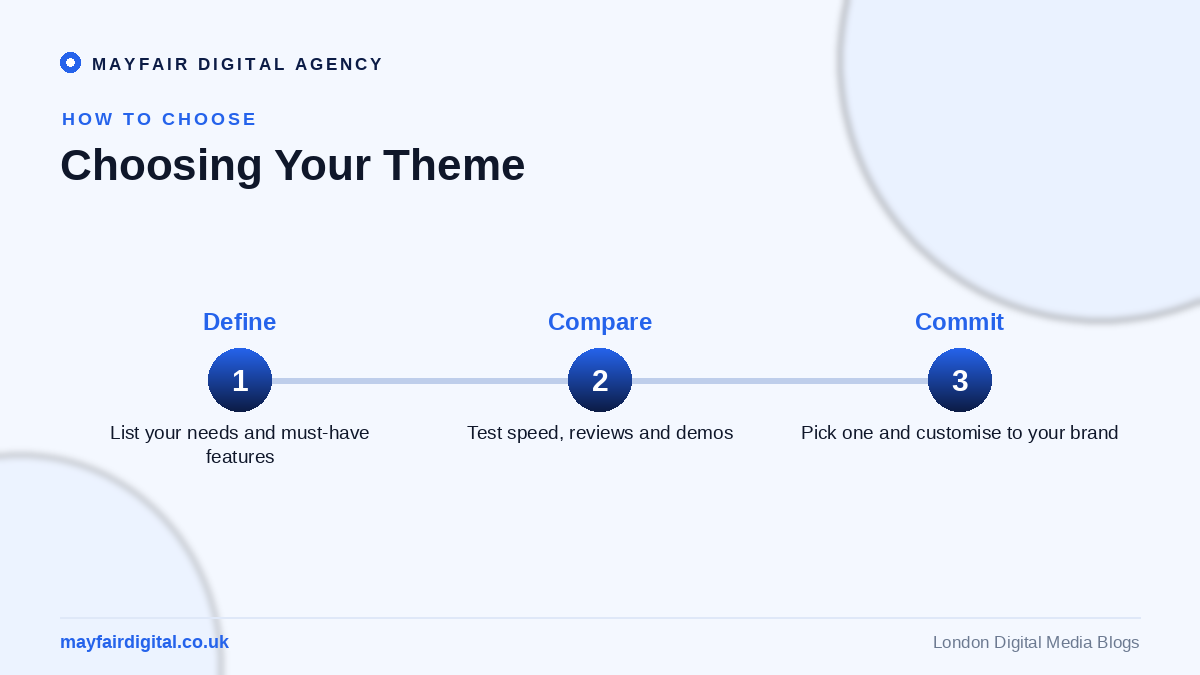
Choosing the right WordPress theme for your blog comes down to balancing readability, speed, mobile performance and the features you genuinely need, all wrapped in a design that reflects your brand. Take the time to preview themes properly, test them on real devices, and imagine your actual content within each layout before deciding. A theme that fits your blog well will quietly support your growth for years, presenting your writing beautifully and keeping readers coming back.
With the right foundation in place, you can focus on what truly matters — creating great content and building an engaged audience — confident that your blog looks professional, loads quickly and provides a reading experience your visitors genuinely enjoy.
Need expert help? Mayfair Digital Agency is a London digital agency and full-service digital agency in London offering website design in London and more. Get in touch for a free consultation.


