




The Role of Artificial Intelligence in Digital Media Opportunities and Challenges
Artificial intelligence has moved from a futuristic buzzword to the engine running quietly behind almost everything we see online. From the posts that appear in your feed to the ads that follow you around the web, the role of artificial intelligence in digital media is now profound — and growing by the month. For marketers, publishers and brands, AI represents one of the biggest opportunities of the decade, but it also raises genuine challenges around authenticity, ethics and control. Understanding both sides is essential to using it well.
This isn’t a distant trend to prepare for “someday.” AI already shapes content creation, audience targeting, personalisation and measurement across every major platform. The brands that learn to harness it thoughtfully will move faster and spend smarter; those that ignore it — or use it carelessly — risk falling behind or eroding the trust they’ve worked to build. Here’s a balanced look at the opportunities, the challenges, and how to navigate both.
How AI Is Transforming Digital Media
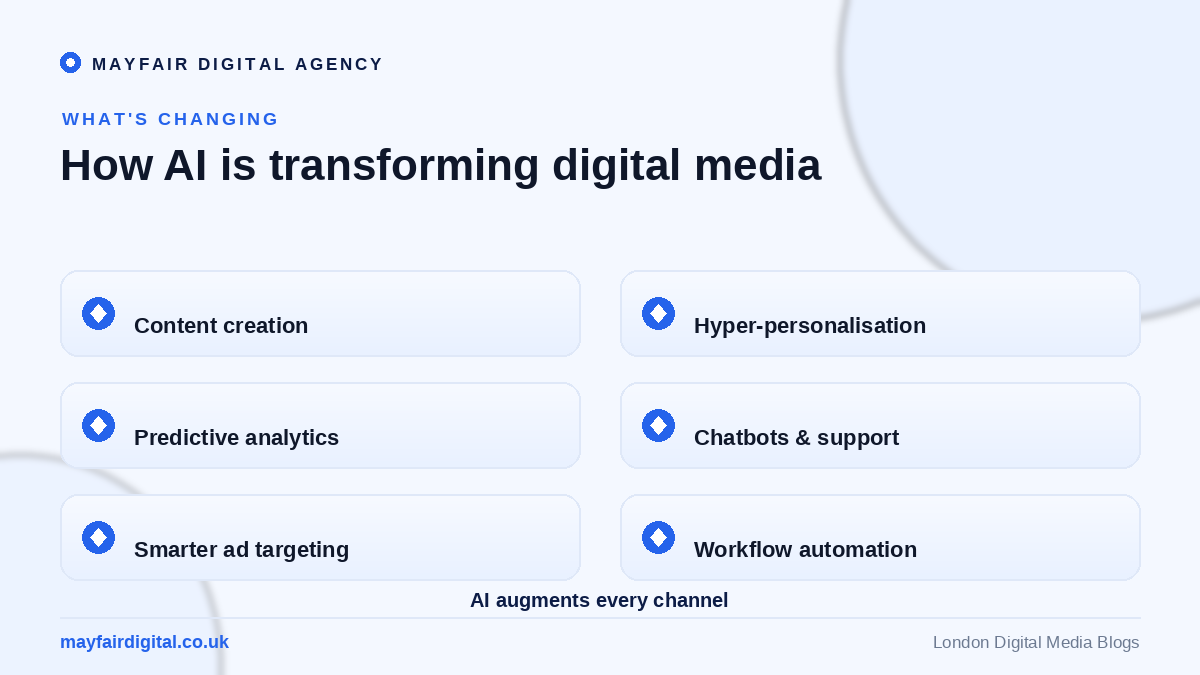
AI now touches nearly every stage of the digital media pipeline. It generates and edits content — text, images, audio and video — in a fraction of the time it once took. It powers the recommendation engines that decide what billions of people watch and read each day. And it analyses vast amounts of data to predict what audiences want before they even search for it. What used to require large teams and weeks of work can increasingly be done in hours.
Crucially, AI has become accessible. Tools that were once the preserve of tech giants are now available to small businesses and solo creators, levelling the playing field. A modest brand can use AI to draft campaigns, design visuals, personalise emails and interpret analytics — capabilities that would have been unaffordable a few years ago. This democratisation is a core reason AI’s role in digital media is expanding so quickly.
The Opportunities AI Unlocks
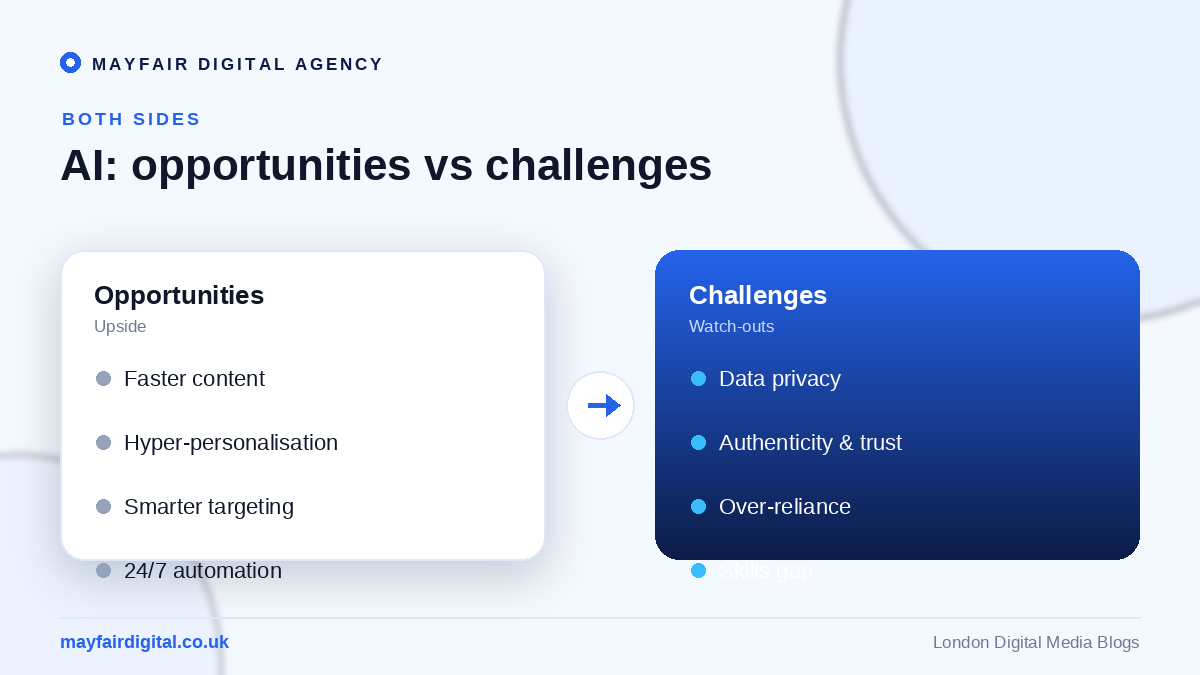
The upside is substantial. AI dramatically improves efficiency, automating repetitive tasks so teams can focus on strategy and creativity. It enables personalisation at scale, tailoring content and offers to individuals rather than broad segments, which lifts engagement and conversions. It sharpens targeting and budget allocation in advertising, reducing wasted spend. And it surfaces insights from data that humans would struggle to spot, turning raw numbers into clear direction.
For content specifically, AI accelerates ideation, drafting and repurposing — helping brands maintain the consistent output that modern platforms reward. Used as a co-pilot, it frees creators to do their best human work: strategy, storytelling and genuine connection. These gains are why AI is increasingly central to the wider future of digital strategy, not a side experiment.
The Challenges and Risks to Manage
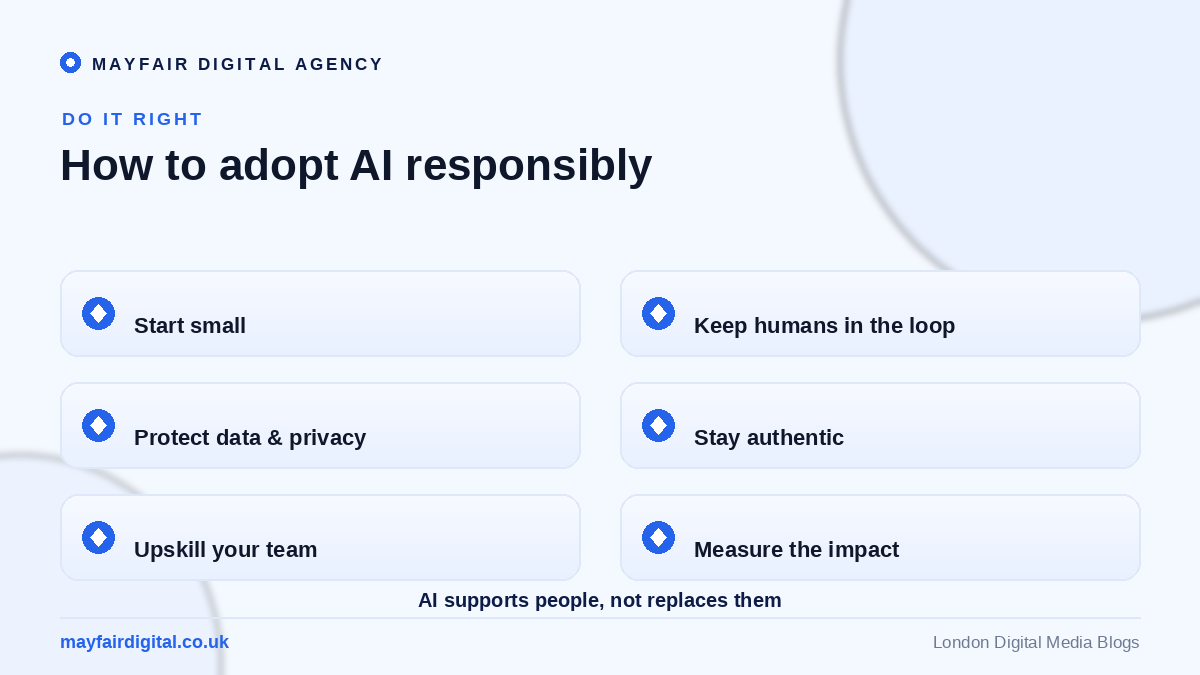
The same power that makes AI valuable also creates real challenges. Over-reliance on automation can produce generic, soulless content that fails to connect — audiences can tell when something lacks a human touch. There are legitimate concerns about accuracy, since AI can confidently produce errors or “hallucinations” that damage credibility if published unchecked. Questions of originality, copyright and data privacy are still being worked out, and misuse can spread misinformation at unprecedented speed.
There’s also the trust dimension. As AI-generated content floods the internet, audiences increasingly value authenticity and transparency. Brands that pass off low-effort AI output as genuine risk a backlash, while those that use AI responsibly — with human oversight and honesty — can strengthen trust. These tensions sit within the broader relationship between technology and society, where reasonable people weigh the trade-offs differently.
How to Use AI Responsibly in Digital Media
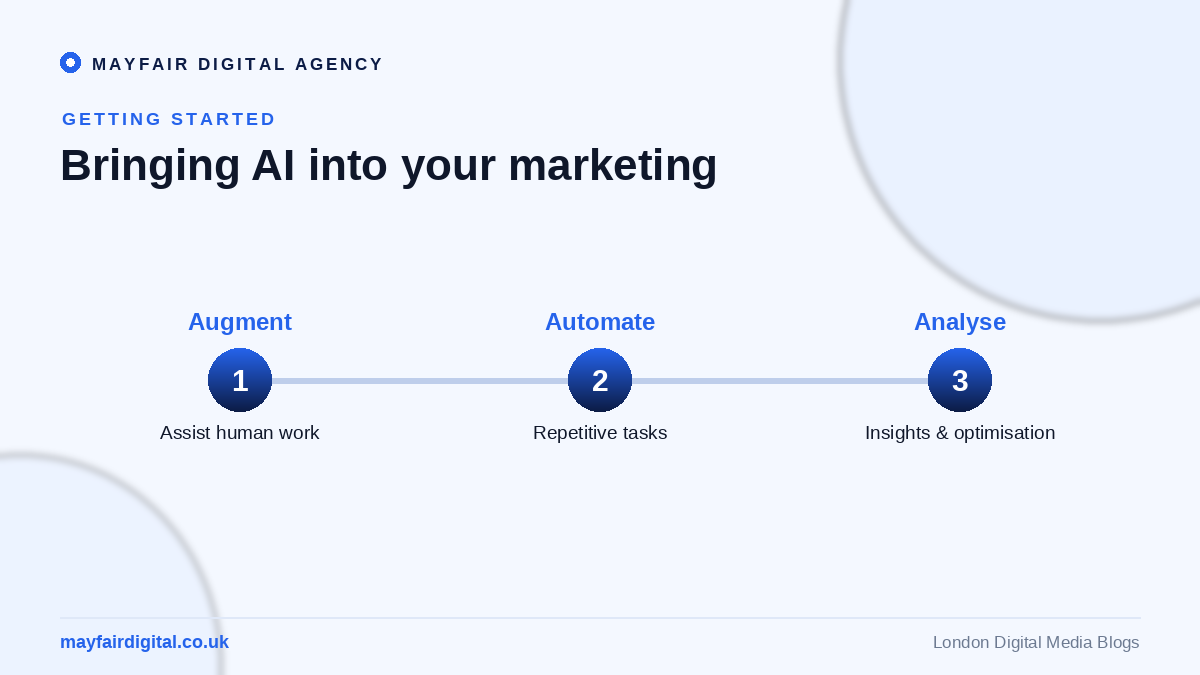
The winning approach treats AI as a powerful assistant, not a replacement for human judgement. Use it to accelerate research, drafting, design and analysis — but keep humans firmly in the loop to add insight, verify facts and protect your brand voice. Always fact-check AI output before publishing, and be transparent where it matters. Establish clear internal guidelines covering what AI can be used for, how outputs are reviewed, and how data and privacy are protected.
Practically, start small: pilot AI on a few workflows, measure the impact on quality and efficiency, and expand what works. Pair AI’s speed with human creativity to produce content that is both scalable and genuinely engaging. This balanced model captures the opportunities while managing the risks — and it’s exactly how we help clients integrate AI through our digital services.
What the Future Holds
AI in digital media will only deepen. Expect more sophisticated personalisation, smarter automation, and AI woven more tightly into search, social and advertising. But the fundamentals won’t change: people will still crave authentic, valuable content and trustworthy brands. The organisations that thrive will be those that use AI to enhance human creativity rather than erase it — combining machine efficiency with human empathy, judgement and originality. Approached this way, AI becomes a genuine competitive advantage rather than a race to the bottom.
Frequently Asked Questions
Will AI replace human creatives in digital media?
It’s unlikely to replace them, but it is changing their roles. AI handles repetitive and time-consuming tasks, freeing people for strategy, storytelling and judgement — the human qualities audiences still value most.
Is AI-generated content bad for SEO?
Not inherently. Search engines reward helpful, accurate, original content regardless of how it’s made. Problems arise with low-quality, unedited AI output. Human review and genuine value are what keep AI content SEO-safe.
How should small businesses start using AI?
Begin with one or two workflows — drafting content, designing visuals or analysing data — keep a human reviewing outputs, measure the results, and scale what genuinely improves quality and efficiency.
Want to harness AI without losing authenticity? Talk to Mayfair Digital Agency or explore our services.
Need expert help? Mayfair Digital Agency is a London digital agency and full-service digital agency in London offering digital strategy agency and more. Get in touch for a free consultation.


