




WordPress SEO Tips: How to Optimise Your Site for Search Engines
WordPress is one of the most SEO-friendly platforms available, but it does not optimise itself. To climb the rankings and attract organic traffic, you need to apply proven WordPress SEO techniques across your content, structure and technical setup. The good news is that WordPress makes this achievable without coding, thanks to its flexibility and powerful plugins. This guide walks through the essential tips to optimise your WordPress site for search engines and grow your visibility.
Whether you run a blog, a business site or an online store, these practical steps will help you build a solid SEO foundation and steadily improve your search performance. Let us look at what matters most.
Install and Configure an SEO Plugin
The first step for any WordPress site is installing a reputable SEO plugin. These tools guide you through optimising titles, meta descriptions and content, generate XML sitemaps, and help you follow on-page best practices through simple prompts. They effectively turn complex SEO into a manageable checklist, ensuring every page is set up to rank as well as possible.
Take the time to configure your SEO plugin properly, setting up titles, sitemaps and key settings correctly. A well-configured plugin lays the groundwork for everything else and provides ongoing guidance as you publish new content.
Do Keyword Research
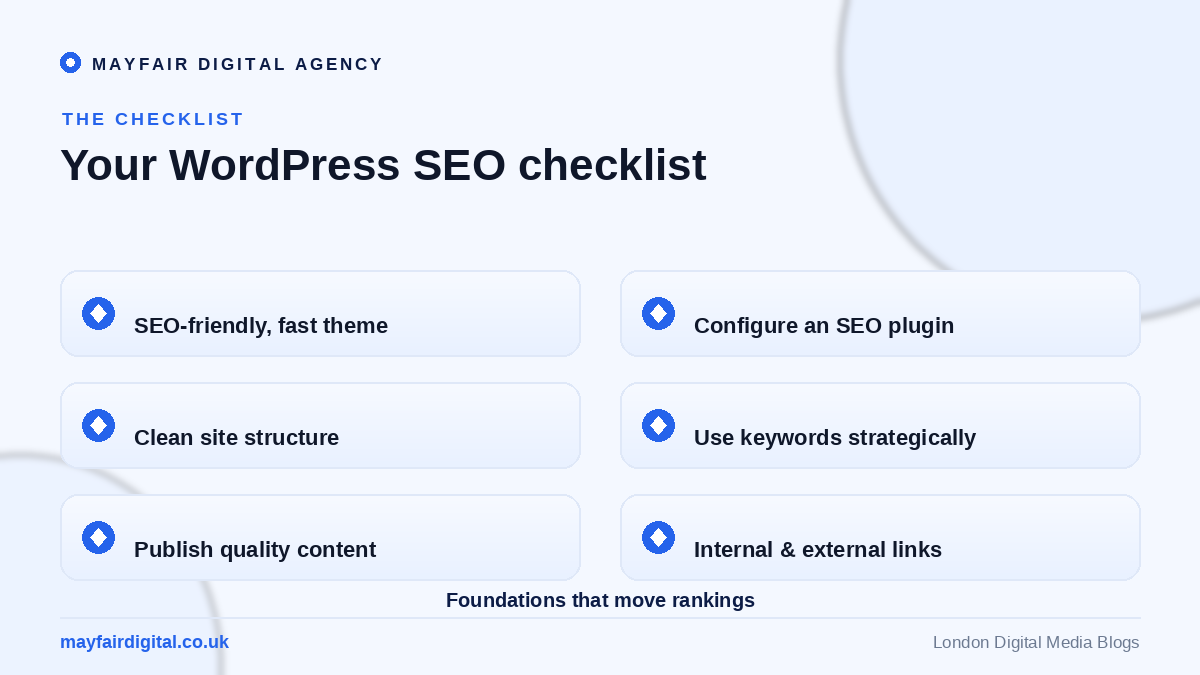
Effective SEO begins with understanding what your audience searches for. Research the keywords and questions relevant to your business, including long-tail phrases that are more specific and less competitive. Mapping these keywords to the right pages ensures each one targets the searches most likely to bring valuable visitors.
This research should guide your content creation, helping you produce pages and posts that match real demand. Writing about what your audience is actually searching for is the foundation of attracting the right traffic.
Optimise Your Content
On-page optimisation is where much of your SEO success is won. Write unique, descriptive titles and meta descriptions, use clear heading structures, and incorporate your target keywords naturally throughout genuinely helpful content. Avoid thin or duplicated content, and aim to create the most useful resource on each topic you cover.
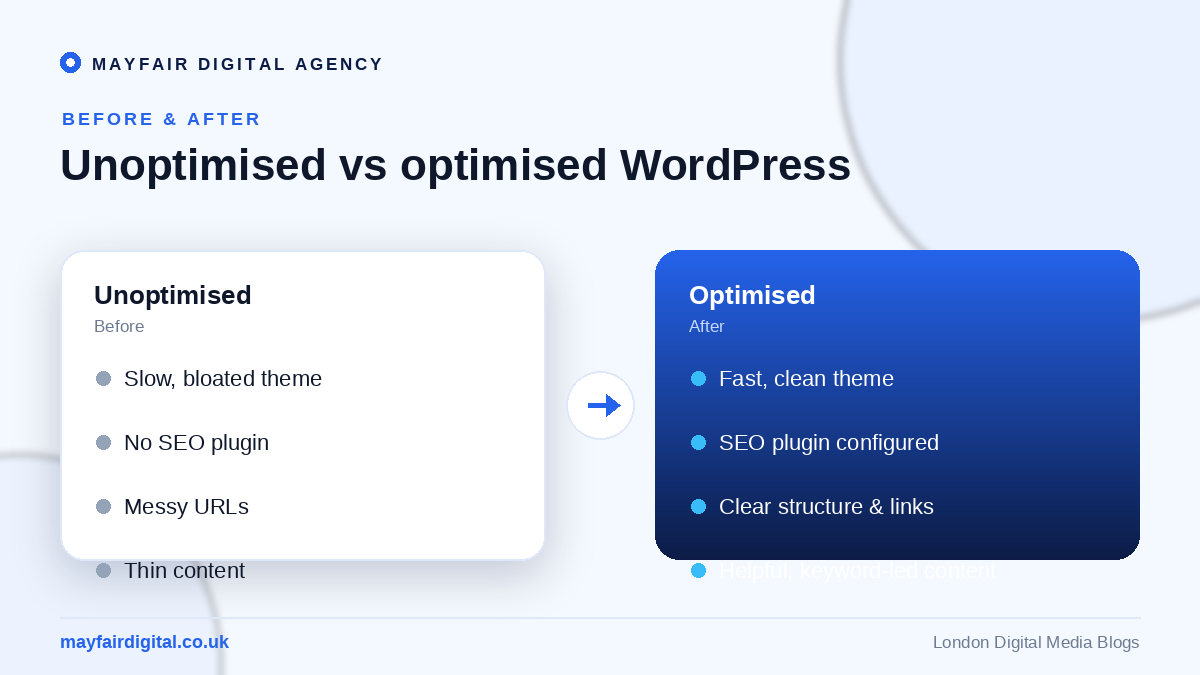
Quality matters more than quantity. In-depth, well-structured content that thoroughly satisfies user intent outperforms shallow pages, so focus on genuinely helping your readers while weaving in keywords naturally rather than forcing them.
Improve Site Structure and Internal Linking
A logical site structure helps both visitors and search engines navigate your site. Organise your content sensibly, keep navigation intuitive, and use clean, descriptive URLs. Internal linking — connecting related pages and posts — helps spread authority through your site and guides visitors to relevant content, improving both SEO and user experience.
Strong internal linking also helps search engines understand the relationships between your pages and discover new content faster. A well-linked site makes the most of the authority you build.
Optimise Images and Speed
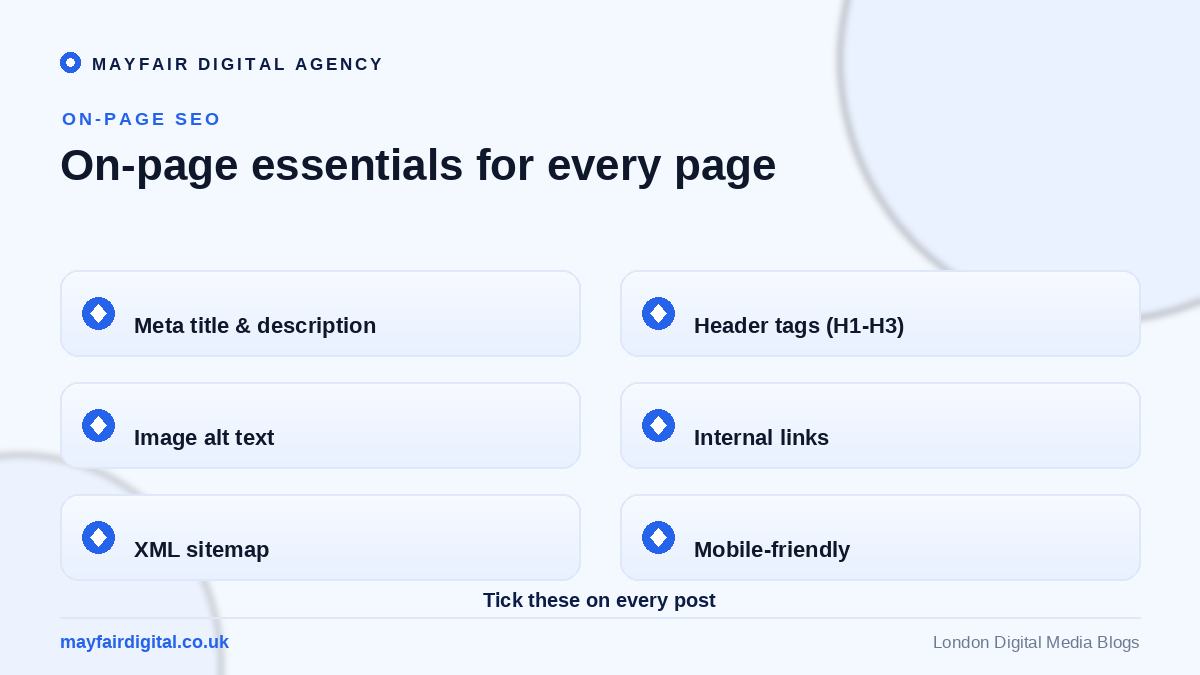
Images enrich your content but can slow your site if left unoptimised. Compress images, use descriptive file names and add alt text that describes each image and reinforces your keywords. Alt text also aids accessibility and helps images appear in search. Combined with caching and a quality host, image optimisation keeps your site fast.
Speed is a ranking factor and crucial for user experience, especially on mobile. A fast-loading WordPress site keeps visitors engaged and is rewarded by search engines, so performance optimisation should be an ongoing priority.
Frequently Asked Questions
Is WordPress good for SEO? Yes. WordPress is highly SEO-friendly, especially with a good SEO plugin and proper optimisation of content, structure and speed.
Do I need an SEO plugin? A reputable SEO plugin is highly recommended. It simplifies on-page optimisation, generates sitemaps and guides you through best practices, making SEO far more manageable.
How long does WordPress SEO take to work? Expect early progress within a few months and stronger results over six to twelve months. SEO is a long-term investment that compounds over time.
Optimise Your WordPress Site With Mayfair
Optimising your WordPress site for search engines turns it into a powerful, around-the-clock source of organic traffic. As a full-service digital media agency, Mayfair Digital Agency builds and optimises WordPress sites that rank well and attract the right visitors. If you want your site to be found, get in touch and let’s grow your search visibility together.
Make Your Site Mobile-Friendly
With most web traffic now coming from mobile devices, a mobile-friendly WordPress site is essential for SEO success. Search engines prioritise mobile performance when ranking sites, so your design must look and work flawlessly on phones and tablets. Choose a responsive theme, test your site regularly on different devices, and ensure that navigation, buttons and content all adapt smoothly to smaller screens. A site that frustrates mobile users will struggle both to rank and to convert the visitors it does attract.
Mobile optimisation also ties closely to speed, since mobile users are especially impatient with slow pages. Keeping your mobile experience fast and seamless protects both your rankings and the satisfaction of the majority of your audience.
Create Fresh, Regular Content
Search engines favour sites that are active and regularly updated, making consistent content creation a powerful SEO tactic. Publishing helpful blog posts, guides and articles on a steady basis gives search engines new pages to index, targets a wider range of keywords, and demonstrates that your site is current and authoritative. A blog is one of the most effective tools for growing your WordPress site’s search visibility over time.
Beyond publishing new content, periodically updating and improving existing pages keeps them accurate and competitive. Refreshing older posts with new information and better optimisation can revive their rankings and extend their value for years.
Build Quality Backlinks
Backlinks from reputable websites remain a key ranking factor, signalling to search engines that your content is valuable and trustworthy. Earn these by creating genuinely useful content that others want to reference, building relationships within your industry, and pursuing opportunities like guest contributions and digital PR. Quality and relevance matter far more than quantity, so focus on earning links from credible, related sites.
Avoid shortcuts like buying links, which violate search engine guidelines and risk penalties. Sustainable, ethically earned backlinks build authority that lasts and protect your site from the risks that come with manipulative tactics.
Use Categories and Tags Wisely
WordPress offers categories and tags to organise your content, and using them thoughtfully improves both user experience and SEO. A clear, logical category structure helps visitors and search engines navigate your site and understand how your content fits together. Avoid creating too many overlapping tags or categories, which can create thin, duplicate pages, and instead use them deliberately to group related content meaningfully.
Well-organised categories also create useful landing pages that can rank in their own right, capturing searches around broader topics. A tidy taxonomy strengthens your site’s structure and helps spread authority effectively.
Monitor Performance and Keep Improving
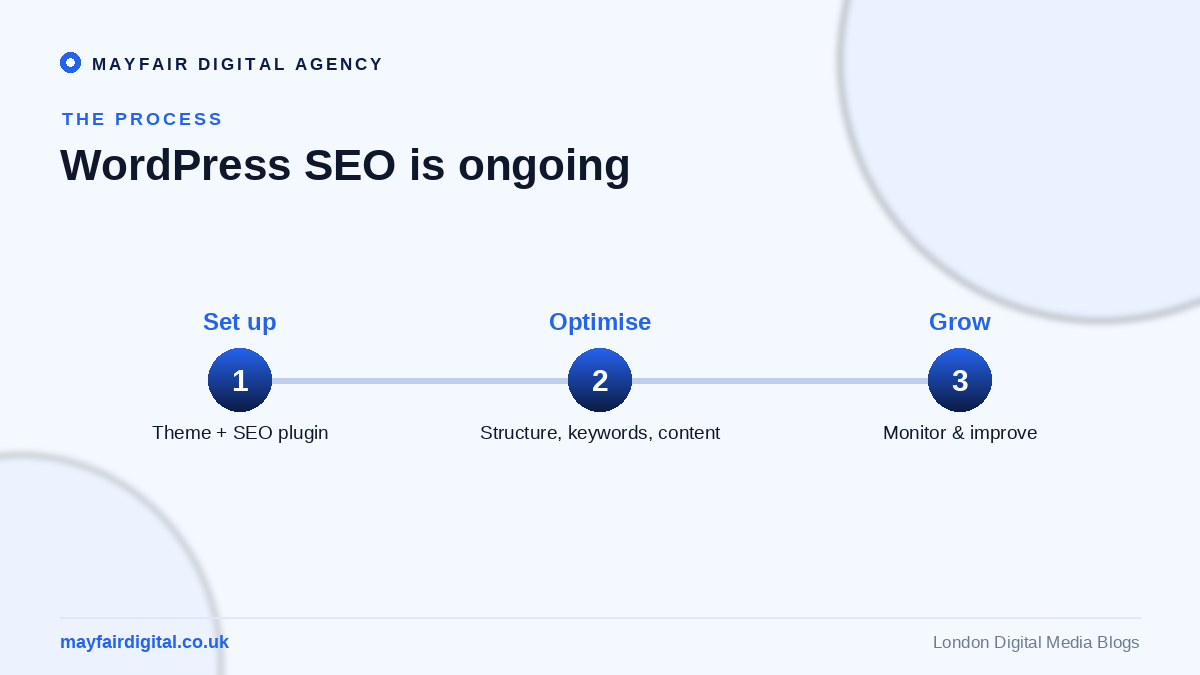
SEO is an ongoing process, not a one-time task. Use analytics and search tools to track your traffic, rankings and how visitors behave on your site. These insights reveal which content performs best, where there are opportunities, and what needs improvement. By reviewing your performance regularly and refining your approach based on real data, you keep your WordPress site climbing the rankings rather than standing still.
Consistency is the secret to long-term success. The sites that win at SEO treat it as a continuous habit, steadily optimising content, fixing issues and building authority. Over time, this disciplined effort compounds into a powerful, sustainable source of organic traffic that supports your business for years to come.
If optimising and maintaining your WordPress SEO feels overwhelming, remember that you do not have to do it all at once. Start with the essentials — an SEO plugin, solid keyword research and well-optimised content — then build from there, adding technical improvements, fresh content and quality backlinks over time. Each step strengthens your foundation, and the cumulative effect is a site that steadily rises through the rankings. With patience, consistency and the right approach, your WordPress site can become one of your most valuable assets, attracting the right visitors and growing your business around the clock.
Need expert help? Mayfair Digital Agency is a digital agency in London and full-service digital agency in London offering global SEO agency and more. Get in touch for a free consultation.


