




How to Choose the Right Shopify Theme for Your Online Store
Your store’s theme is the first thing customers notice and one of the biggest influences on whether they buy. Choosing the right Shopify theme is therefore far more than a design decision — it shapes your brand, your loading speed, your mobile experience and ultimately your conversion rate. With hundreds of options available, knowing how to choose well saves you time, money and a frustrating rebuild later.
This guide walks you through exactly what to look for, the trade-offs between free and paid themes, the features that matter most for sales, and the mistakes to avoid. By the end you will be able to pick a theme with confidence rather than guesswork.
Why Your Theme Matters So Much
A Shopify theme is the framework that controls how your store looks and behaves. It dictates your layout, navigation, product presentation and checkout flow. Because shoppers form an impression within seconds, a clean, professional and trustworthy design directly affects whether they stay and explore or leave for a competitor. The theme is the stage on which every product performs.
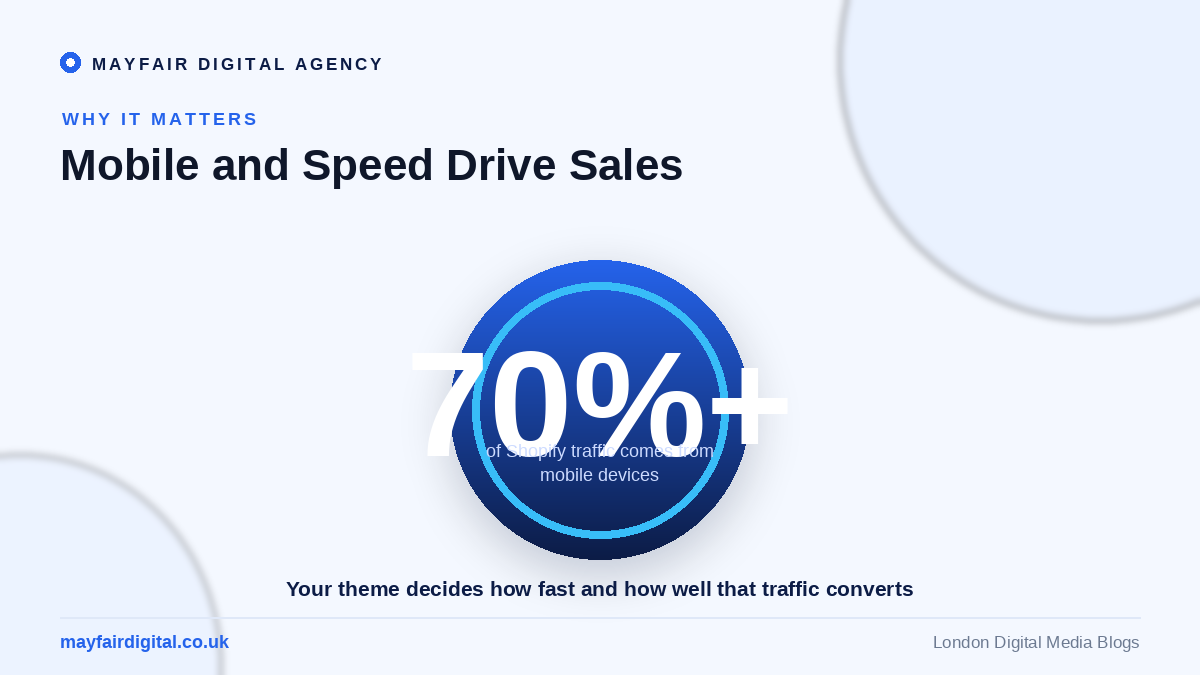
Just as importantly, the theme affects speed and usability. A bloated or poorly built theme slows your site, frustrates visitors and harms your search rankings. A well-built one loads fast, works flawlessly on mobile and guides customers smoothly toward checkout. The right choice quietly lifts every metric that matters.
Free vs Paid Themes
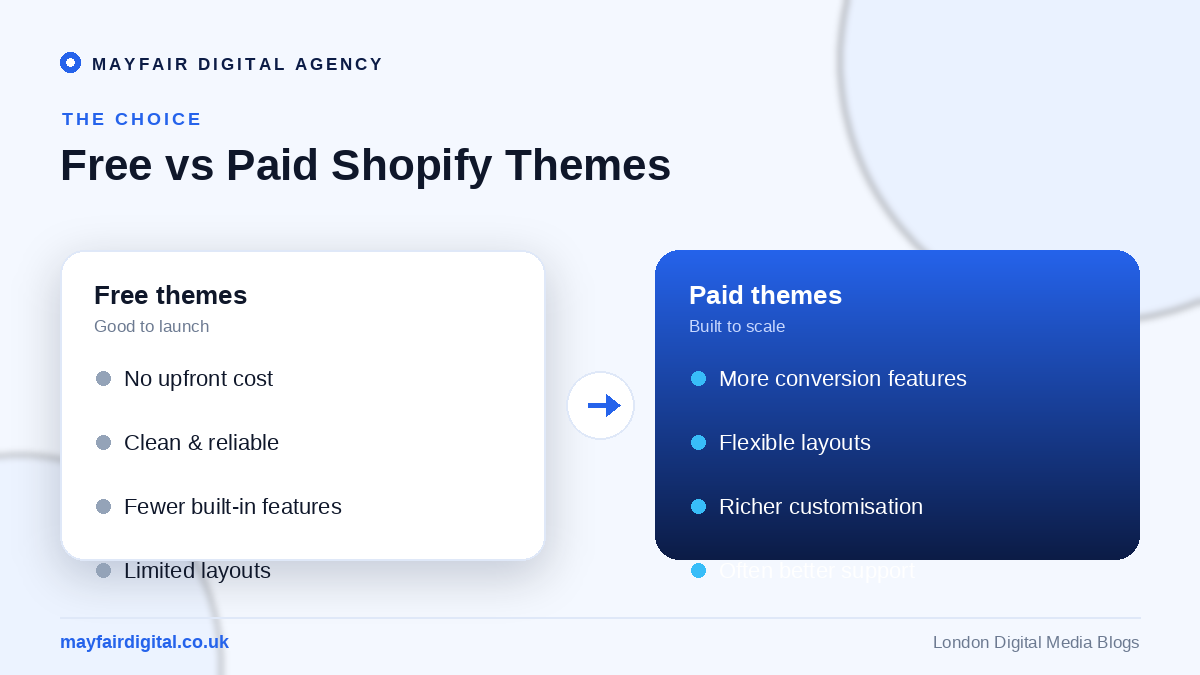
Shopify offers a curated selection of free themes that are reliable, fast and a sensible starting point for new or budget-conscious stores. They are professionally built and fully supported, so you are never gambling on quality. The trade-off is that customisation options and unique features are more limited, and many stores use them, so standing out takes more effort.
Paid themes, available through the Shopify Theme Store and third-party marketplaces, typically offer more layouts, advanced features and design flexibility. For an established or growing store, the one-off cost is usually a worthwhile investment in a distinctive, conversion-focused storefront. The key is to choose based on the features you genuinely need rather than the most impressive demo.
Prioritise Mobile Responsiveness
The majority of e-commerce traffic now comes from mobile devices, so a theme must look and work beautifully on phones, not just desktops. Always preview how a theme handles mobile navigation, product images and checkout before committing. A theme that is merely “mobile compatible” is not enough; it must be genuinely mobile-first, because that is where most of your customers will be.
Match the Theme to Your Catalogue
Different themes suit different types of store. A shop with a handful of premium products needs a theme that showcases each item with large, striking imagery, while a store with hundreds of products needs strong navigation, filtering and search. Choose a theme designed for the size and style of your catalogue rather than forcing your products into a layout built for a different kind of business.
Consider your brand personality too. A minimalist theme suits a sleek, modern brand, while a bold, colourful theme might suit a playful one. The design should feel like a natural extension of your identity, reinforcing your brand the moment a visitor arrives.
Look for Conversion-Focused Features
Beyond looks, the best themes include features that actively help you sell: quick-view product previews, prominent calls to action, customer reviews, related-product recommendations, sticky add-to-cart buttons and a streamlined checkout. These details reduce friction and nudge visitors toward purchase. When comparing themes, evaluate them as selling tools, not just as pretty templates.
Check Speed, Support and Reviews
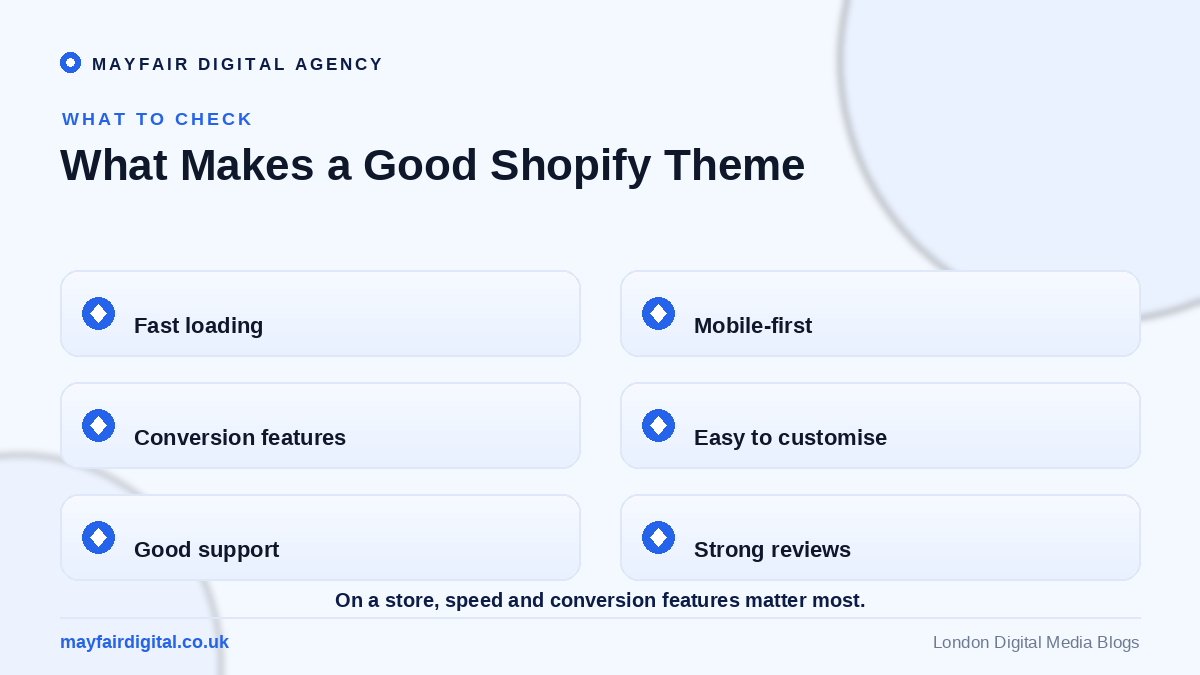
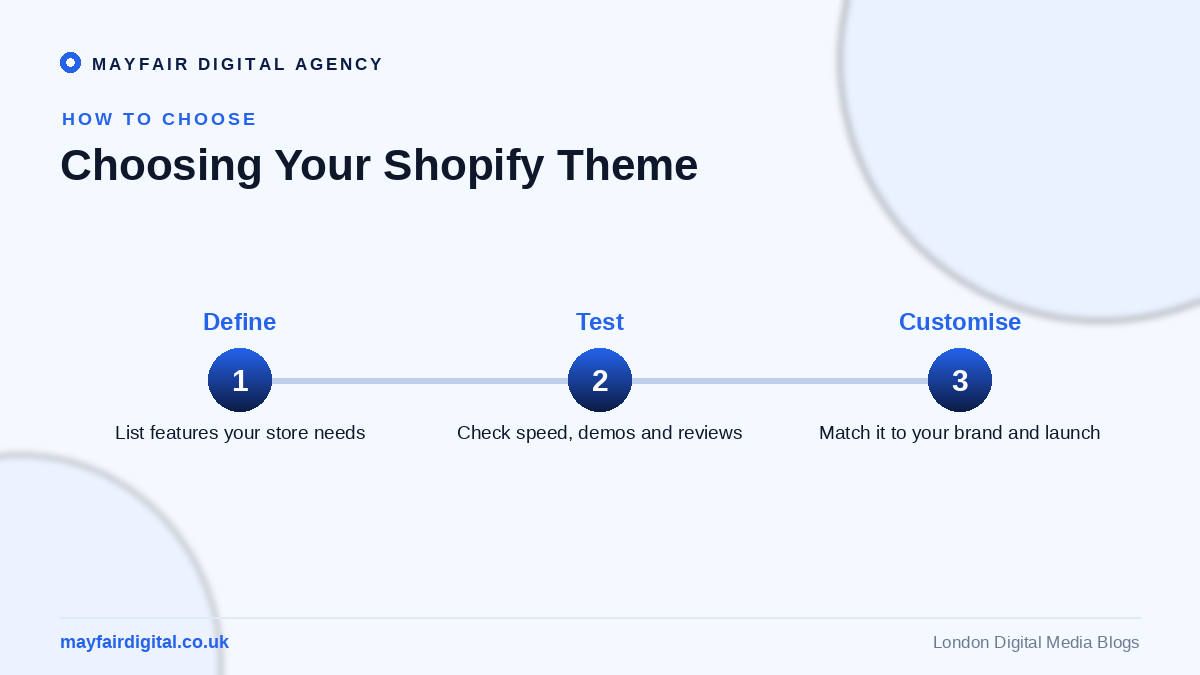
Before choosing, test a theme’s demo for loading speed and read reviews from other merchants. Pay attention to how responsive the theme developer is to support requests and how regularly they release updates, because a well-maintained theme protects you against bugs and compatibility issues over time. A theme is a long-term relationship, so reliability and support genuinely matter.
Avoid Common Mistakes
The most frequent errors are choosing a theme purely on appearance, ignoring mobile performance, picking a feature-heavy theme that slows the site, and selecting something that cannot grow with the business. Avoid the temptation to install endless apps to compensate for a weak theme, as this often creates the very slowdown you were trying to prevent. Start with a strong foundation and build thoughtfully.
Frequently Asked Questions
Can I change my Shopify theme later? Yes, you can switch themes at any time, though it requires some reconfiguration. It is far better to choose well from the start to avoid the disruption of a later rebuild.
Are free Shopify themes good enough? For many new stores, absolutely. They are fast, reliable and professional. Paid themes simply offer more flexibility and features as your needs grow.
What is the most important factor in a theme? Mobile performance and conversion-focused design. A fast, mobile-friendly theme that guides customers to checkout will always outperform a prettier but slower alternative.
Build a Store That Sells With Mayfair
The right Shopify theme is the foundation of a store that looks professional, loads fast and turns visitors into customers. As a full-service digital media agency, Mayfair Digital Agency helps merchants choose, customise and optimise themes that reflect their brand and maximise sales. If you want a storefront built to convert, get in touch and let’s create something your customers will love to shop.
Getting Started With choosing a Shopify theme
Putting all of this into practice does not have to feel overwhelming. The most effective approach to choosing a Shopify theme is to begin with a clear goal, get the fundamentals right first, and then improve steadily based on real results rather than guesswork. Small, consistent steps compound into significant gains over time, and a deliberate, well-documented plan will always outperform sporadic bursts of unfocused effort that fade as quickly as they begin.
It also pays to review your progress regularly. By tracking the metrics that genuinely matter to your business and adjusting course whenever the data points a clearer way, you keep choosing a Shopify theme working as a reliable engine for growth rather than a box-ticking exercise. The businesses that win are the ones that treat this as an ongoing discipline, building on what works and quietly retiring what does not, month after month.
Patience and consistency are the quiet superpowers here. Results rarely arrive overnight, but the compounding effect of doing the right things repeatedly is enormous. A brand that shows up consistently, learns from its numbers and refines its approach will, over time, pull comfortably ahead of competitors who chase quick wins and abandon each tactic before it has a chance to work.
It is worth remembering that choosing a Shopify theme does not exist in isolation. It works best as part of a joined-up strategy where every channel supports the others, reinforcing the same message and guiding people smoothly from first discovery through to becoming a loyal, repeat customer. When the pieces connect, the whole becomes far greater than the sum of its parts.
Avoid the common temptation to constantly reinvent the wheel. Brands that change direction too often confuse their audience and dilute their results. A steadier hand — clear positioning, a consistent voice and a long-term plan — builds the recognition and trust that turn casual attention into genuine commercial value.
And if you would rather concentrate on running your business while specialists handle the detail, that is exactly where an experienced partner earns its keep. As a full-service digital media agency, Mayfair Digital Agency helps businesses turn choosing a Shopify theme into real, measurable results — combining strategy, creativity and data so every effort pulls toward growth. Get in touch and let’s build something that lasts.
Choosing the right Shopify theme is the kind of foundational decision that pays dividends for years, so it is worth taking the time to get it right. Preview your shortlist on real devices, test the checkout, and imagine your actual products in each layout before you commit. A theme that fits your brand, loads quickly and guides shoppers smoothly to purchase will quietly lift your sales long after the initial setup is complete, making it one of the most valuable early investments you can make in your store.
Need expert help? Mayfair Digital Agency is a London digital agency and full-service digital agency in London offering website design in London and more. Get in touch for a free consultation.


