




Measuring the Return on Investment (ROI) of Digital Media
Digital media offers businesses an unprecedented ability to reach audiences, but spending without measuring is a recipe for wasted budget. Measuring the return on investment of your digital media is how you separate the channels and campaigns that genuinely grow your business from those that merely consume resources. With the right approach, digital media becomes a transparent, accountable investment rather than an act of faith — and that clarity is the foundation of smarter decisions and stronger results.
This guide explains what digital media ROI means, why it is so important, the metrics that genuinely matter, and how to measure and improve your returns. Whether you manage your own marketing or work with an agency, these principles will help you invest with confidence.
What Digital Media ROI Means
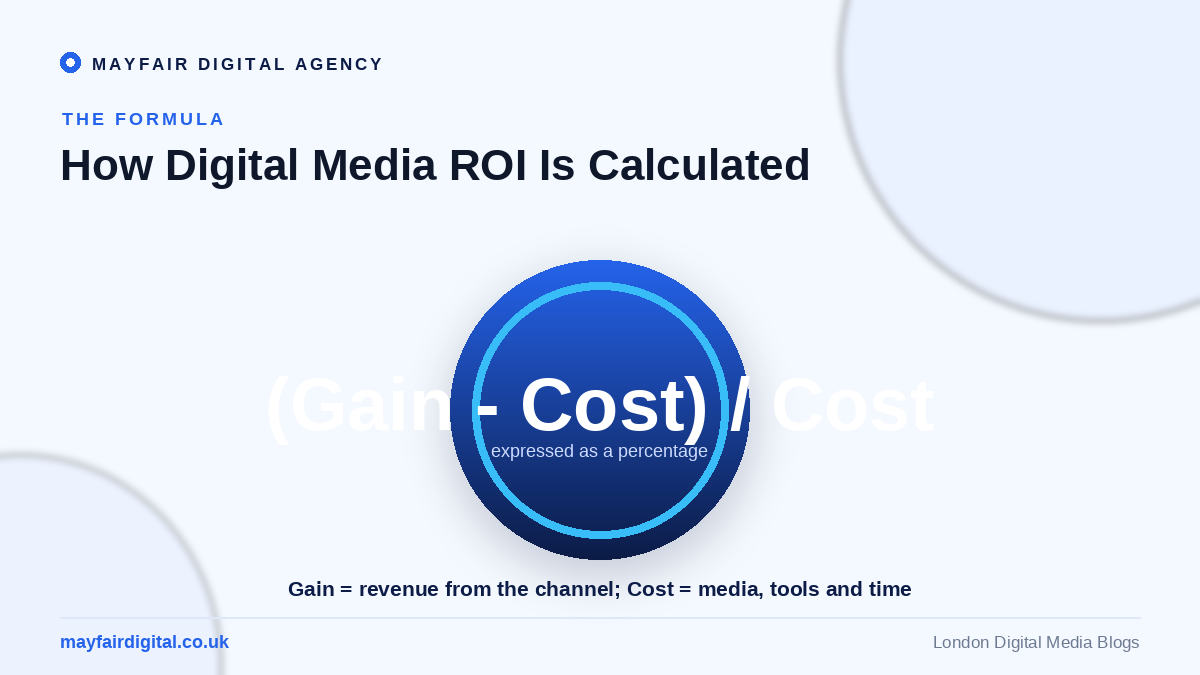
Return on investment compares the value generated by your digital media activities against the cost of running them. Those costs include media spend, content creation, tools and time, while the returns can range from immediate sales and leads to longer-term gains like brand awareness and customer loyalty. Defining what counts as a return for your business is the essential first step, because ROI is meaningless without clear goals to measure against.
Importantly, digital media ROI is not only about instant sales. Much of its value lies in building awareness and relationships that pay off over time. A mature measurement approach captures both the direct, trackable returns and these longer-term, compounding benefits.
Why Measuring ROI Is Essential
Measuring ROI transforms digital media from guesswork into strategy. It reveals which channels, campaigns and content genuinely drive results, allowing you to invest more in what works and cut what does not. This continuous optimisation is how marketing performance compounds and improves, turning a reasonable return into an excellent one over time.
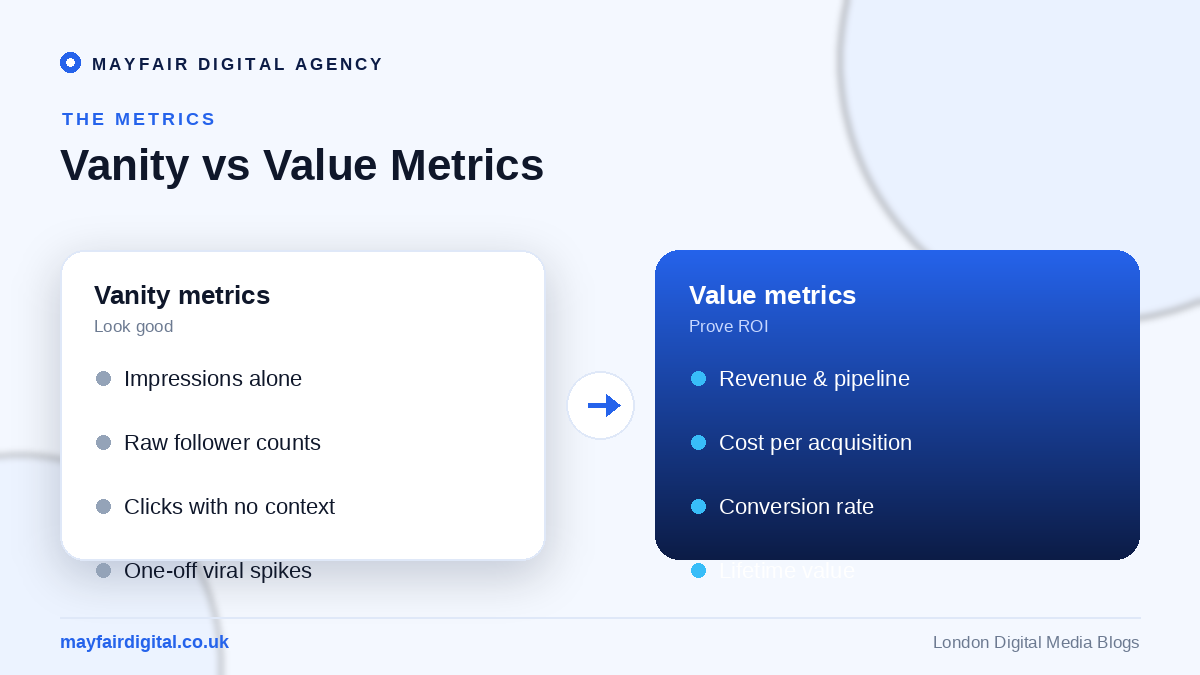
Measurement also brings accountability, whether you market in-house or through an agency. It proves the value of your spend and keeps everyone focused on outcomes that matter to the business, rather than vanity metrics that look impressive but mean little. Clear ROI is the foundation of confident, data-driven decision-making.
The Metrics That Truly Matter
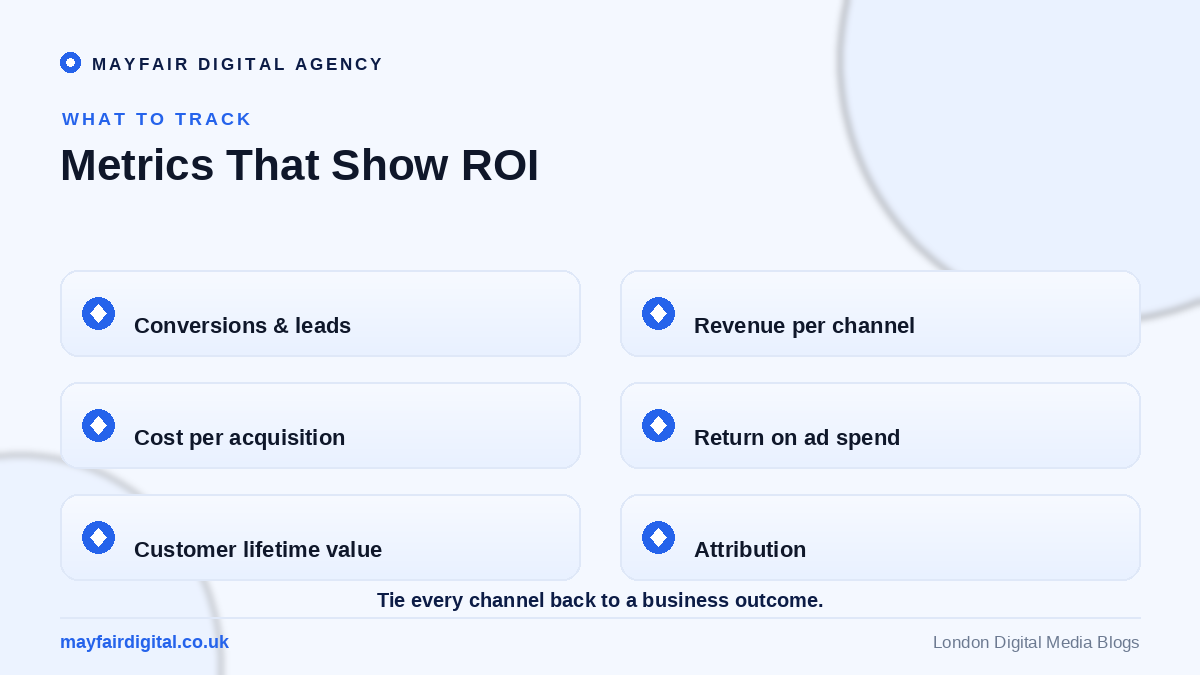
Not all metrics are equal. Vanity metrics like impressions and likes can feel reassuring but reveal little about commercial impact. The metrics that genuinely matter connect activity to outcomes: cost per acquisition, conversion rates, return on ad spend, the value of leads and sales generated, and customer lifetime value. These figures show whether your digital media is profitable.
It also helps to track the full journey rather than only the final sale. Traffic, engagement and lead quality are useful leading indicators that show whether the foundations of future revenue are being built, provided they are viewed as steps toward results rather than ends in themselves.
How to Measure ROI Accurately
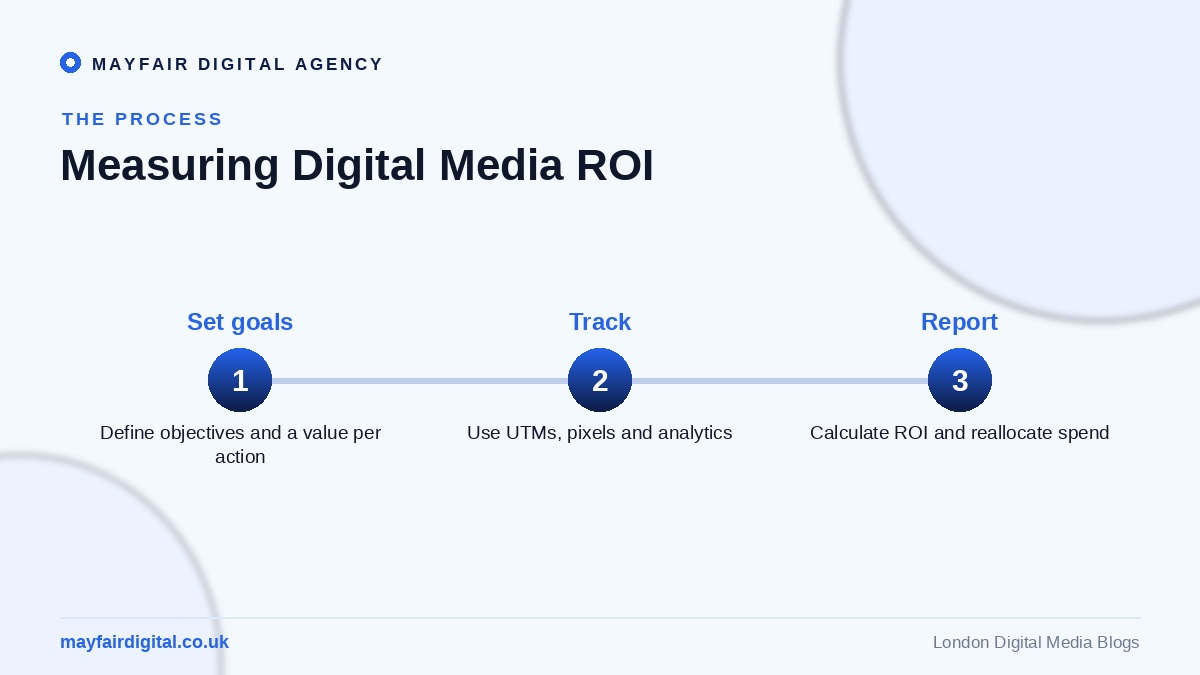
Accurate measurement depends on proper tracking. Analytics platforms reveal how visitors find and use your site, conversion tracking ties actions to specific campaigns, and tagged links show which channels drive traffic. Setting this infrastructure up from the start is essential, because without it, attributing results becomes guesswork. A good agency treats measurement setup as a first priority.
Remember that some returns take time and are harder to quantify. Brand awareness, improved rankings and a growing audience all build future revenue even without an immediate sale. A fair ROI assessment accounts for these longer-term assets rather than judging everything on instant results.
Frequently Asked Questions
Can digital media ROI really be measured? Yes. With proper tracking and clear goals, you can connect digital media activity to traffic, leads and sales, while also accounting for longer-term gains like awareness and loyalty.
What is the most important ROI metric? Cost per acquisition relative to customer value is among the most revealing, as it shows whether your marketing is profitably winning customers rather than just generating activity.
How often should I measure ROI? Continuously. Regular measurement lets you spot trends, optimise campaigns and make informed decisions, turning measurement into an engine for ongoing improvement.
Measure and Maximise ROI With Mayfair
Measuring the ROI of your digital media turns marketing into a confident, data-driven investment rather than a leap of faith. As a full-service digital media agency, Mayfair Digital Agency sets clear goals, tracks the metrics that matter and uses the data to maximise your returns. If you want marketing with results you can see, get in touch and let’s make every pound count.
Understanding Attribution
One of the trickiest aspects of measuring digital media ROI is attribution — deciding which channels deserve credit for a result. Customers rarely convert after a single interaction; they might discover you through social media, research you via search, and finally buy after clicking an email. Judging each channel purely on last-click sales can badly undervalue those that do important early work in building awareness and consideration. A thoughtful approach considers the whole journey, using sensible attribution models rather than crediting only the final touch, so you do not mistakenly cut channels that are quietly driving growth.
Accepting that attribution will never be perfect is part of measuring maturely. By focusing on overall trends in revenue, leads and cost rather than obsessing over every interaction, you can make confident decisions even within the real limits of modern tracking.
Turning Data Into Better Decisions
The true purpose of measuring ROI is not merely to keep score but to improve. Each reporting cycle should end with clear decisions about what to scale, refine or stop. By identifying which channels and campaigns deliver the strongest returns, you can shift budget toward them and steadily lift overall performance. This disciplined loop of measuring, learning and adjusting is what separates businesses that grow predictably from those that rely on luck.
Over time, these small, data-led improvements compound into significant gains. Digital media evolves from an unpredictable expense into a dependable, growing contributor to the business, precisely because every decision is grounded in evidence rather than assumption.
Common ROI Measurement Mistakes
Several mistakes can distort digital media ROI. Focusing on vanity metrics, failing to set up tracking, judging long-term brand-building on short-term sales, and ignoring the cost of time all lead to misleading conclusions. Measuring sporadically rather than consistently makes it impossible to spot meaningful trends. Avoiding these pitfalls is largely a matter of agreeing clear goals and metrics upfront, then measuring against them consistently and honestly.
A trustworthy partner guards against these traps, presenting clear reports that connect activity to outcomes rather than burying weak results beneath impressive-looking but meaningless figures. This honesty is essential to making sound decisions and building a productive long-term relationship.
The Tools That Make Measurement Possible
Accurate ROI measurement relies on the right tools working together. Web analytics show how people find and use your site, conversion tracking ties specific actions to specific campaigns, and call tracking captures enquiries that happen by phone. Dashboards bring these data sources together into a clear picture of performance. A capable agency configures these tools, connects them to your business goals, and uses them to demonstrate exactly what your investment delivers.
With this infrastructure in place, reporting becomes genuinely useful, showing not just how many people engaged with your marketing but how many became leads or customers as a result. That complete picture is what turns measurement into a powerful decision-making tool.
A Smarter, More Confident Way to Market
Measuring the return on investment of your digital media is not a bureaucratic chore but the key to marketing smarter. It ensures your budget is working, reveals where to improve, and gives you the confidence to invest in growth. For any business serious about success online, robust ROI measurement is the difference between hoping for results and reliably achieving them.
By committing to clear goals, proper tracking and continuous refinement — whether on your own or with an expert partner — you transform digital media into an accountable, optimisable engine for growth. The result is a marketing programme whose value you can see, measure and steadily increase over time.
Need expert help? Mayfair Digital Agency is a digital agency in London and full-service digital agency in London offering digital strategy agency and more. Get in touch for a free consultation.


