




The Future of E-Commerce What Shopify Merchants Need to Know
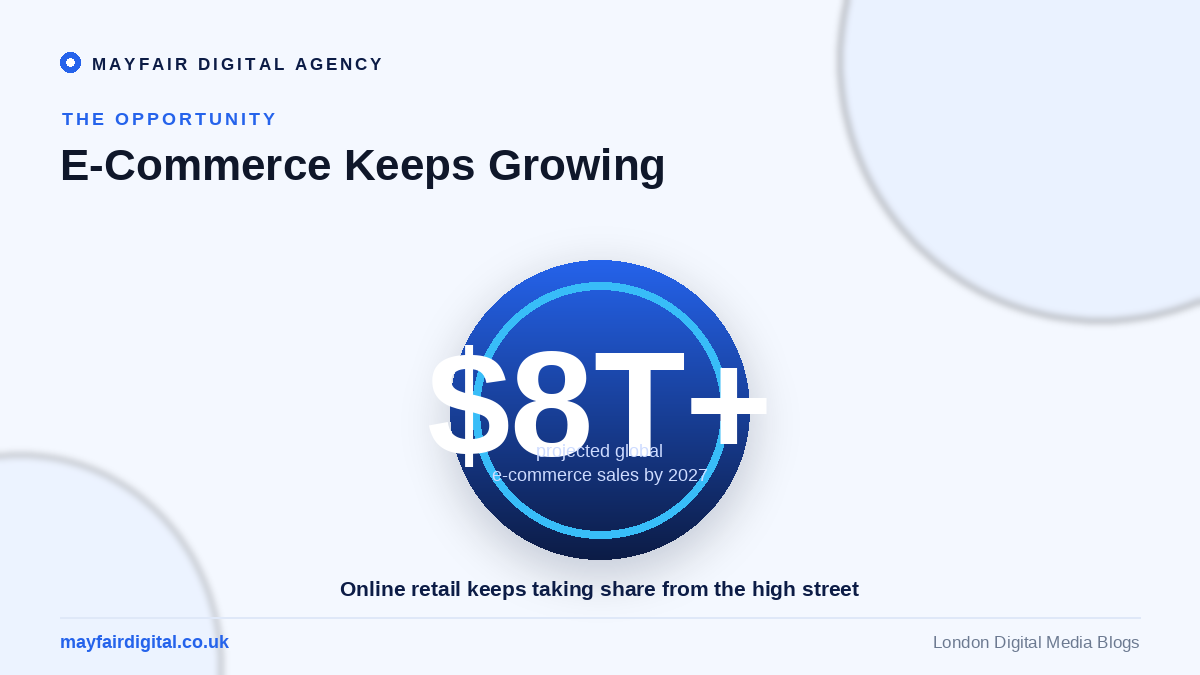
The world of online retail never stands still, and for anyone running a store the question is always the same: what comes next? The future of e-commerce is being shaped by faster technology, smarter customers and rising expectations — and Shopify merchants are right at the centre of that change. Understanding where the market is heading is the difference between reacting to trends and getting ahead of them.
In this guide we break down the shifts that matter most for Shopify store owners over the coming year, from artificial intelligence and personalisation to mobile commerce, social selling and sustainability. Each section explains not just what is changing, but what you can do about it to keep your e-commerce business growing.
Why the E-Commerce Landscape Is Changing So Fast
E-commerce growth has pulled in enormous investment, and that investment funds rapid innovation in payments, logistics and customer experience. At the same time, shoppers who grew up online now expect every store to be as fast, personal and frictionless as the biggest brands. For Shopify merchants, this raises the bar: a “good enough” store is no longer good enough when competitors are one tap away.
The good news is that the same platform powering this competition also gives smaller merchants access to enterprise-grade tools. Shopify continually ships new features, and its app ecosystem lets store owners adopt cutting-edge capabilities without building them from scratch. The merchants who win are the ones who treat their store as a living product to be improved, not a project to be finished.
Artificial Intelligence Is Reshaping the Storefront
AI is the single biggest force in e-commerce right now. For Shopify merchants it shows up in practical ways: product recommendations that adapt to each visitor, chatbots that answer questions instantly, automated copywriting for product descriptions, and predictive analytics that forecast demand. Used well, AI lets a small team deliver the kind of personal service that once required a large one.
The key is to adopt AI where it removes friction or saves time, rather than chasing novelty. Start with the basics — smart search, personalised recommendations and automated customer support — and expand from there as you see what genuinely improves conversion and retention.
Personalisation Becomes the Expectation, Not the Bonus
Shoppers increasingly expect stores to remember who they are and show them what is relevant. Personalised homepages, tailored email flows and dynamic offers based on browsing history all lift conversion rates and average order value. For Shopify merchants, the platform’s customer data and app integrations make this achievable without a developer on staff.
Effective personalisation respects privacy and feels helpful rather than intrusive. The goal is to make the shopping journey easier — surfacing the right product at the right moment — not to unsettle the customer with how much you know.
Mobile and Social Commerce Keep Growing
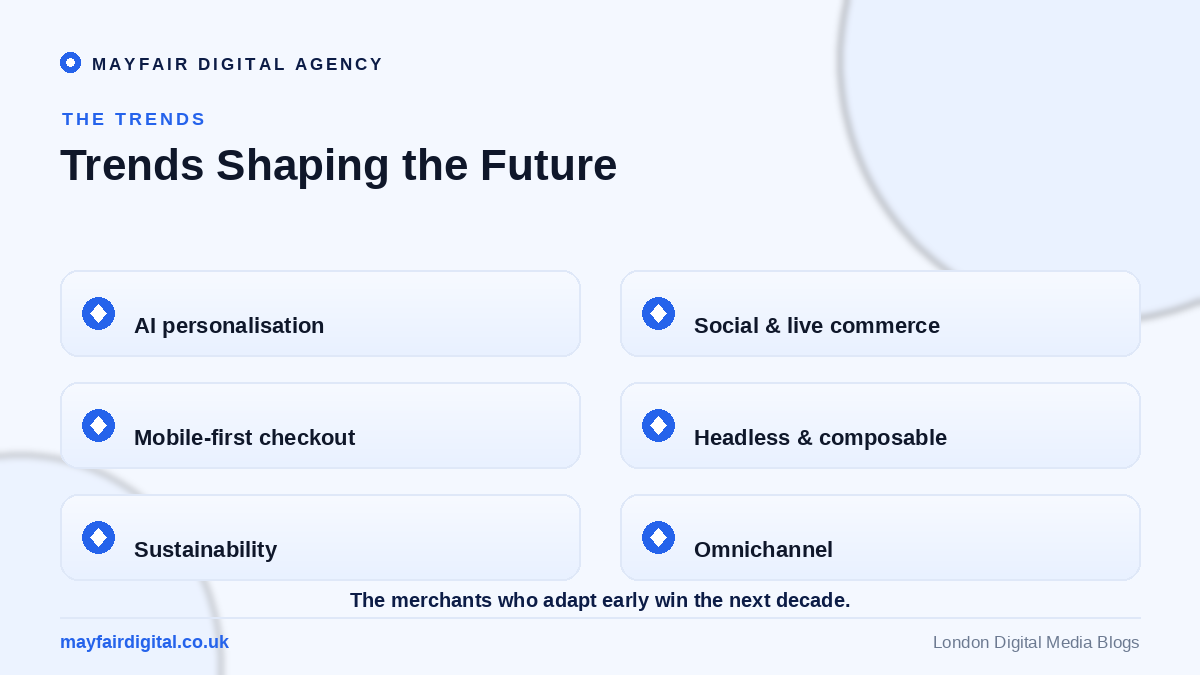
A large and growing share of online sales now happens on mobile devices, often within social apps themselves. Shopify’s integrations with platforms like Instagram, TikTok and Facebook let merchants sell directly where their audience already spends time. Optimising your store for fast mobile loading and one-tap checkout is no longer optional — it is fundamental.
- Mobile-first design — every page should look and work flawlessly on a phone.
- Social shopping — sell through shoppable posts and in-app storefronts.
- Fast checkout — accelerated payment options reduce abandonment.
- Short-form video — product videos drive discovery and trust on social feeds.
Customer Experience and Retention Take Centre Stage
Acquiring a new customer costs far more than keeping an existing one, so the future of e-commerce is as much about retention as it is about reach. Shopify merchants are investing in loyalty programmes, subscription models, seamless returns and proactive support to turn one-time buyers into repeat customers. A great post-purchase experience is becoming a powerful, and often overlooked, growth lever.
Email and SMS marketing remain among the highest-return channels available, precisely because they reach people who already trust you. Building and nurturing that owned audience protects your business from the rising cost and unpredictability of paid advertising.
Sustainability and Brand Values Influence Buying
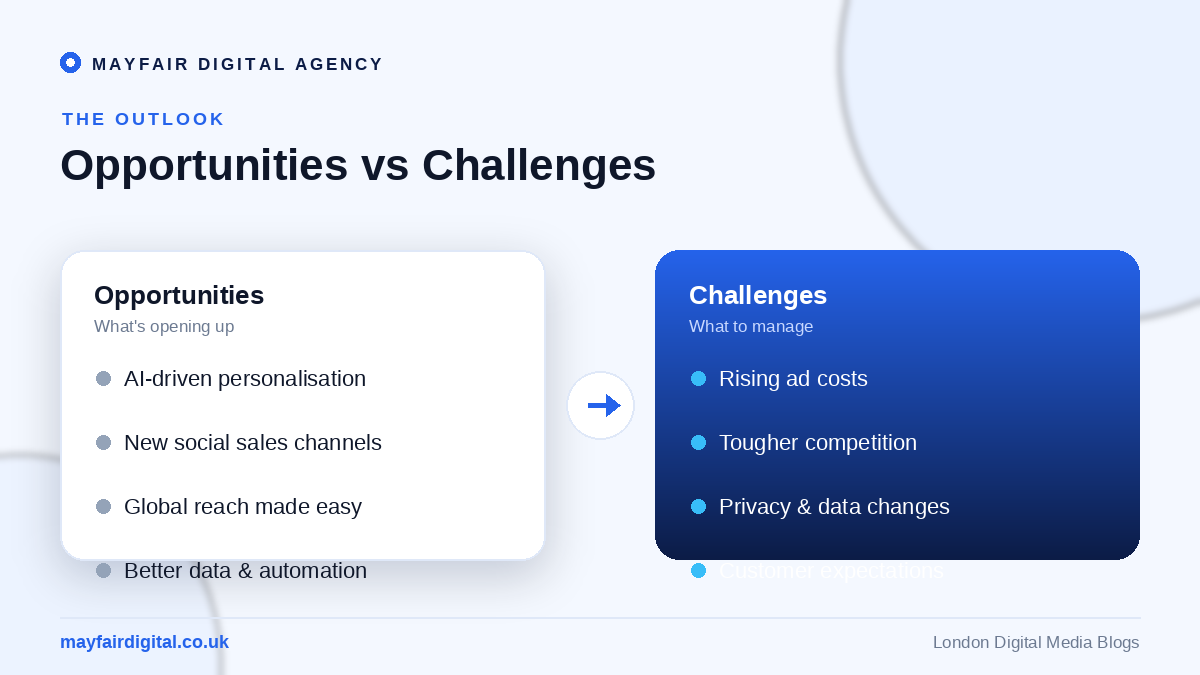
Customers — especially younger ones — increasingly choose brands whose values align with their own. Transparent sourcing, eco-friendly packaging and honest marketing are becoming genuine differentiators. Shopify merchants who communicate their values clearly can build deeper loyalty and command stronger margins than those competing on price alone.
What Shopify Merchants Should Do Now
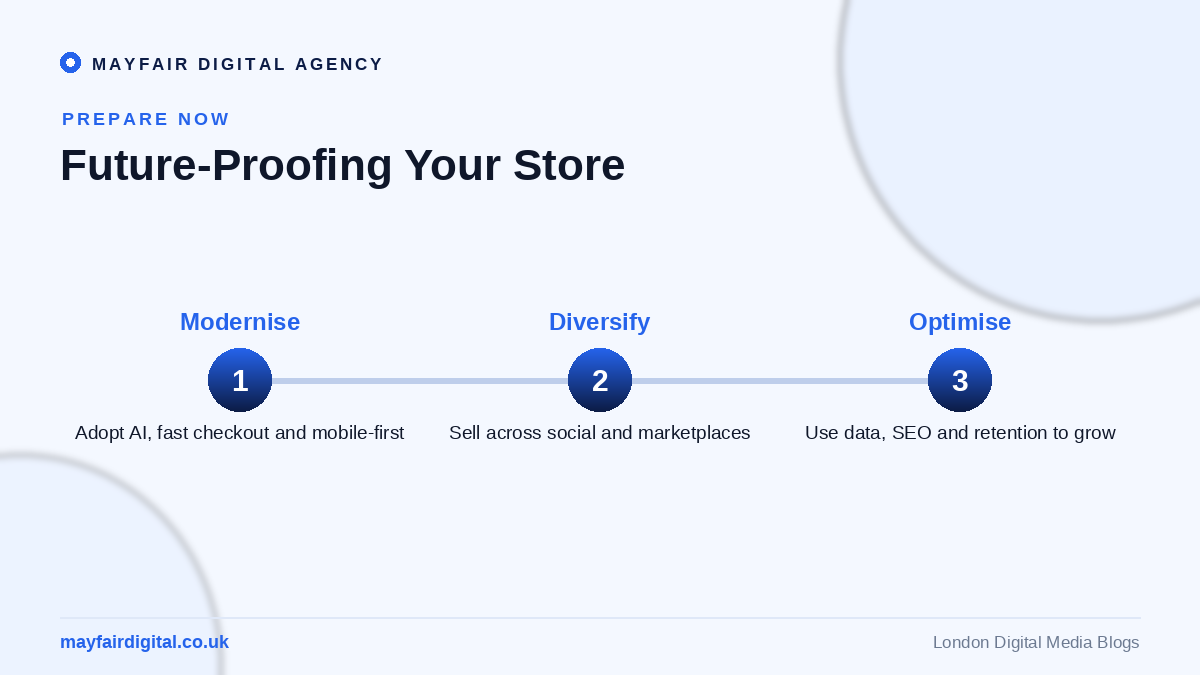
The future rewards preparation. Audit your store’s mobile speed, switch on personalisation and AI-powered recommendations, tighten your checkout, and build an owned marketing channel through email and SMS. Above all, treat your e-commerce store as something you optimise continuously, testing changes and following the data rather than guesswork.
If keeping pace with all of this feels overwhelming, that is exactly where expert help pays for itself. Partnering with a specialist team means your store benefits from the latest best practices without you having to master every tool yourself.
Frequently Asked Questions
Is Shopify a good platform for the future of e-commerce? Yes. Shopify invests heavily in new technology and its app ecosystem means merchants can adopt emerging capabilities quickly, making it well suited to a fast-changing market.
Do I need to use AI in my store? You do not have to, but AI-driven recommendations and support meaningfully improve conversion and efficiency. Most successful Shopify merchants are adopting at least the basics.
What is the most important area to invest in? Mobile experience and customer retention deliver the most reliable returns. A fast, personal store that keeps customers coming back beats one that only chases new traffic.
Future-Proof Your Store With Mayfair Digital Agency
The future of e-commerce belongs to merchants who adapt early and execute consistently. As a full-service digital media agency, Mayfair Digital Agency helps Shopify merchants build faster, smarter, more profitable stores — from design and SEO to marketing and conversion optimisation. If you want to stay ahead of what comes next, get in touch and let’s grow your e-commerce business together.
How Shopping Habits Are Evolving
Today’s shoppers research extensively before they buy, comparing reviews, prices and delivery options across multiple devices and sessions. For Shopify merchants this means the buying journey is rarely linear — a customer might discover you on TikTok, read reviews on their laptop, and finally check out on their phone days later. Building a consistent, trustworthy experience across every one of those touchpoints is what turns browsers into buyers in modern e-commerce.
This fragmented journey also makes data more valuable than ever. By understanding how customers move toward a purchase, merchants can remove friction at the exact points where people hesitate, whether that is unclear shipping costs, a slow product page or a checkout that asks for too much information.
The Rising Importance of Speed and Trust
Page speed has a direct, measurable impact on conversion. Every additional second of load time costs sales, which is why optimising images, themes and apps is one of the most profitable jobs a Shopify merchant can do. Equally important is trust: clear policies, visible reviews, secure payment badges and responsive support reassure first-time buyers who have no prior relationship with your brand.
As competition intensifies, the merchants who combine a fast, reliable store with genuine credibility will capture a disproportionate share of the market. These fundamentals rarely make headlines, but they remain the bedrock of every successful e-commerce business and will only grow more important as customer expectations climb.
Turning Trends Into a Plan
Knowing where e-commerce is heading is only valuable if it changes what you do. The most successful Shopify merchants translate these trends into a simple, prioritised roadmap: fix the fundamentals first, then layer on personalisation, AI and new sales channels as capacity allows. By reviewing performance regularly and acting on the numbers, you keep your store improving quarter after quarter rather than falling behind. The future of online retail favours the prepared, and a steady, deliberate approach will always outperform last-minute reactions to whatever trend happens to be loudest this month.
Need expert help? Mayfair Digital Agency is a digital marketing agency in London and full-service digital agency in London offering website design in London and more. Get in touch for a free consultation.


