




The Importance of Measuring the ROI of Your SEO Agency
SEO is a long-term investment, and like any investment it deserves to be measured. Measuring the ROI of your SEO agency is how you know whether the work is genuinely growing your business or simply generating reports. Without clear measurement, it is easy to keep paying for activity that produces little, or to abandon a strategy just before it would have paid off. With the right metrics and a clear-eyed approach, SEO becomes an accountable, optimisable channel rather than an act of faith.
This guide explains why measuring SEO ROI matters, the metrics that truly count, how to account for SEO’s long-term nature, and how a good agency proves and improves the value it delivers. Whether you already work with an agency or are considering one, these principles will help you invest wisely.
Why Measuring SEO ROI Matters
The most obvious reason to measure ROI is accountability. SEO can be opaque, and without measurement it is hard to know whether your agency is delivering value or quietly underperforming. Clear measurement protects your budget and ensures the work is genuinely contributing to growth. A good agency welcomes this scrutiny, because strong results are the best argument for continuing the partnership.
Measurement also drives better decisions. When you understand which keywords, pages and tactics produce the strongest returns, you can focus effort where it counts and refine the strategy over time. This continuous optimisation is how SEO compounds, turning steady early gains into significant long-term growth.
Account for SEO’s Long-Term Nature
SEO is unlike paid advertising in that its returns build gradually and then compound. A page that climbs the rankings can deliver free, high-intent traffic for years, but it may take months to get there. Measuring SEO ROI therefore requires a sensible time horizon — judging results over quarters rather than days, and recognising that early investment lays foundations for later, larger returns.
This long-term view prevents a common and costly mistake: abandoning SEO too early. Many businesses give up just as their efforts are about to bear fruit, wasting the investment already made. Patience, guided by the right leading indicators, is essential to measuring SEO fairly.
The Metrics That Truly Matter
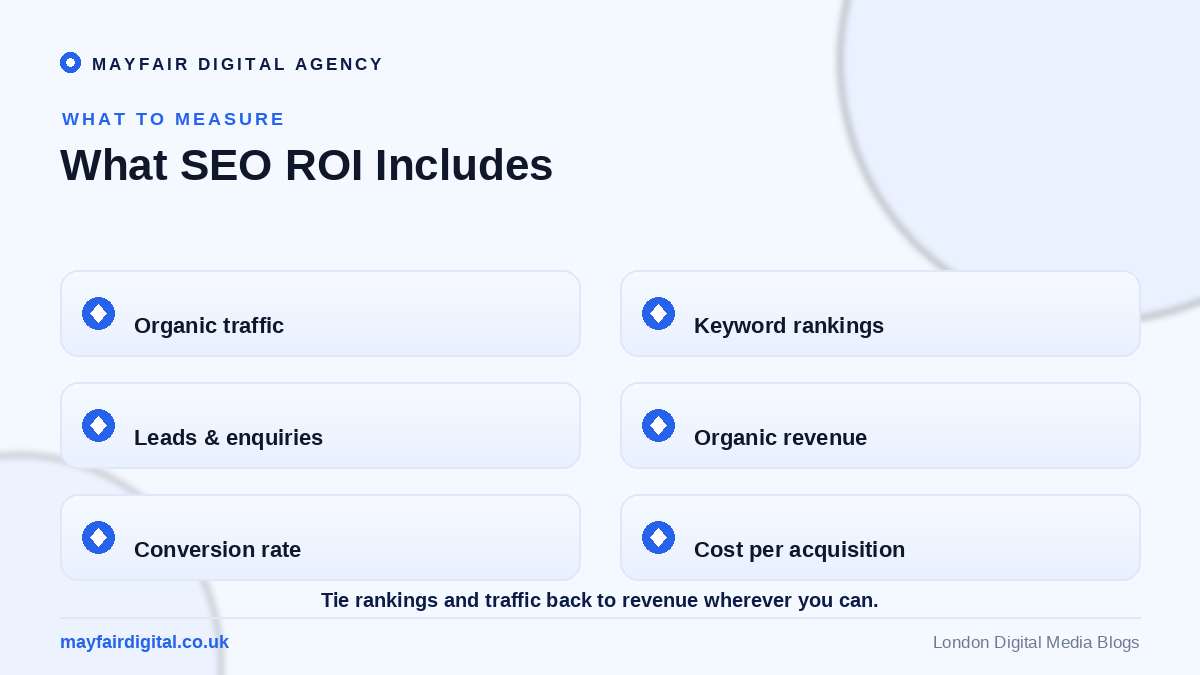
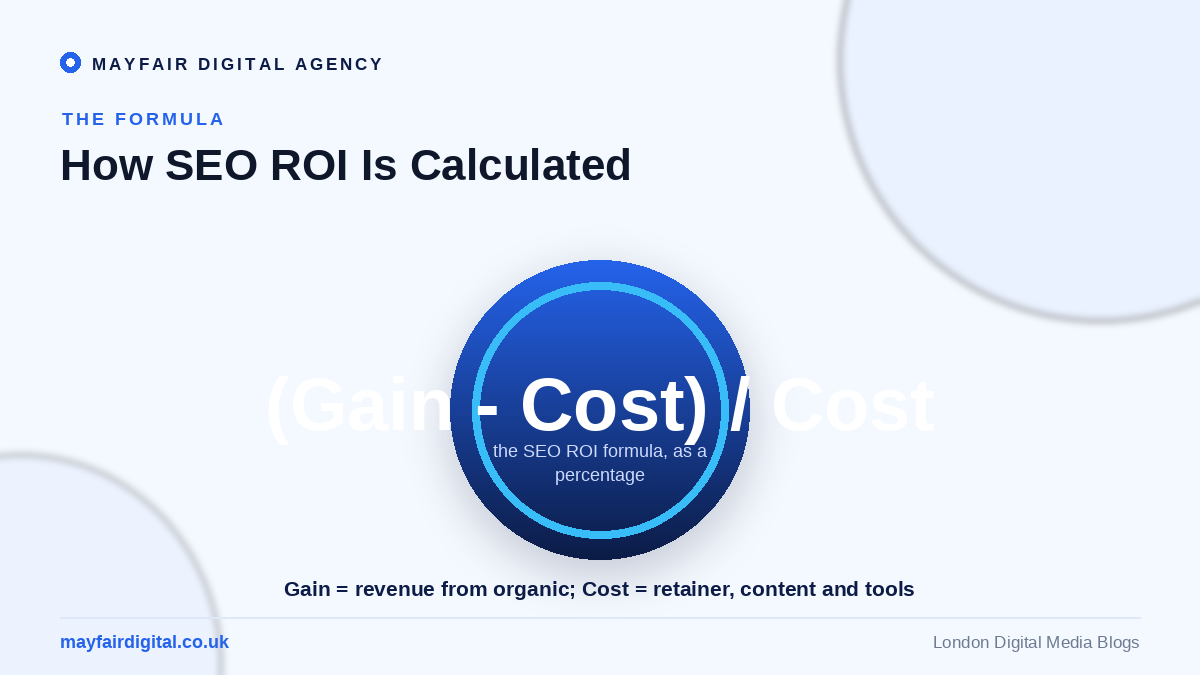
Effective SEO measurement focuses on outcomes, not vanity. The metrics that matter include organic traffic and its quality, rankings for valuable keywords, leads and sales generated from organic search, conversion rates, and ultimately the revenue attributable to SEO relative to its cost. These figures reveal whether your SEO is profitable.
Leading indicators are valuable too. Improvements in rankings, impressions and click-through rates often precede gains in traffic and revenue, signalling that the strategy is working before the full results arrive. A good agency tracks both leading and lagging metrics to give a complete picture.
How a Good Agency Proves ROI
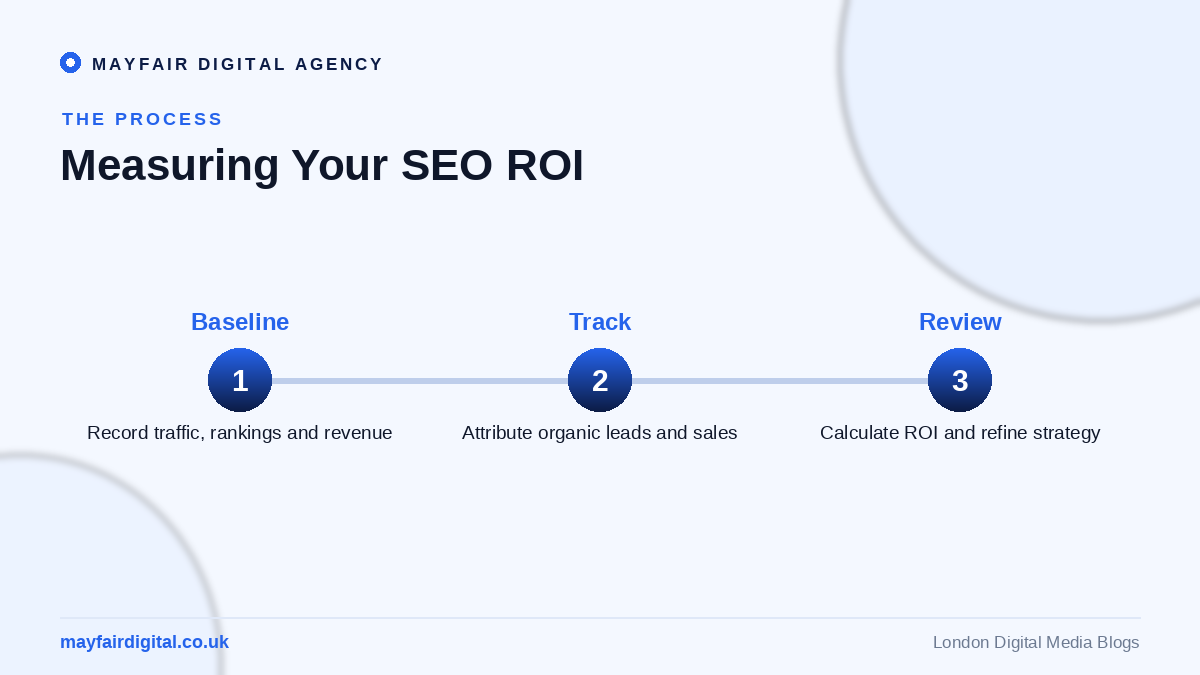
A capable SEO agency sets up proper tracking from the start, using analytics and search tools to connect organic performance to real business outcomes. It establishes clear goals, monitors meaningful metrics, and reports transparently in plain language — showing what was done, what changed and what comes next. This rigour turns SEO from a mysterious cost into a measurable, manageable investment.
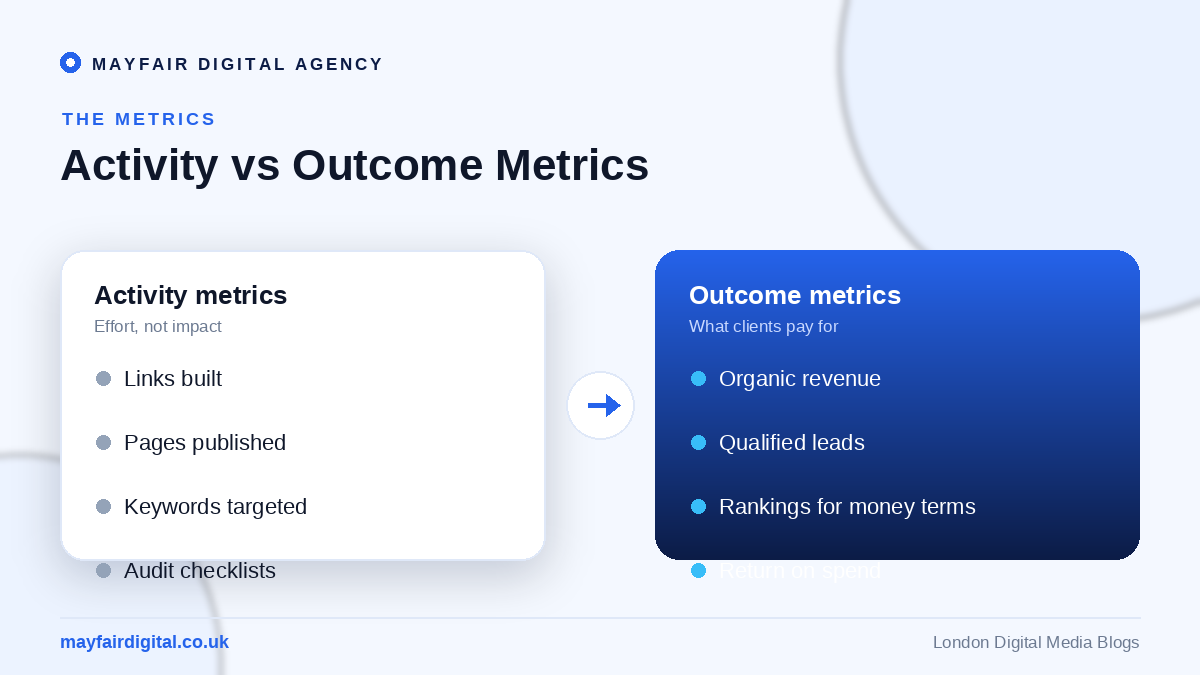
Beyond reporting, a good agency uses ROI data to improve. By analysing which efforts deliver the best returns, it refines the strategy, focusing resources where they generate the most value. This is where measurement becomes truly powerful — not just proving results, but driving them higher.
Frequently Asked Questions
How soon should I expect ROI from an SEO agency? Expect early progress within a few months and stronger returns over six to twelve months. SEO is a long-term investment that compounds, so judge it over quarters rather than weeks.
What is the most important SEO ROI metric? Revenue or leads from organic search relative to cost is the truest measure, supported by rankings and quality traffic as leading indicators of future results.
What if my agency cannot show clear ROI? An unwillingness or inability to connect SEO to results is a warning sign. A good agency embraces measurement and uses it to prove and improve the value it delivers.
Measure Your SEO Returns With Mayfair
Measuring the ROI of your SEO agency turns a long-term investment into an accountable, optimisable engine for growth. As a full-service digital media agency, Mayfair Digital Agency sets clear goals, tracks the metrics that matter and reports transparently, so you always know what your SEO is delivering. If you want SEO with results you can see, get in touch and let’s grow your organic returns together.
Setting Up Tracking for Accurate SEO Measurement
Accurate SEO ROI depends on having the right tracking in place before work begins. This means configuring web analytics to see how organic visitors behave, connecting search tools to monitor rankings and impressions, and setting up conversion tracking to capture the leads and sales that organic traffic generates. Without this infrastructure, attributing results to SEO becomes guesswork. A good agency treats measurement setup as a first priority, ensuring that every improvement can be traced through to a tangible business outcome rather than left as an unmeasured assumption.
This groundwork makes reporting genuinely meaningful. When tracking is robust, an agency can show not only that rankings improved but that the improved rankings brought more qualified visitors who converted into customers, painting a complete picture of the value SEO delivers to your bottom line.
Attribution and the Customer Journey
Organic search rarely acts alone in a customer’s journey. Someone might find you through search, return later via social media, and finally convert after an email. Because of this, judging SEO purely on last-click conversions can undervalue the crucial role it plays in discovery and consideration. A thoughtful agency considers SEO’s contribution across the whole journey, using sensible attribution rather than crediting only the final click, so its early-stage value is properly recognised.
Accepting that attribution will never be perfect is part of measuring maturely. By focusing on overall trends in organic traffic, leads and revenue rather than obsessing over every interaction, you can make confident decisions even within the real limits of tracking.
Comparing SEO ROI to Other Channels
One of the most compelling arguments for SEO emerges when you compare its ROI to other channels over time. While paid advertising stops delivering the moment you stop paying, the rankings and content built through SEO continue to attract traffic long after the work is done. This makes the long-term cost per acquisition from SEO remarkably low, often far lower than paid channels. Measuring this properly helps you appreciate SEO’s true value and allocate budget wisely across your marketing mix.
This is not to say SEO should replace other channels, but rather that understanding its distinctive, compounding ROI helps you balance short-term and long-term investments sensibly. The best strategies use paid media for immediate results while SEO builds a durable, cost-effective foundation underneath.
Turning Measurement Into Growth
The real purpose of measuring SEO ROI is not simply to keep score but to fuel growth. Each reporting cycle should end with clear decisions about which keywords, pages and tactics to double down on and which to rethink. By following the data, an agency steadily improves performance, compounding your returns over time. A partnership built on this disciplined loop of measuring, learning and refining becomes more valuable with every passing quarter.
Ultimately, measuring the ROI of your SEO agency keeps both sides focused, honest and aligned on the outcomes that matter. When you can see clearly what your SEO produces, you invest with confidence, hold your partner accountable, and build a relationship grounded in demonstrable, lasting results rather than hope.
Need expert help? Mayfair Digital Agency is a digital agency in London and full-service digital agency in London offering global SEO agency and more. Get in touch for a free consultation.


