




The Pros and Cons of Using Shopify for Your E-commerce Business
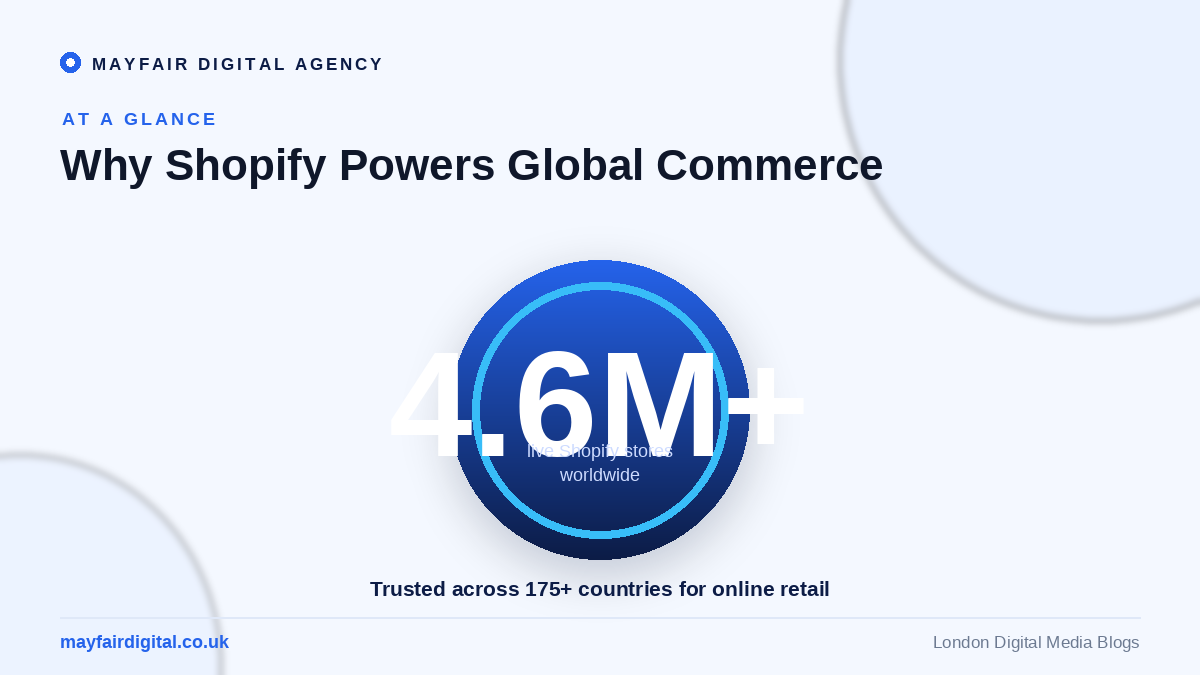
If you are launching or growing an online store, one platform comes up again and again: Shopify. It powers millions of businesses worldwide, from one-person side hustles to global brands. But popularity alone does not make it right for you. To make a confident decision, you need an honest look at the pros and cons of using Shopify for your e-commerce business — and that is exactly what this guide provides.
Below we weigh up the genuine strengths that make Shopify the default choice for so many merchants, alongside the limitations worth knowing before you commit. The goal is not to sell you on the platform, but to help you decide whether it fits your products, your budget and your ambitions.
The Pros of Using Shopify
Shopify’s biggest advantage is how quickly it lets you get a professional store online. You do not need to be a developer or a designer. The platform handles hosting, security, payments and updates behind the scenes, so you can focus on products and customers rather than technical plumbing. For most new merchants, this alone is worth the price of entry.
Ease of use runs through everything. The dashboard is intuitive, adding products is straightforward, and managing orders, inventory and customers happens in one tidy place. This gentle learning curve means you spend your time selling rather than wrestling with software, which matters enormously when you are wearing every hat in the business.
The platform is also built to scale. A store that starts with ten products and a handful of orders can grow into one handling thousands without changing platforms. Shopify’s infrastructure absorbs traffic spikes — during a sale or a viral moment — that would crash a poorly hosted site, giving you room to grow with confidence.
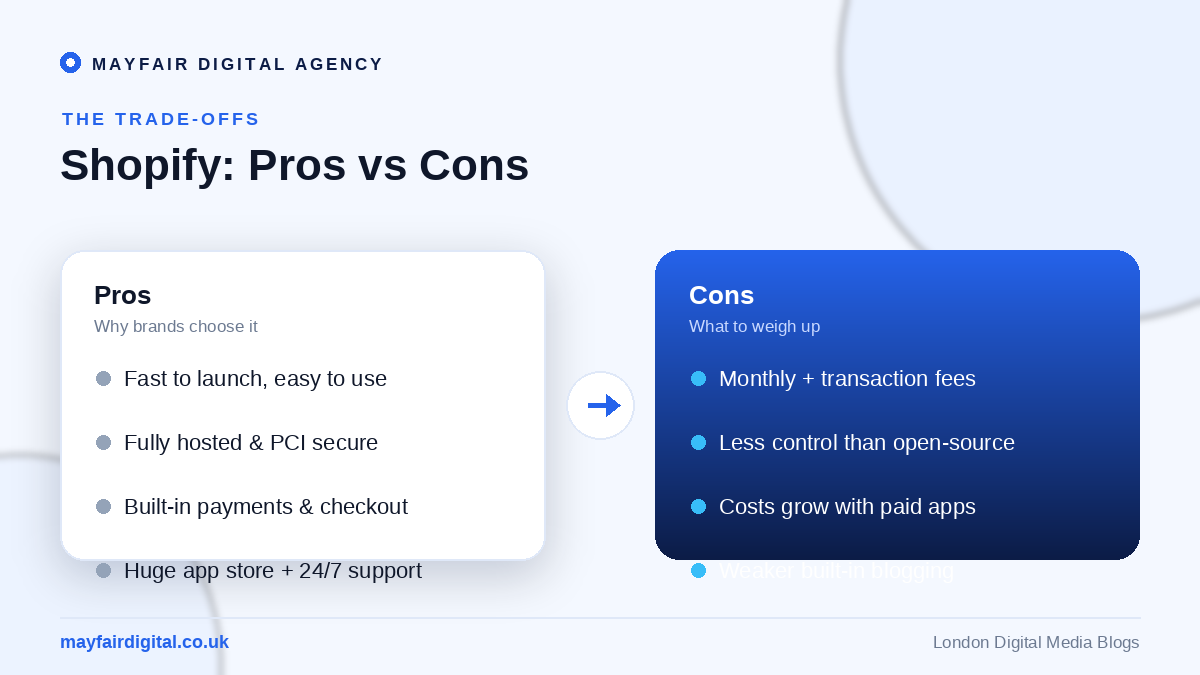
Then there is the app ecosystem. Shopify’s App Store offers thousands of add-ons for email marketing, reviews, loyalty programmes, upselling, accounting and far more. This means you can extend your store’s capabilities almost infinitely, adopting powerful tools without commissioning custom development. Whatever you want your store to do, there is usually an app for it.
Shopify is strong on the things that quietly drive sales, too: mobile-responsive themes, fast and secure checkout, abandoned-cart recovery and seamless integration with social platforms and marketplaces. These conversion-friendly features are baked in, so even a modest store benefits from best practices that would be expensive to build from scratch.
Finally, support is a genuine plus. Shopify offers 24/7 assistance, extensive documentation and a vast community of merchants and experts. When something goes wrong at an awkward hour, knowing help is available brings real peace of mind that self-hosted alternatives rarely match.
The Cons of Using Shopify
No platform is perfect, and Shopify’s costs are the most common concern. Beyond the monthly subscription, you may pay for premium themes, apps and transaction fees if you do not use Shopify Payments. Individually these are small, but they add up, and it is wise to map your likely monthly total before committing rather than being surprised later.
Customisation has limits as well. While themes are flexible, achieving a truly bespoke design or unusual functionality can require working with Shopify’s own templating language, Liquid, or hiring a developer. Merchants with very specific or complex requirements sometimes find the platform’s guardrails frustrating compared with a fully open-source build.
Transaction fees deserve a closer look. If you choose a third-party payment gateway instead of Shopify Payments, the platform charges an additional fee on every sale. For high-volume stores, this can become significant, so it pays to understand the payment options and their costs from the outset.
There is also the question of ownership and lock-in. Because Shopify is a hosted, closed platform, you are operating within its ecosystem and rules. Migrating away later is possible but can be involved, and you are ultimately dependent on Shopify’s pricing and policy decisions. For most merchants this trade-off is well worth the convenience, but it is a real consideration.
Lastly, content and SEO flexibility, while solid, is not limitless. Shopify’s URL structures and blogging tools are perfectly capable, but businesses with very content-heavy strategies occasionally find dedicated content platforms more accommodating. For the vast majority of stores, however, Shopify’s SEO features are more than enough to compete.
Who Shopify Is Best For
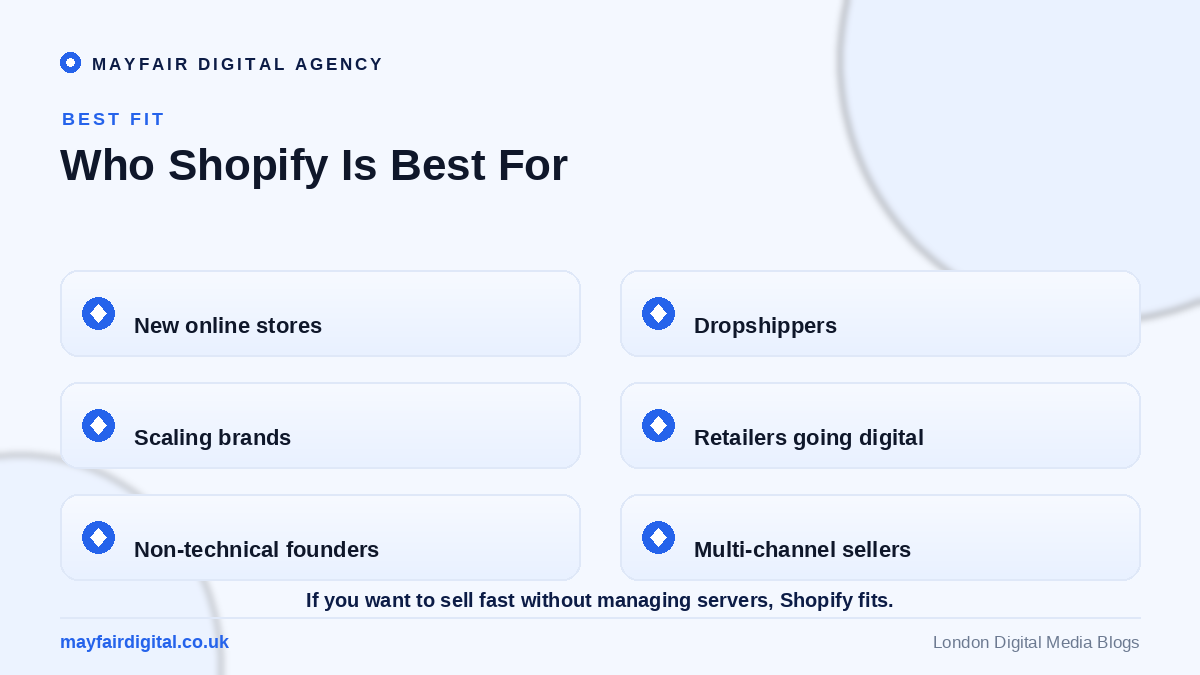
Shopify suits the overwhelming majority of e-commerce businesses, and especially those who want to launch quickly, sell across multiple channels and grow without managing technical infrastructure. If your priority is getting to market fast with a reliable, scalable store, Shopify is hard to beat.
It is less ideal for businesses with highly unusual requirements, extremely tight margins that cannot absorb app and transaction costs, or a need for total control over every line of code. Even then, many such businesses still choose Shopify and work around the limitations, because the time and reliability it buys back are so valuable.
Making the Most of Shopify
The merchants who get the best results treat Shopify as a foundation to optimise rather than a finished product. They choose apps deliberately to avoid bloat and slowdowns, invest in a fast, well-designed theme, and continually improve their product pages and checkout based on real data. A little expertise applied to the platform’s strengths goes a long way.
This is also where a specialist partner adds value. From store setup and theme customisation to SEO and conversion optimisation, expert help ensures you exploit Shopify’s strengths while sidestepping its pitfalls, turning a capable platform into a genuinely high-performing store.
Frequently Asked Questions
Is Shopify worth the monthly cost? For most businesses, yes. The time saved, reliability gained and built-in conversion features typically far outweigh the subscription and app costs, especially as the store grows.
Can I customise my Shopify store? Yes, extensively through themes and apps, and even further with Liquid or a developer. Only the most unusual requirements bump against its limits.
Are there cheaper alternatives to Shopify? There are, including open-source options, but they usually shift costs into hosting, security and development time. Shopify’s value lies in bundling all of that into one reliable, supported package.
Build a High-Performing Shopify Store With Mayfair
Shopify’s pros comfortably outweigh its cons for most e-commerce businesses, provided you set it up and run it well. As a full-service digital media agency, Mayfair Digital Agency helps merchants design, optimise and grow Shopify stores that load fast, rank well and convert browsers into buyers. If you want to get the very best from the platform, get in touch and let’s build your store the right way.
Getting Started With your Shopify store
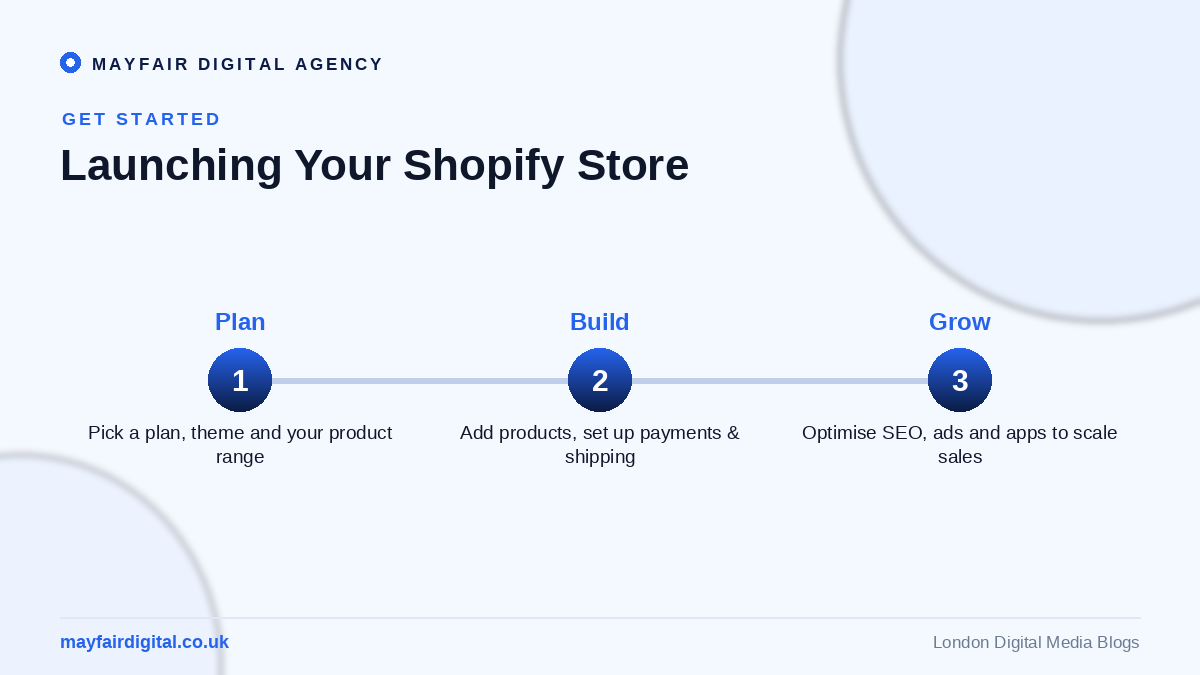
Putting all of this into practice does not have to be overwhelming. The most effective approach to your Shopify store is to begin with a clear goal, get the fundamentals right first, and improve steadily based on real results rather than guesswork. Small, consistent steps compound into significant gains over time, and a deliberate plan will always outperform sporadic bursts of effort.
It also helps to review your progress regularly. By tracking the metrics that genuinely matter to your business and adjusting course when the data points the way, you keep your Shopify store working as an engine for growth rather than a box-ticking exercise. The brands that win are the ones that treat this as an ongoing discipline, not a one-off task to be completed and forgotten.
And if you would rather focus on running your business while experts handle the detail, that is exactly where a specialist partner earns its keep. As a full-service digital media agency, Mayfair Digital Agency helps businesses get real, measurable results from your Shopify store — combining strategy, creativity and data so every effort drives toward growth. Get in touch and let’s build something that lasts.
Need expert help? Mayfair Digital Agency is a digital agency in London and full-service digital agency in London offering website design in London and more. Get in touch for a free consultation.


