



Major Changes in Google Search Results and SEO Strategies
Google has made a series of major changes to its Google Search results and ranking systems — and together they have reshaped SEO strategy for 2026. From fewer results per page to tighter limits on AI crawlers, here is what changed, why it matters, and how to adapt.
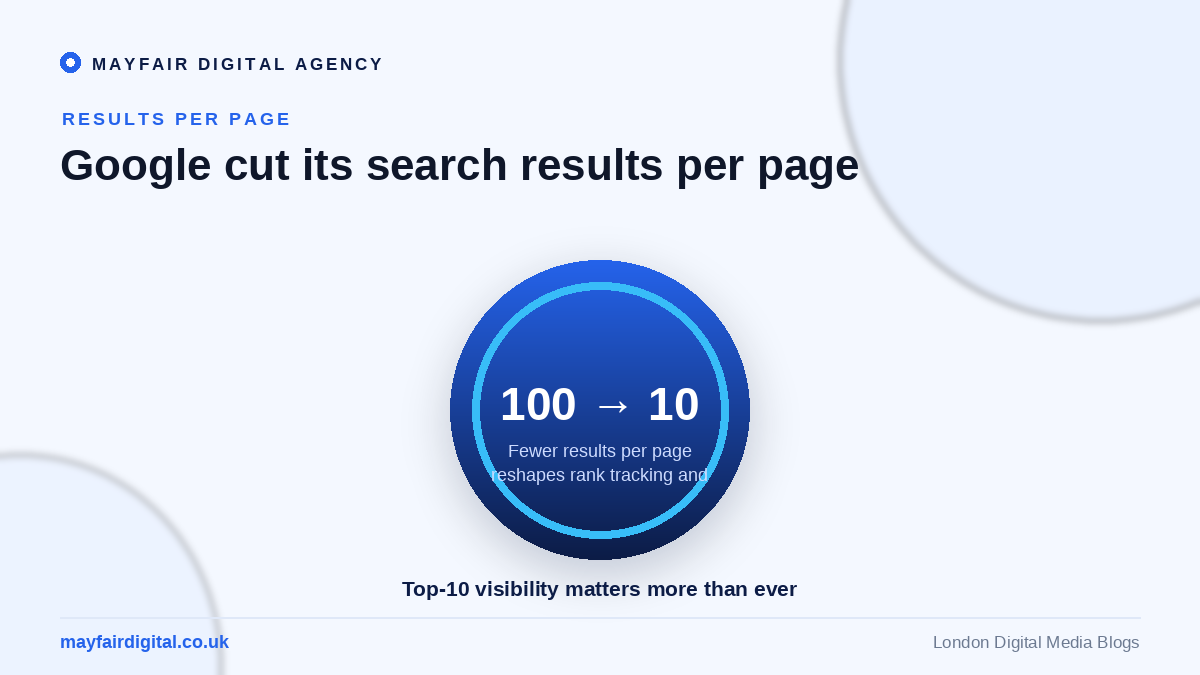
1. From 100 to 10 Results Per Page
Google removed the long-standing option to show 100 results per page (the “&num=100” parameter), effectively standardising on 10 results per page. For users it means more pages to browse; for SEO it disrupts rank-tracking tools that relied on pulling 100 results at once, and it makes genuine top-10 visibility more valuable than ever.
2. AI Crawlers Lose Web Depth
Google has also tightened how much of its results AI-powered tools (such as those from OpenAI, Anthropic and Perplexity) can access, sharply reducing the “web depth” available to third-party scrapers. The practical effect is that marketers must rely less on bulk data extraction and more on first-party measurement and genuine authority — closely related to Google’s wider AI Search expansion.
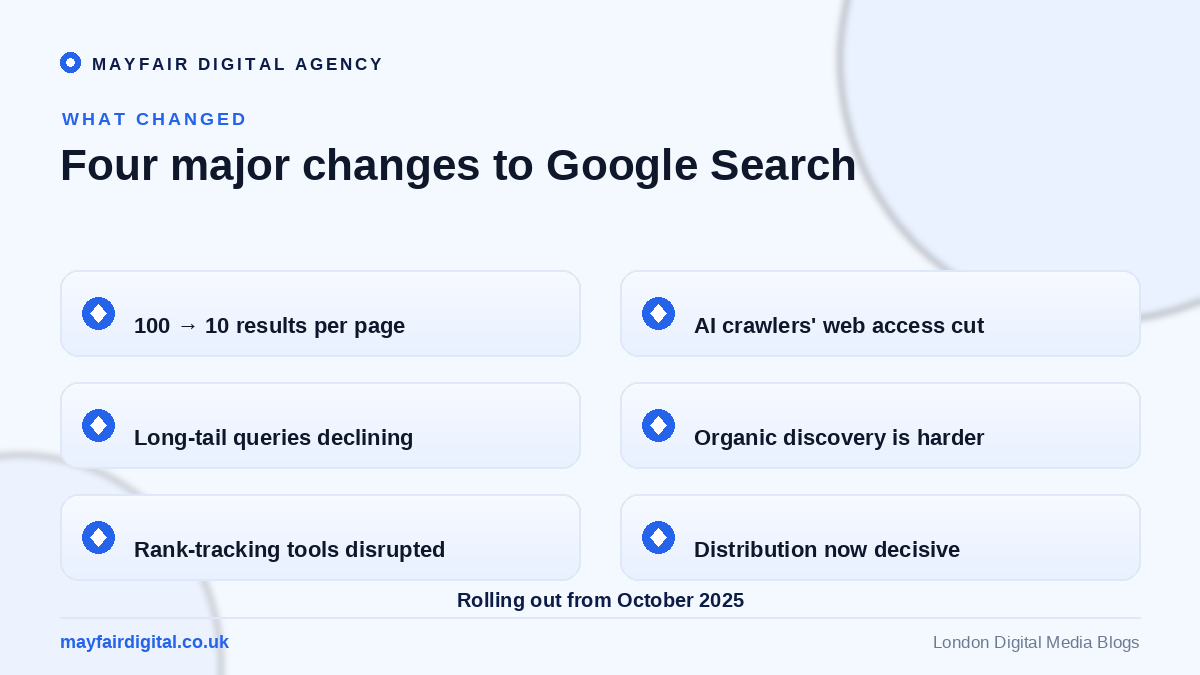
3. Long-Tail Queries Are Declining
As AI answers absorb more niche, specific questions directly in the results, many long-tail queries are losing visibility and traffic. The takeaway is not to abandon specificity, but to focus on concise, high-intent topics and cluster related questions into authoritative, comprehensive content.
4. Organic Discovery Is Harder for New Brands
Building a great product or service is no longer enough — distribution is now just as important as quality. With organic discovery tougher for newcomers, a winning strategy blends SEO with content distribution, social media and brand-building, rather than relying on search alone.
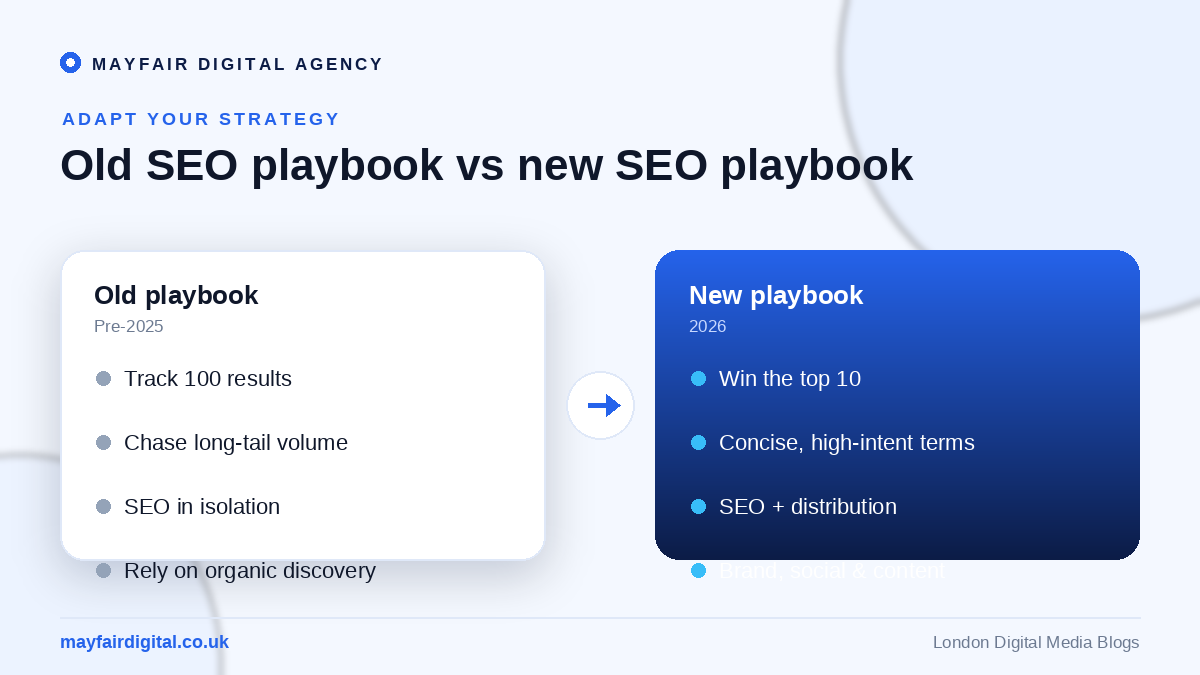
What These Changes Mean for Your SEO
- Re-baseline your rank tracking and focus on real top-10 visibility.
- Prioritise concise, high-intent keywords and strong topical clusters.
- Pair SEO with distribution — social, email, PR and partnerships.
- Invest in brand and first-party data as third-party access tightens.
- Track visibility inside AI results, not just classic rankings.
Google’s Recent Run of Search Changes
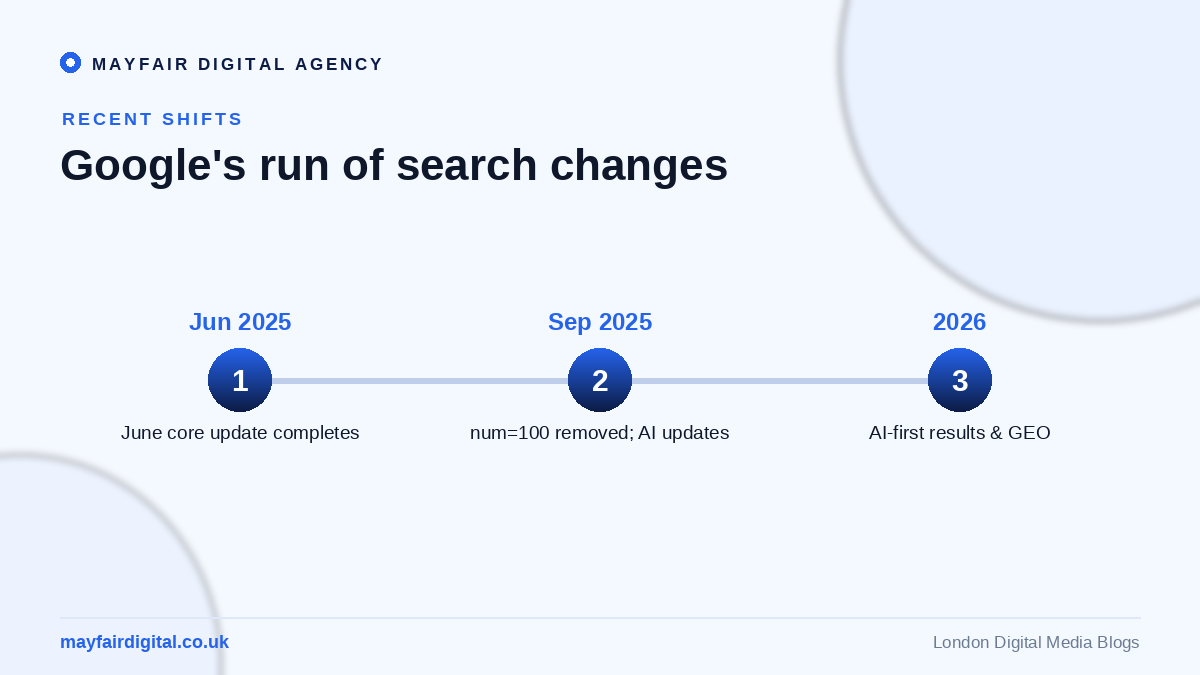
These updates signal a broader shift: SEO is no longer just keywords and content, but a wider strategy spanning user experience, distribution and AI visibility. For the bigger picture, see the future of SEO and the top SEO trends for 2026. Google details its updates on the official Google blog.
Frequently Asked Questions
Why did Google reduce results per page to 10?
Google removed the &num=100 parameter, so most searches now return 10 results per page. It streamlines the experience and limits bulk scraping, but it disrupts rank-tracking tools and raises the importance of top-10 visibility.
How do these Google Search changes affect SEO?
They push SEO toward concise, high-intent content, stronger brands, and distribution beyond search. With long-tail visibility declining and AI answers rising, measuring AI visibility becomes essential.
What should new businesses do about organic discovery?
Combine quality with distribution: invest in social, email, PR and partnerships alongside SEO, and build genuine authority so both Google and AI engines trust your brand.
Need help adapting to Google’s latest changes? Talk to Mayfair Digital Agency, or explore our SEO and digital marketing services.