




The Eternal Digital Dilemma: Organic Growth Versus Paid Visibility
Few questions divide marketers like this one: should you invest in organic growth or paid visibility? One promises durable, compounding results built on trust; the other delivers fast, controllable reach at a cost. The truth is that this is not really a battle to be won but a balance to be struck, and understanding the strengths and trade-offs of each is the key to building a marketing strategy that delivers both immediate impact and lasting growth.
This guide breaks down what organic and paid really offer, where each excels, and how to combine them intelligently. Whether you are working with a limited budget or planning an ambitious campaign, knowing how to weigh these approaches will help you spend smarter and grow faster.
Understanding Organic Growth
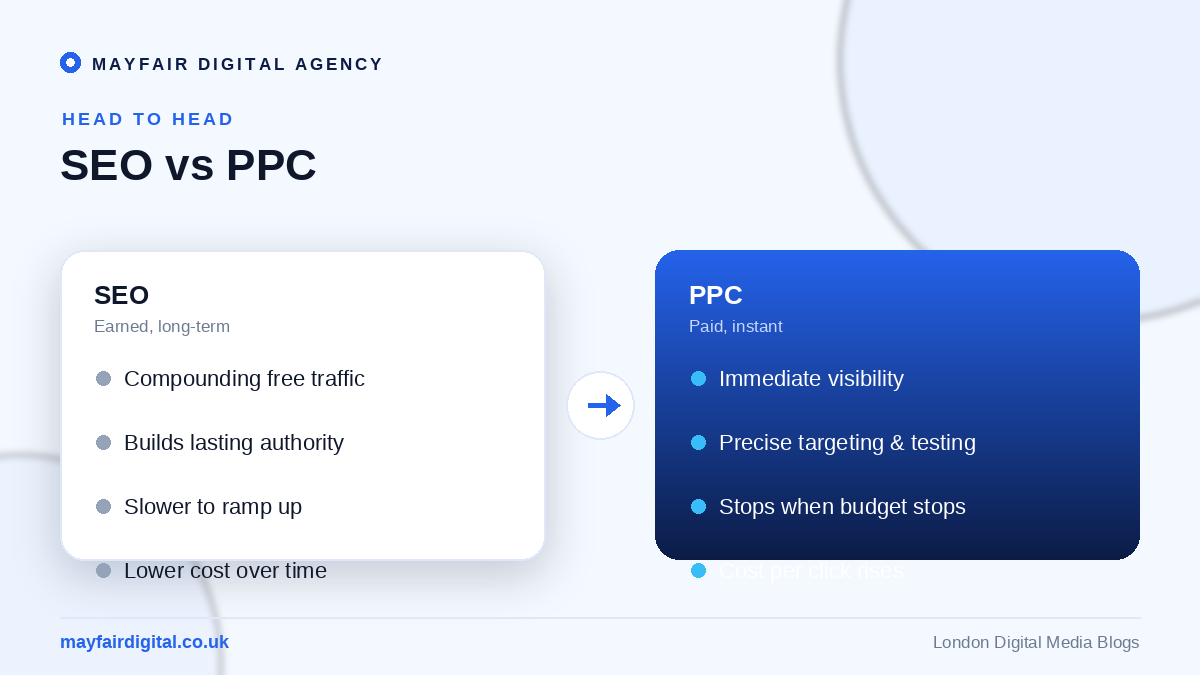
Organic growth comes from earning visibility rather than paying for it — through SEO, content, social media engagement and word of mouth. Its great strength is durability: a blog post that ranks well or a piece of content that resonates can keep attracting audiences for months or years at no ongoing cost. Organic also builds genuine trust, because people tend to view earned visibility as more credible than advertising.
The trade-off is time. Organic growth is a long game that requires patience and consistent effort before it pays off. Rankings take months to build, audiences grow gradually, and results are harder to control. But once established, organic visibility becomes a compounding asset that lowers your reliance on paid channels.
Understanding Paid Visibility
Paid visibility — search ads, social ads and other promoted placements — offers the opposite profile. Its great strength is speed and control: you can appear in front of precisely targeted audiences almost instantly, scale up or down at will, and measure results directly. For launches, promotions or entering competitive markets, paid visibility delivers immediate reach that organic cannot match.
The trade-off is that paid visibility stops the moment you stop paying. It is effectively rented attention, and costs can rise in competitive markets. Without a strategy to convert that attention into lasting relationships, paid spending can become a treadmill that demands ever more budget to maintain the same results.
The Case for Combining Both
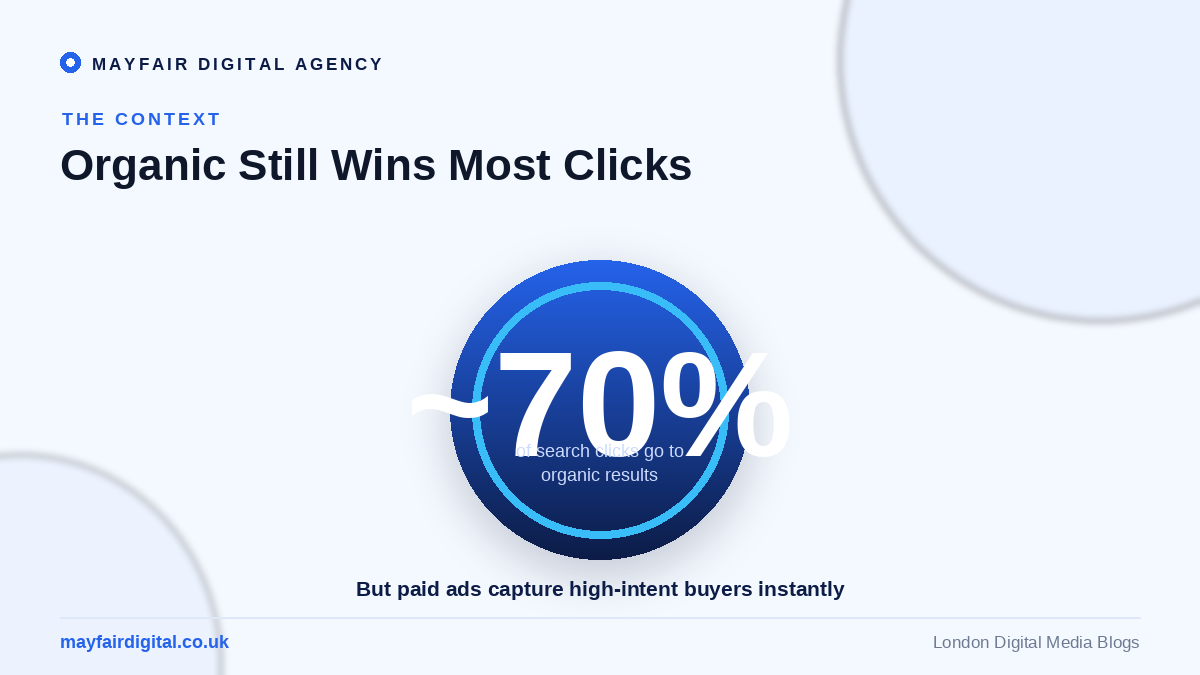
The most effective strategies rarely choose one over the other; they combine the two so each compensates for the other’s weaknesses. Paid visibility delivers immediate results while organic builds in the background, and the data gathered from paid campaigns can sharpen organic targeting and content. Over time, as organic grows, reliance on paid can reduce, improving overall efficiency.
This complementary approach also captures audiences at every stage. Paid ads can capture high-intent searchers ready to buy now, while organic content nurtures those still researching, building the trust that turns them into customers later. Together, they cover the full customer journey.
How to Balance Organic and Paid
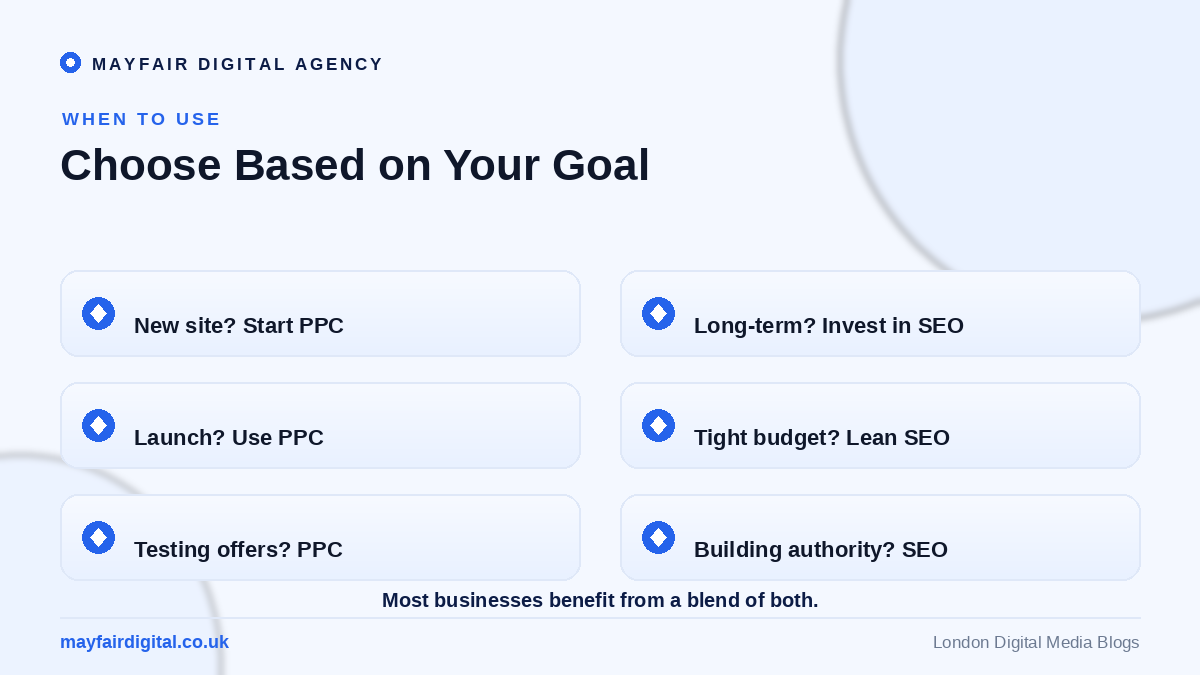
The right balance depends on your goals, timeline and budget. Businesses needing fast results or launching something new often lean on paid initially, while those building for the long term invest steadily in organic. A common and effective approach is to use paid visibility for immediate impact while consistently building organic assets that gradually reduce the need for paid spend.
Frequently Asked Questions
Is organic or paid better for my business? Neither is universally better; they serve different purposes. Most businesses benefit from combining both, using paid for speed and organic for durable, compounding growth.
Can I succeed with organic alone? Yes, but it takes time and consistency. Many businesses use paid visibility to drive early results while organic builds, then lean more on organic over time.
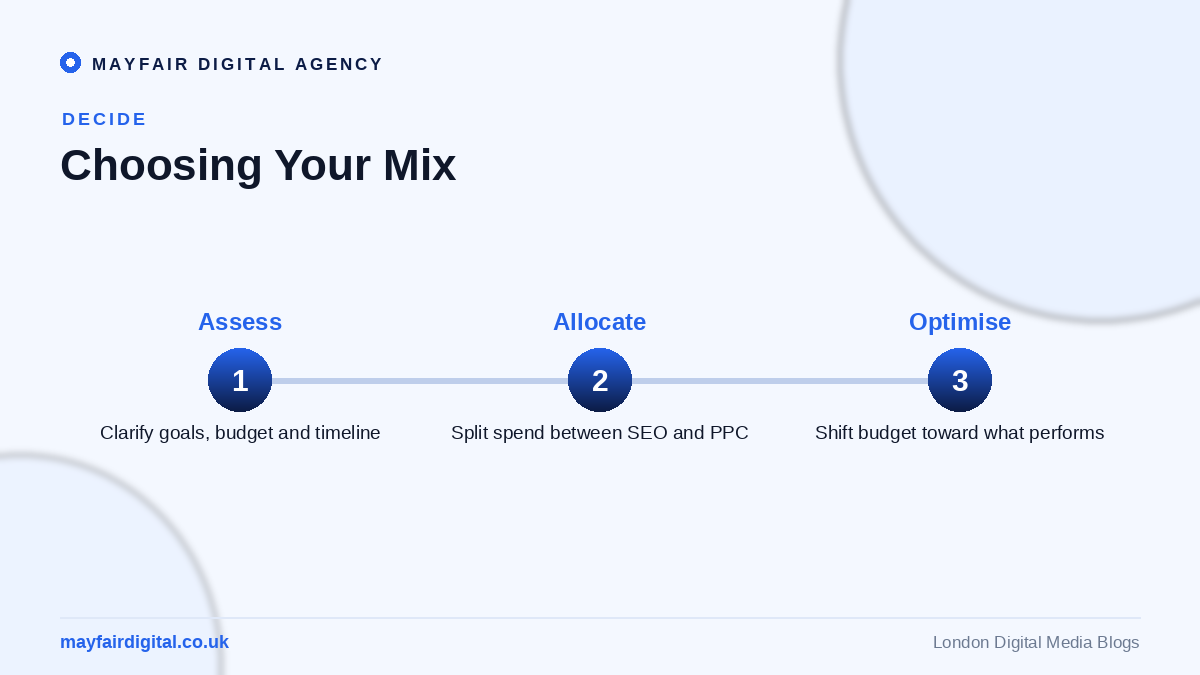
How should I split my budget between organic and paid? It depends on your goals and timeline. A balanced approach often works best, with the mix shifting toward organic as those assets mature and reduce reliance on paid.
Find Your Perfect Balance With Mayfair
The organic versus paid dilemma is best resolved not by choosing sides but by combining both into a strategy that delivers immediate impact and lasting growth. As a full-service digital media agency, Mayfair Digital Agency builds integrated strategies that balance paid visibility with durable organic assets. If you want the best of both worlds, get in touch and let’s design a strategy that grows your business now and for years to come.
How Organic and Paid Strengthen Each Other
One of the most underappreciated truths in marketing is how powerfully organic and paid reinforce one another when used together. Paid campaigns generate fast data about which messages, keywords and audiences convert, and those insights can be fed straight into your organic content and SEO strategy, making it sharper from the outset. In the other direction, strong organic content gives your paid campaigns better landing pages and a more credible brand presence, which improves ad performance and lowers costs. Run in isolation, each channel works; run together, they create a virtuous cycle where the whole is greater than the sum of its parts.
Retargeting is a perfect example of this synergy. Organic content draws new visitors to your site, and paid retargeting then re-engages those who did not convert the first time, gently guiding them back. Neither channel could achieve this alone, but together they capture value that would otherwise be lost.
Common Mistakes to Avoid
Businesses often stumble by treating organic and paid as rivals rather than partners. Some pour everything into paid ads and neglect the organic assets that would reduce their costs over time, leaving themselves dependent on an expensive treadmill. Others rely solely on organic and miss the immediate opportunities that paid visibility can capture. Another frequent error is impatience with organic — abandoning SEO and content just before they begin to pay off, wasting the investment already made.
The remedy is to view your marketing as a single, integrated system with a clear plan for both channels. By setting realistic expectations for each and giving organic the time it needs while paid delivers near-term results, you avoid these traps and build a balanced strategy that performs across every time horizon.
Measuring Success Across Both Channels
To balance organic and paid effectively, you need to measure both honestly. Track the cost and return of paid campaigns alongside the steadily growing traffic and conversions from organic, and look at how they interact across the customer journey. Over time, you should see organic assets carrying more of the load, allowing you to optimise your paid spend rather than simply increasing it. This measurement-led approach ensures your budget is always working as efficiently as possible.
It also helps to review the balance periodically. As your organic presence matures and market conditions change, the ideal split between organic and paid will shift, and a regular review keeps your strategy aligned with your goals and the best possible return.
A Balanced Strategy Wins in the Long Run
The eternal dilemma of organic versus paid dissolves once you recognise that the strongest strategies use both in harmony. Paid visibility delivers the speed, control and immediate reach that growing businesses need, while organic growth builds the durable, trusted foundation that lowers costs and compounds over time. Together, they cover every stage of the customer journey and every time horizon, from this week’s sales to next year’s brand strength.
Rather than asking whether to choose organic or paid, the smarter question is how to combine them for your specific goals and budget. Answer that well — on your own or with an expert partner — and you build a marketing strategy that is both resilient and high-performing, capable of driving growth today while steadily building the assets that will power it tomorrow.
In short, the businesses that win online are rarely the ones that pick a side in the organic-versus-paid debate. They are the ones that understand each approach deeply, deploy them where they are strongest, and let them feed one another over time. Start with a clear view of your goals and resources, give organic the patience it requires, use paid to capture immediate opportunities, and keep measuring how the two work together. Do that consistently, and you will build a marketing engine that delivers both the quick wins and the lasting growth every business ultimately needs.
Need expert help? Mayfair Digital Agency is a London digital agency and full-service digital agency in London offering Google Ads management and more. Get in touch for a free consultation.


