




The Digital High Street is Booming: SEO for Online Stores
The high street has not died — it has moved online. Shoppers still browse, compare and buy with enthusiasm; they simply do it through search engines instead of pavements. That shift makes SEO for online stores the single most valuable form of marketing an e-commerce business can invest in. When your products appear at the top of search results, you capture customers at the exact moment they are ready to buy.
This guide explains why search has become the new digital high street, how e-commerce SEO actually works, and the practical steps that help an online store climb the rankings and win more sales. Whether you run a Shopify shop or any other store, these principles apply.
Why Search Is the New High Street
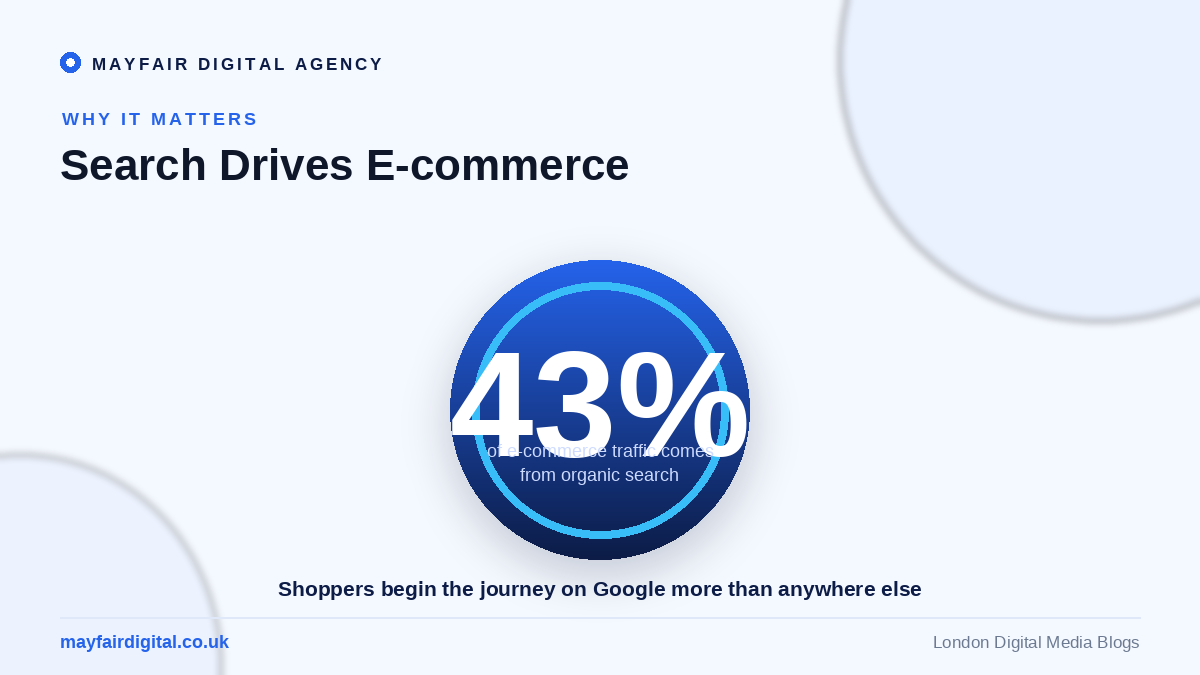
Think about how people shop today. When they want something, they do not wander into town hoping to find it — they type it into a search engine. The stores that appear on the first page are the ones that get visited, just as the shops with the best high-street locations once attracted the most footfall. Ranking well is the modern equivalent of owning the prime corner unit.
The crucial difference is intent. Someone searching “buy waterproof hiking boots” is far closer to purchasing than someone idly scrolling social media. SEO lets you meet that high-intent shopper precisely when their wallet is open, which is why the traffic it delivers tends to convert so well and cost so little over time.
And unlike paid advertising, organic rankings keep working long after the effort is made. A product page that climbs to the top of search results can deliver free, qualified traffic for months or years. That compounding return is what makes SEO for online stores such a powerful long-term asset rather than a recurring expense.
How E-Commerce SEO Works
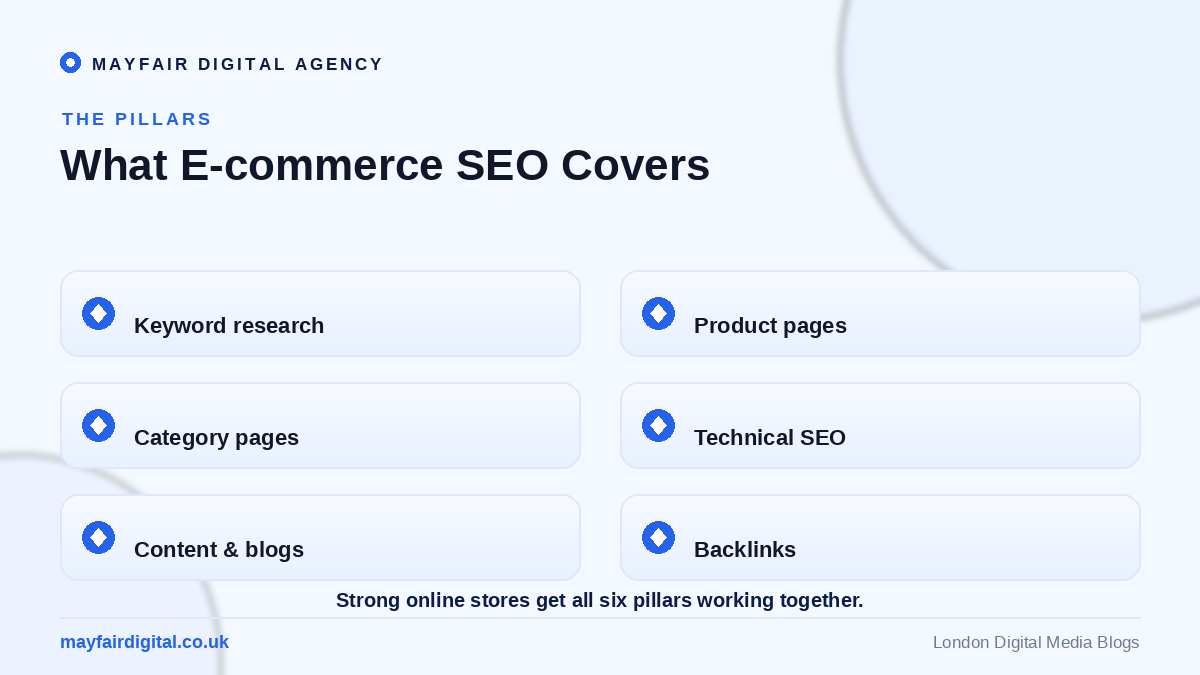
At its heart, SEO is about helping search engines understand your store and trust it enough to recommend it. That breaks down into a few connected disciplines: keyword research to learn what your customers search for, on-page optimisation to align your pages with those searches, technical SEO to ensure the site is fast and crawlable, and authority building to earn credibility through quality links and content.
For online stores, this work happens at every level — the homepage, category pages, individual product pages and the blog. Each plays a role, and the most successful stores optimise them as a system so that authority flows through the whole site rather than concentrating on a single page.
Keyword Research: Speak Your Customers’ Language
Everything starts with understanding the words your customers actually use. Keyword research reveals not only the obvious product terms but the long-tail phrases — more specific searches with less competition — that often convert best. A store that targets “organic cotton baby grows” as well as “baby clothes” captures buyers who know exactly what they want.
Mapping these keywords to the right pages is just as important. Broad terms suit category pages, while specific terms belong on individual product pages. Getting this structure right ensures each page has a clear job and the best possible chance of ranking for the searches that matter.
On-Page Optimisation for Product and Category Pages
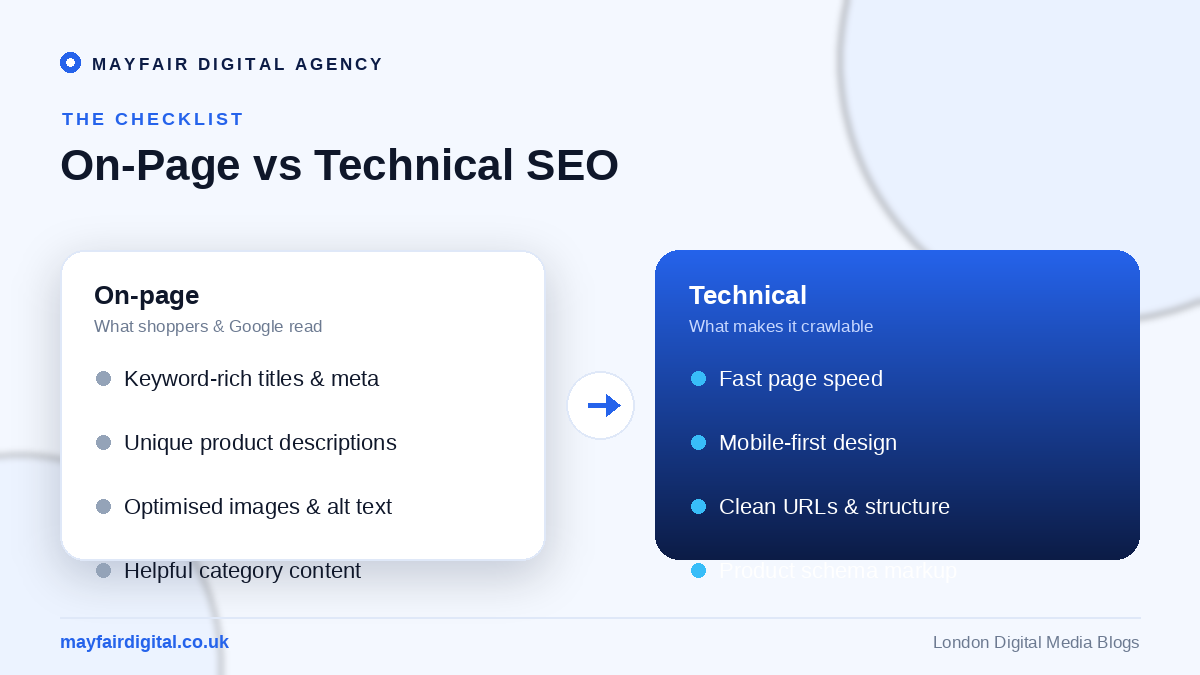
On-page SEO is where many online stores leave easy wins on the table. Unique, descriptive product titles and meta descriptions, keyword-rich but genuinely helpful product descriptions, optimised image alt text and clean, logical URLs all signal relevance to search engines. Thin or duplicated descriptions — a common problem when manufacturers’ copy is pasted in — actively hold stores back.
Category pages deserve special attention because they often target the highest-value keywords. Adding a short, useful block of introductory content to a category page, alongside the product grid, can dramatically improve its ability to rank without harming the shopping experience.
Technical SEO: Speed, Structure and Crawlability
A beautiful store that loads slowly or confuses search engines will struggle no matter how good its products are. Technical SEO ensures fast page-load times, mobile-friendliness, secure HTTPS, a logical site structure and clean internal linking. It also includes structured data, which helps search engines display rich results like star ratings and prices that boost click-through rates.
Site speed in particular has a double benefit: it pleases both search engines and shoppers. Every second shaved off load time tends to improve rankings and reduce the number of impatient visitors who abandon before the page even appears.
Content Marketing: Capturing Demand Early
Not every shopper is ready to buy immediately. Content marketing — buying guides, comparisons, how-to articles and answers to common questions — lets a store capture customers earlier in their journey and build trust along the way. A guide that ranks for “how to choose running shoes” introduces your brand to buyers long before they reach a product page.
This content also strengthens the whole site’s authority and creates natural opportunities to link to relevant products. Done well, it turns a store into a genuinely useful resource, which is exactly what both customers and search engines reward.
Building Authority and Trust
Search engines treat links from other reputable sites as votes of confidence. Earning these through quality content, digital PR, partnerships and genuine relationships gradually builds the authority a store needs to rank for competitive terms. Reviews and a strong brand presence reinforce that trust further, signalling that real customers value what you sell.
Frequently Asked Questions
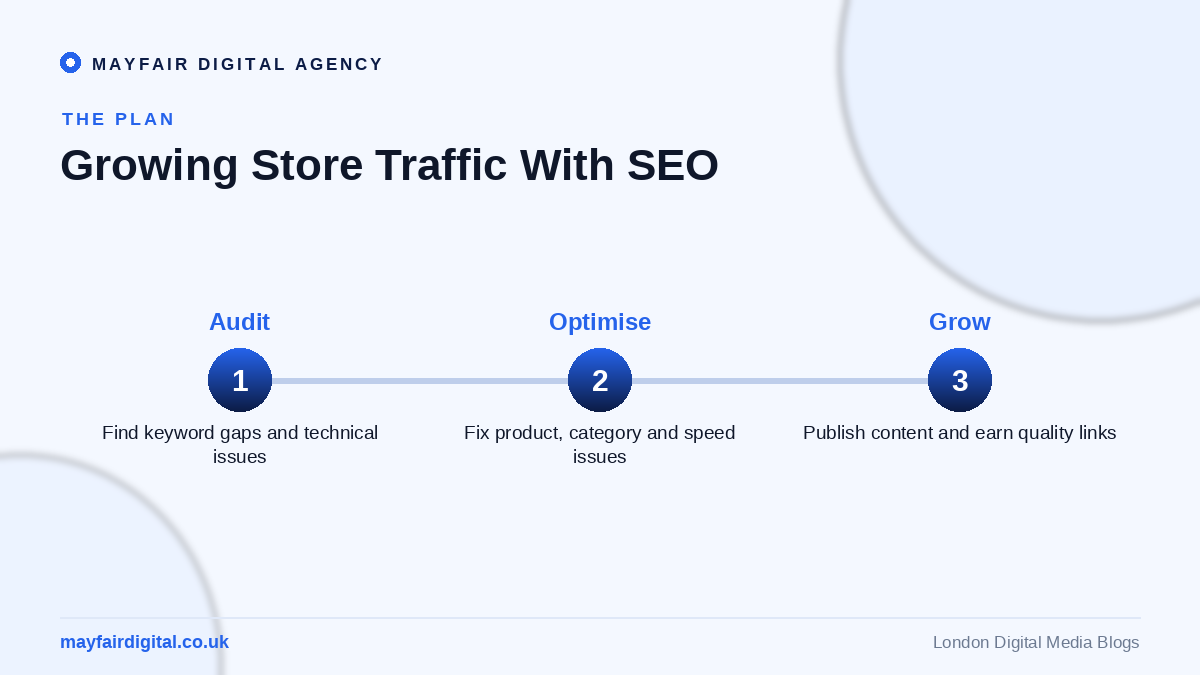
How long does e-commerce SEO take to work? Expect early movement within a few months and more significant gains over six to twelve months. SEO is a long-term investment whose returns compound over time.
Is SEO better than paid ads for online stores? They work best together. Ads deliver immediate traffic while SEO builds a durable, lower-cost channel. Most successful stores invest in both.
Can I do e-commerce SEO myself? The fundamentals are learnable, but competitive markets often reward specialist expertise. Many store owners handle the basics and bring in help to accelerate results.
Win the Digital High Street With Mayfair
The digital high street is booming, and SEO for online stores is how you claim your spot on it. As a full-service digital media agency, Mayfair Digital Agency helps e-commerce businesses rank higher, attract high-intent shoppers and turn search traffic into sales. If you want your store to be the one customers find first, get in touch and let’s grow your visibility together.
Getting Started With SEO for your online store
Putting all of this into practice does not have to be overwhelming. The most effective approach to SEO for your online store is to begin with a clear goal, get the fundamentals right first, and improve steadily based on real results rather than guesswork. Small, consistent steps compound into significant gains over time, and a deliberate plan will always outperform sporadic bursts of effort.
It also helps to review your progress regularly. By tracking the metrics that genuinely matter to your business and adjusting course when the data points the way, you keep SEO for your online store working as an engine for growth rather than a box-ticking exercise. The brands that win are the ones that treat this as an ongoing discipline, not a one-off task to be completed and forgotten.
And if you would rather focus on running your business while experts handle the detail, that is exactly where a specialist partner earns its keep. As a full-service digital media agency, Mayfair Digital Agency helps businesses get real, measurable results from SEO for your online store — combining strategy, creativity and data so every effort drives toward growth. Get in touch and let’s build something that lasts.
Local SEO: Winning Nearby Shoppers
Many online stores also serve a local audience, whether through delivery zones, click-and-collect or a physical shop behind the website. Local SEO — optimising for “near me” searches, maintaining an accurate Google Business Profile and gathering local reviews — helps these stores capture nearby buyers who are ready to purchase today. Combining local and traditional e-commerce SEO widens your reach and captures demand that competitors focused on only one approach will miss.
The takeaway is simple: search has become the high street, and the stores that invest in being found are the ones that thrive. By treating SEO as an ongoing discipline rather than a one-time fix, an online store steadily builds a stream of free, high-intent traffic that grows more valuable with every passing month.
Need expert help? Mayfair Digital Agency is a London digital agency and full-service digital agency in London offering global SEO agency and more. Get in touch for a free consultation.


