




The Quiet Revolution: How Podcasts Influence Media Consumption
While flashier formats grab the headlines, a quieter revolution has been reshaping how people consume media: the rise of podcasts. Once a niche hobby, podcasting has grown into a mainstream habit, with millions of people listening during their commutes, workouts, chores and downtime. This shift matters enormously for businesses, because podcasts have changed not just what people listen to but how deeply they engage with content and the brands behind it. Understanding this revolution helps you see why audio has become one of the most intimate and influential channels in modern marketing.
In this article we explore how podcasts have transformed media consumption, why they command such loyal and attentive audiences, and what the trend means for businesses looking to build trust and authority. Whether you are considering launching your own show or advertising on someone else’s, the opportunity is real and still growing.
How Podcasts Changed Media Consumption
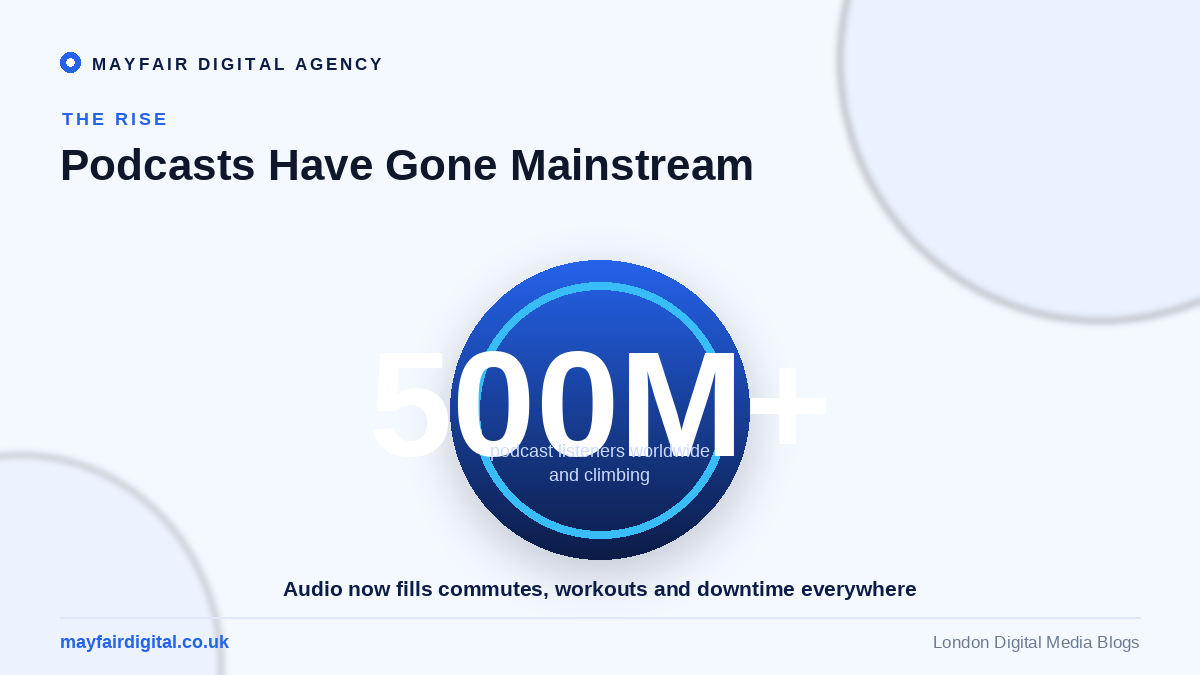
Podcasts succeeded by fitting seamlessly into the gaps of everyday life. Unlike video, which demands your eyes, or articles, which demand your full attention, audio can accompany activities you are already doing — driving, exercising, cooking or walking. This portability turned previously wasted time into prime listening time, dramatically expanding how much content people consume. As a result, podcasts reach audiences in moments when no other medium can, creating a uniquely persistent presence in listeners’ daily routines that few formats can rival.
The on-demand nature of podcasts also handed control to the listener. People choose exactly what they want to hear, when and where, building personal libraries of shows that reflect their genuine interests. This self-selection means podcast audiences are highly engaged by definition: nobody listens to a forty-minute episode by accident. For brands, reaching people who have actively chosen to spend their time with a topic is far more valuable than interrupting a distracted, passive audience.
Why Podcasts Command Such Loyal Audiences
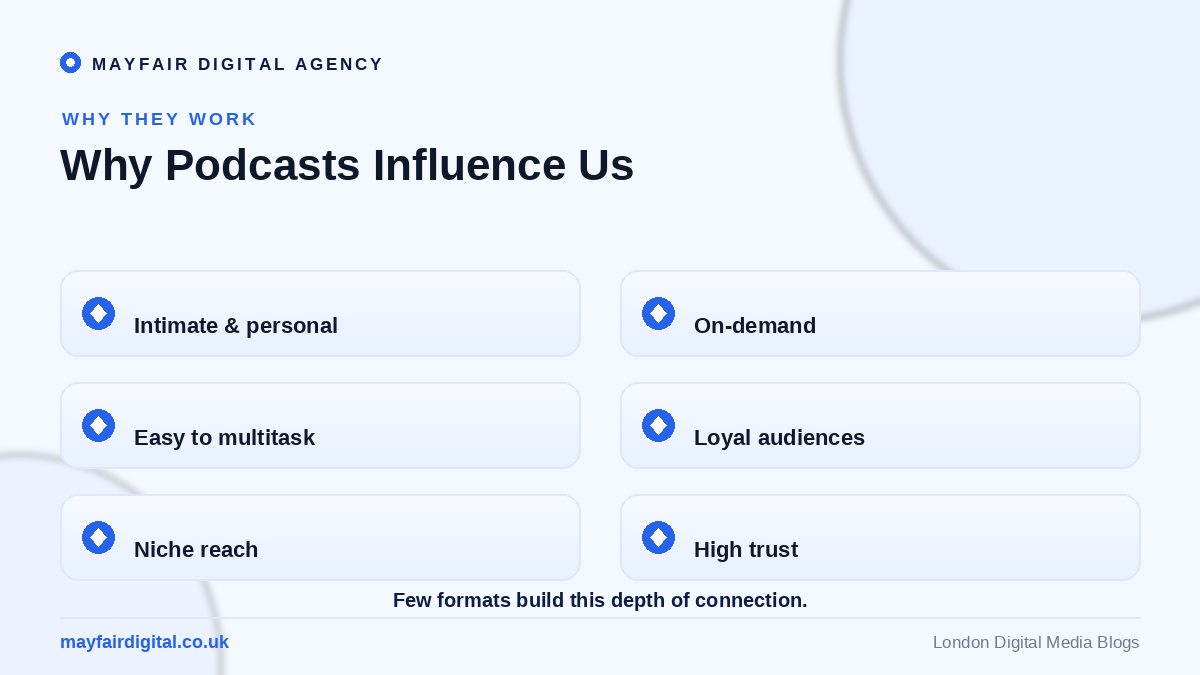
The defining feature of podcasts is intimacy. Listening to a voice directly in your ears, often for long stretches and on a regular schedule, creates a sense of personal connection that other media struggle to match. Listeners come to feel they know and trust the hosts, almost as friends. This parasocial bond translates into remarkable loyalty and influence — recommendations from a trusted host carry weight that a banner ad never could, which is precisely why podcast endorsements convert so well.
Engagement levels reinforce this loyalty. Podcast listeners tend to consume most or all of an episode, follow shows faithfully, and actively seek out new content from creators they enjoy. This depth of attention is increasingly rare in a world of endless scrolling and skippable clips, making podcasts a refuge of focused engagement that brands are eager to tap into.
What the Podcast Boom Means for Businesses
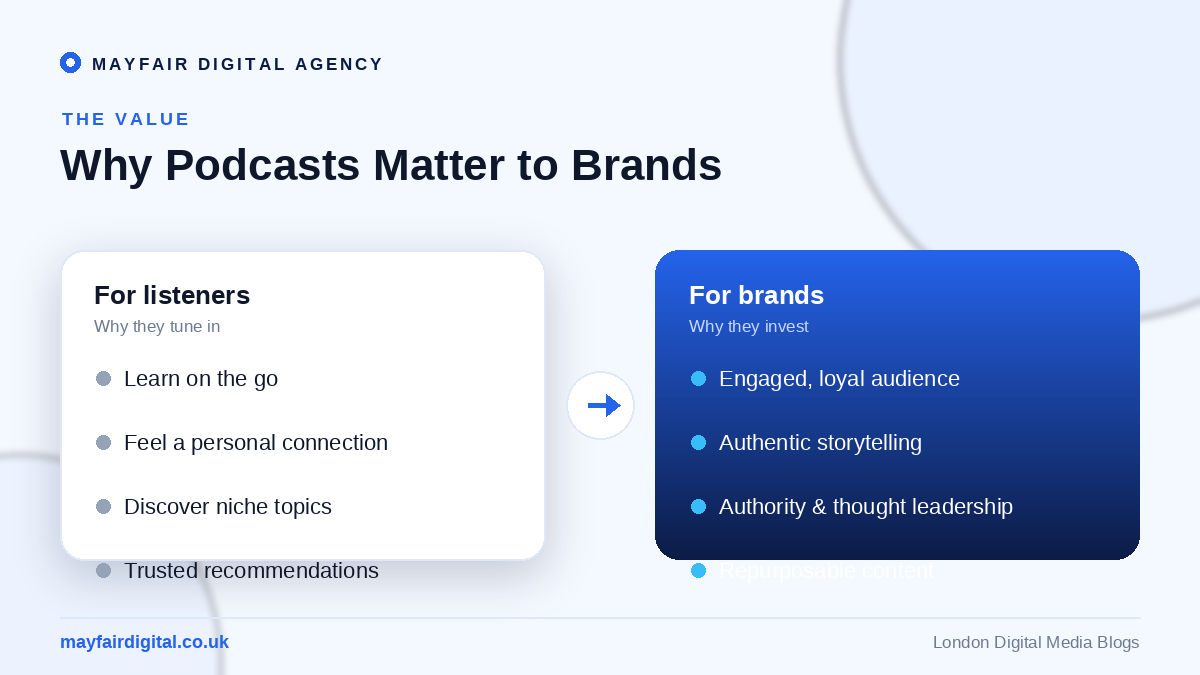
For businesses, the rise of podcasts opens several valuable doors. Launching your own show lets you build authority in your field, deepen relationships with your audience and create content that can be repurposed across other channels. A well-produced podcast positions your brand as a knowledgeable, trustworthy voice, and the long-form format gives you space to explore ideas that a short post never could, building genuine expertise in your listeners’ minds.
Advertising or appearing as a guest on established podcasts offers another route, letting you borrow the trust those hosts have already built. Because audiences are so engaged and so closely matched to specific topics, podcast advertising can be remarkably effective and efficient, reaching exactly the right people in a receptive, attentive frame of mind. Either approach taps into the medium’s unique blend of reach, relevance and trust.
How to Make the Most of Podcasting
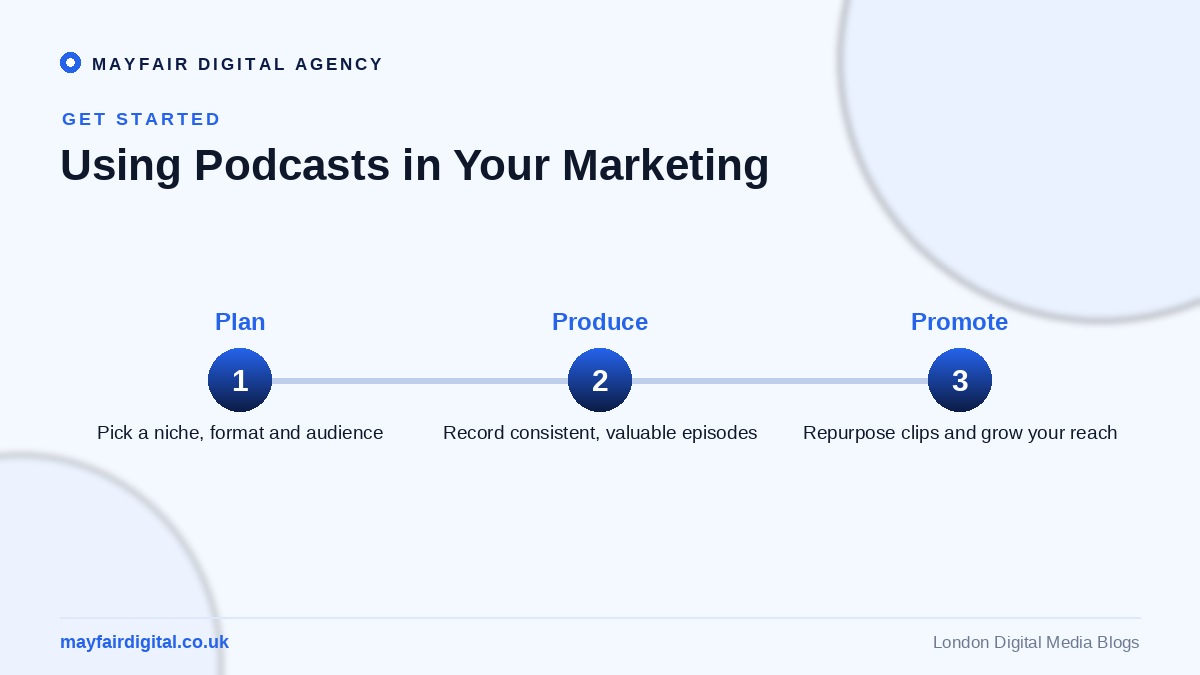
Success in podcasting comes from consistency, quality and genuine value rather than hard selling. Whether you host or sponsor, focus on serving the audience first — sharing useful insights, telling compelling stories and respecting listeners’ time. Clear audio, a defined theme and a regular publishing schedule build the habit and trust that make a show grow. As with all content, the brands that give generously and authentically are the ones that earn lasting attention and influence.
Frequently Asked Questions
Are podcasts still growing in popularity? Yes. Listenership continues to climb year on year as more people fold audio into their daily routines, and the medium is now firmly mainstream rather than niche.
Should my business start a podcast? If you can commit to consistent, valuable content, a podcast is an excellent way to build authority and deepen trust. If not, advertising on or guesting on established shows can deliver many of the same benefits.
Why are podcast audiences so valuable? Listeners are highly engaged, loyal and self-selected by interest, and the intimate format builds strong trust in hosts — making recommendations and ads unusually influential.
Find Your Voice With Mayfair
The quiet revolution of podcasts has reshaped media consumption and created a powerful, intimate channel for brands willing to embrace it. As a full-service digital media agency, Mayfair Digital Agency helps businesses harness audio and every other channel to build authority, trust and lasting audience relationships. If you want to make the most of the podcast era, get in touch and let’s help your brand be heard.
Podcasts and the Wider Shift to On-Demand Audio
The podcast boom is part of a broader move toward on-demand audio that also includes audiobooks, smart speakers and voice assistants. People increasingly expect to access spoken content whenever and wherever it suits them, weaving listening into moments that were once silent or wasted. For brands, this means audio is no longer a side channel but a central part of how modern audiences inform and entertain themselves. Building an audio presence now positions your business to be heard as this listening habit continues to deepen and spread across new devices and contexts.
Crucially, audio content tends to have a long shelf life. A well-made episode can keep attracting new listeners months or even years after it is published, steadily compounding its value as people discover your back catalogue. This durability makes podcasting an efficient use of creative effort, since each episode continues working long after the recording is done.
Repurposing Podcast Content Across Channels
One of the smartest ways to maximise the value of a podcast is to repurpose it. A single episode can be transformed into short audio clips for social media, quote graphics, a written blog summary, a video version and an email newsletter. This stretches one recording into a week or more of content across multiple platforms, reinforcing your message and meeting your audience wherever they prefer to engage. For businesses with limited time, this multiplier effect makes audio one of the most efficient content investments available.
Measuring the Impact of Audio
Like any channel, podcasting works best when you pay attention to results. Download numbers, listener retention, subscriber growth and the enquiries or website visits that follow your episodes all help you understand what resonates. By reviewing these signals and refining your topics, format and promotion over time, you turn a podcast from a hopeful experiment into a dependable driver of awareness and trust. The quiet revolution in audio rewards those who listen to their own data as carefully as their audience listens to them.
As media consumption continues to fragment, the intimacy and loyalty that podcasts inspire will only grow more valuable. Brands that embrace audio thoughtfully — serving listeners with genuine value rather than interruption — stand to build some of the deepest, most durable relationships available anywhere in modern marketing.
For any business weighing where to invest its content effort, the lesson of the podcast revolution is clear: audiences reward depth, consistency and authenticity. Audio offers a rare chance to hold someone’s undivided attention for minutes at a time, building familiarity and trust that translate directly into loyalty and sales. Whether you start your own show, sponsor an established one or simply lend your expertise as a guest, stepping into the audio space now means meeting your audience in one of the most personal and influential environments in modern media — and doing so before your competitors fully realise the opportunity.
Need expert help? Mayfair Digital Agency is a London digital agency and full-service digital agency in London offering digital strategy agency and more. Get in touch for a free consultation.


