




Balancing Profitability with Responsibility in the Digital Age
In the digital age, businesses face a question that grows more pressing every year: how do you pursue profit while acting responsibly? Customers, employees and society increasingly expect companies to do more than make money — they expect them to respect privacy, market honestly, and contribute positively to the world. Balancing profitability with responsibility is no longer a philosophical nicety but a practical necessity that shapes reputation, loyalty and long-term success.
This article explores how businesses can reconcile the drive for profit with the duty to act ethically online, why doing so is good for business as well as conscience, and the practical principles that make responsible growth possible. Far from being opposing forces, profitability and responsibility increasingly reinforce one another.
Why Responsibility Matters More Than Ever
The digital age has made businesses more visible and accountable than at any point in history. Customers can research a company’s practices, share their experiences instantly, and hold brands to account publicly. In this environment, cutting corners or behaving unethically carries real risk, while genuine responsibility builds the trust that underpins lasting customer relationships.
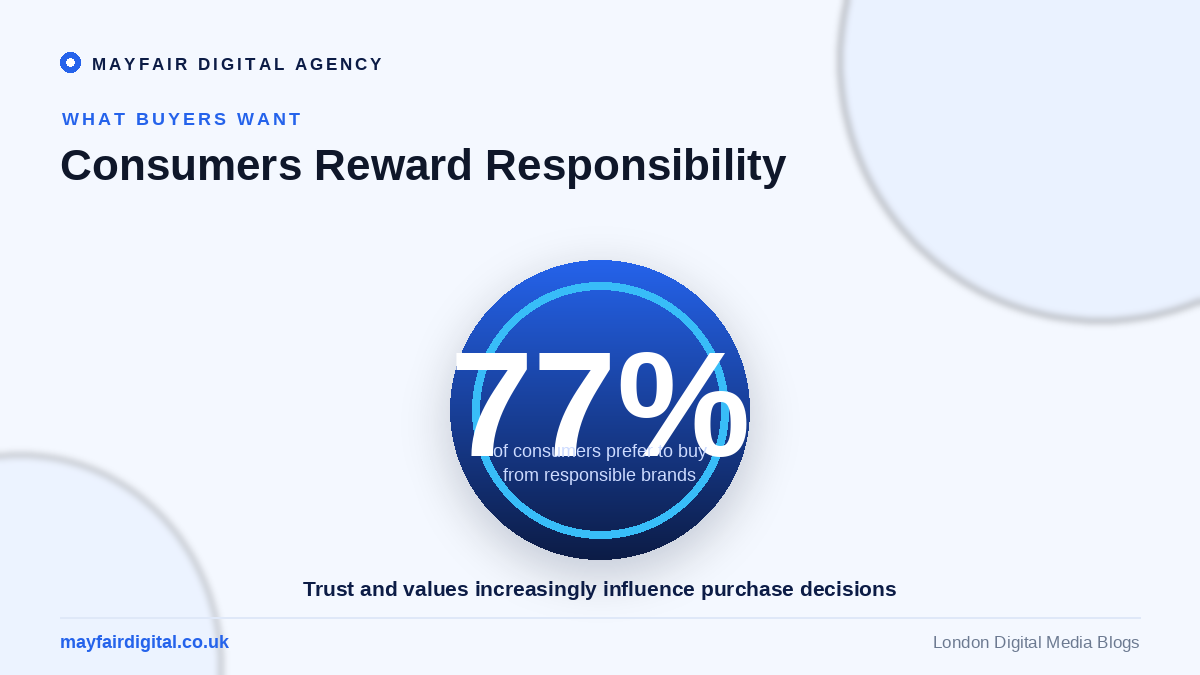
Modern consumers, particularly younger ones, increasingly choose brands whose values align with their own. They reward transparency, fairness and social responsibility, and they punish exploitation and dishonesty. Responsibility, in other words, has become a competitive advantage rather than a constraint.
The Tension Between Profit and Principle
The challenge is real because the pressures are real. Businesses must generate profit to survive and grow, and in the short term, responsible choices can appear to cost money — investing in privacy, refusing manipulative tactics, or paying fairly. It is tempting to prioritise immediate gains over principles, especially in competitive markets.
Yet this short-term view is often a false economy. Practices that boost profit at the expense of trust — misleading advertising, careless data handling or exploitative design — tend to backfire, damaging reputation and customer relationships in ways that prove far more costly than the savings they offered.
Responsible Data and Privacy Practices
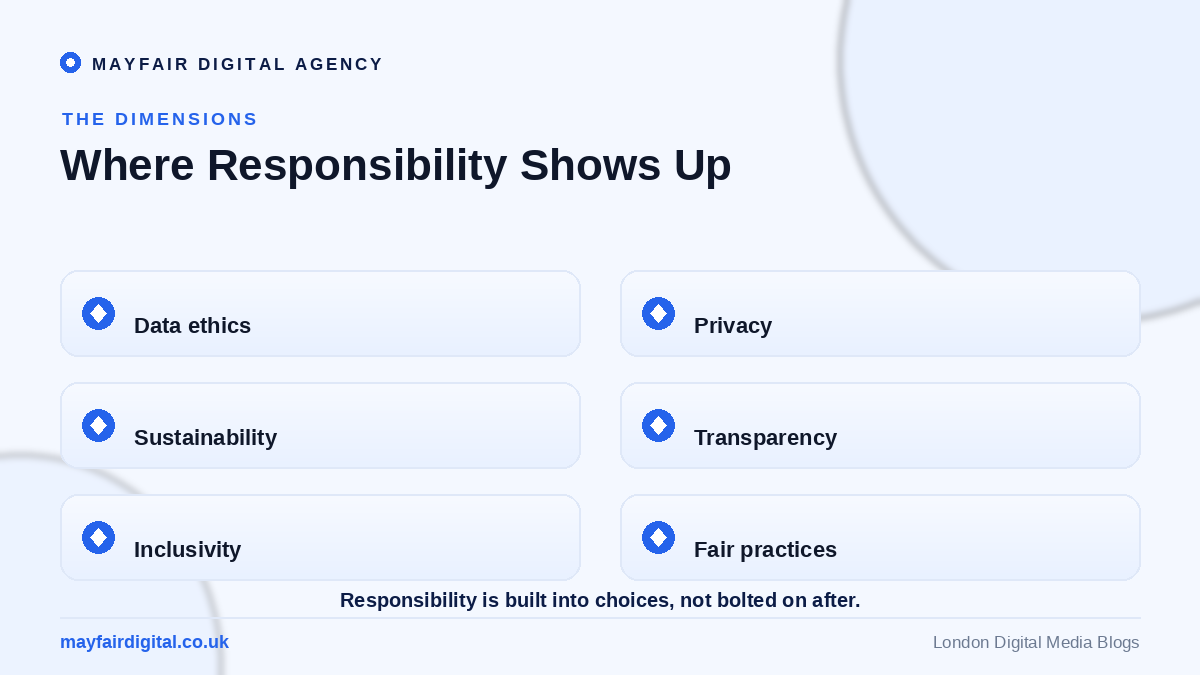
Few areas illustrate this balance better than data. Digital businesses rely on customer data, but how they collect and use it is a defining ethical test. Responsible companies are transparent about what they gather, use it to genuinely benefit customers, and protect it diligently. They treat privacy as a right to respect rather than an obstacle to exploit.
This approach pays off commercially. Customers are far more willing to share data with businesses they trust, and that trust enables better personalisation and stronger relationships. Respecting privacy is both the right thing to do and a sound long-term strategy.
Honest Marketing Builds Lasting Trust
Responsible marketing means being truthful, avoiding manipulation and respecting your audience’s intelligence. While exaggerated claims or pressure tactics might drive a quick sale, they erode trust and damage reputation over time. Honest marketing that delivers on its promises builds the credibility and loyalty that sustain a business for years.
Profitability and Responsibility Can Reinforce Each Other
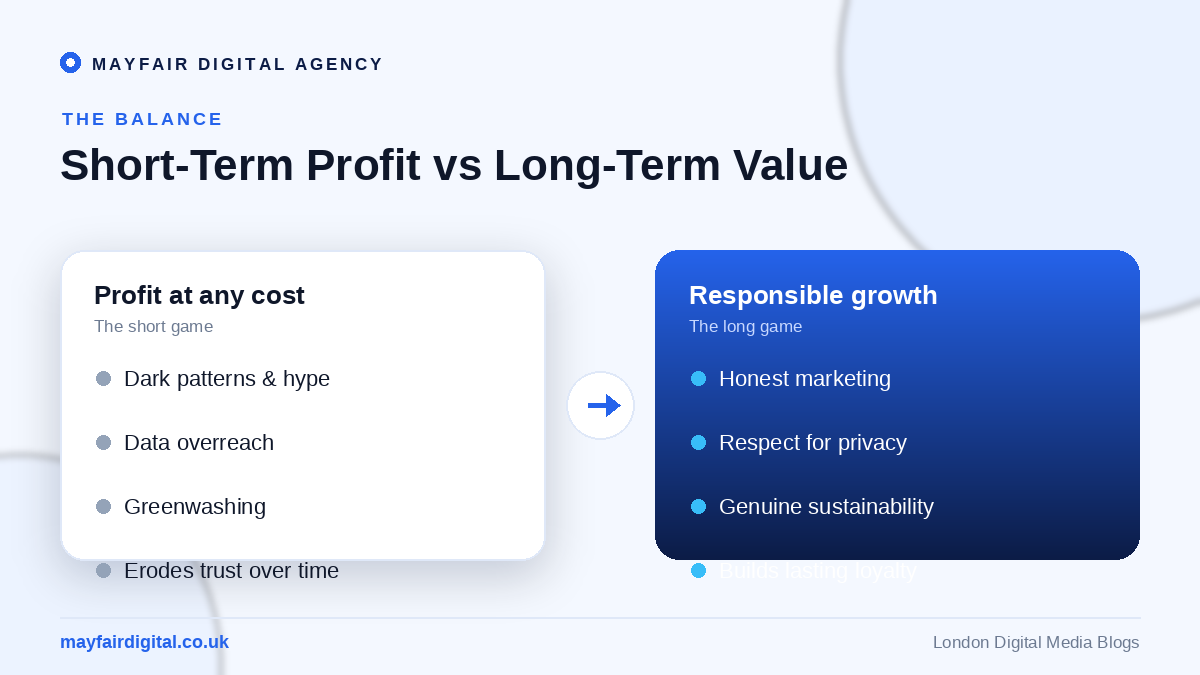
The most important insight is that profit and responsibility are not opposites. Responsible practices build trust, loyalty and reputation, which in turn drive sustainable profitability. Businesses that treat customers, employees and society well tend to attract and retain both customers and talent, creating a virtuous cycle where doing good and doing well go hand in hand.
Frequently Asked Questions
Does acting responsibly hurt profitability? In the short term it can require investment, but over the long term responsibility builds the trust, loyalty and reputation that drive sustainable profit. The two increasingly reinforce each other.
Why do customers care about business responsibility? Customers increasingly choose brands whose values align with their own and reward transparency and fairness. Responsibility has become a genuine differentiator in competitive markets.
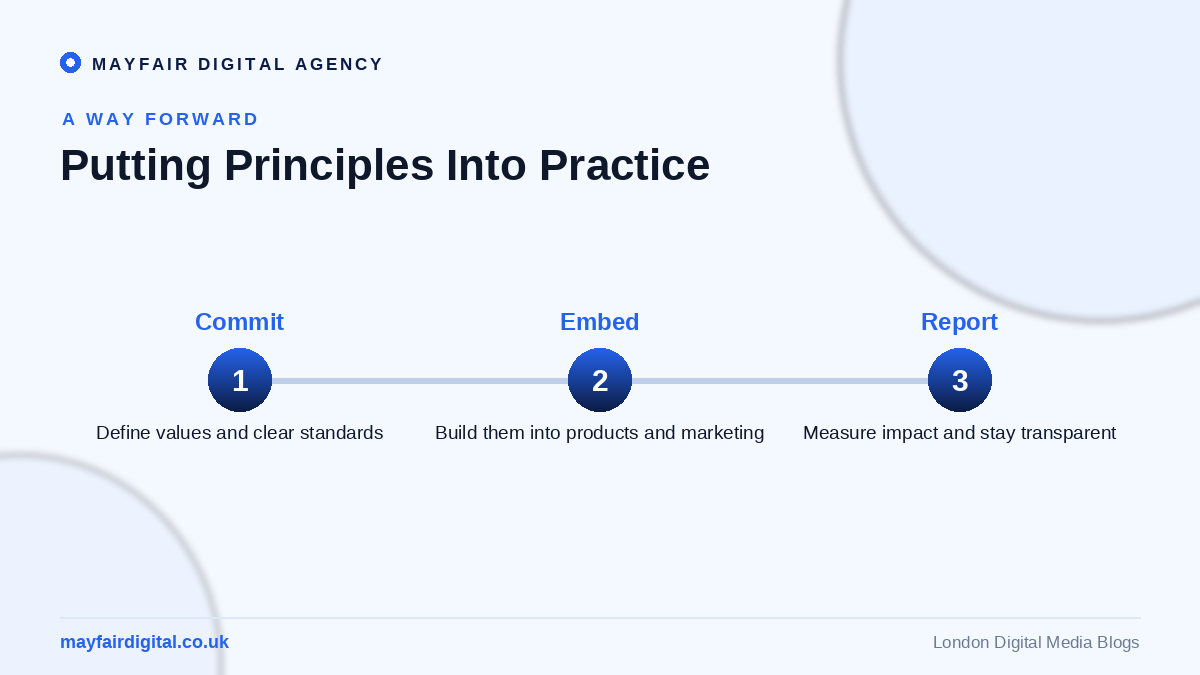
What does responsible digital business look like? It means handling data transparently, marketing honestly, treating people fairly and contributing positively — pursuing profit in ways that respect customers and society.
Grow Responsibly With Mayfair
Balancing profitability with responsibility is the defining challenge of the digital age, and the businesses that master it earn lasting trust and success. As a full-service digital media agency, Mayfair Digital Agency helps brands grow ethically and effectively, building marketing that is both profitable and principled. If you want to grow the right way, get in touch and let’s build a business you can be proud of.
Treating People Fairly in a Digital World
Responsibility extends beyond customers to the people a business works with — its employees, partners and the wider community. In a digital economy that can sometimes feel impersonal, businesses that treat people fairly stand out. Paying fairly, fostering a healthy culture, supporting suppliers and engaging genuinely with the community all contribute to a reputation that customers notice and value. These practices may not show up immediately on a balance sheet, but they build the kind of goodwill and loyalty that translate into long-term commercial strength.
This human-centred approach also attracts and retains talent, which is increasingly decisive in a competitive market. Skilled people want to work for businesses they respect, and a strong ethical reputation makes it far easier to build the capable, motivated team that any successful company depends on.
Sustainability as a Business Advantage
Environmental responsibility has moved from a fringe concern to a mainstream expectation. Customers increasingly favour businesses that take their environmental impact seriously, whether through sustainable sourcing, reduced waste or transparent reporting. Far from being a burden, a genuine commitment to sustainability can differentiate a brand, open new markets and build deep loyalty among conscientious consumers. The key is authenticity: customers quickly see through superficial gestures, so commitments must be real and consistently honoured.
Businesses that embed sustainability into how they operate often discover efficiencies and innovations along the way, proving once again that responsibility and profitability can advance together rather than at one another’s expense.
Avoiding Manipulative Design and Dark Patterns
The digital age has given rise to manipulative design tactics — sometimes called dark patterns — that pressure or trick users into actions they would not otherwise take, such as hidden charges, hard-to-cancel subscriptions or misleading buttons. While these tricks can boost short-term metrics, they corrode trust and increasingly attract regulatory scrutiny. Responsible businesses reject them, designing experiences that are clear, honest and genuinely helpful, even when a more manipulative approach might squeeze out a few extra conversions.
This restraint is ultimately rewarded. Customers remember how a brand made them feel, and experiences built on honesty and respect foster the loyalty and advocacy that manipulative tactics can never produce. Ethical design is simply good business in the long run.
Building a Responsible Brand for the Long Term
Balancing profitability with responsibility is not a one-off decision but an ongoing commitment woven through every part of a business. It means asking, at each turn, not only whether a choice is profitable but whether it is right — and trusting that, over time, doing right builds the trust and reputation on which lasting profit depends. Businesses that internalise this mindset are better placed to weather scrutiny, earn loyalty and grow sustainably.
As the digital landscape continues to evolve, the expectation of responsibility will only intensify. The brands that thrive will be those that see responsibility not as a constraint on profit but as a foundation for it — building businesses that are successful precisely because they are trusted, fair and genuinely good for the people and world they serve.
In practice, the businesses that strike this balance best tend to start small and stay consistent, embedding responsible choices into everyday decisions rather than treating ethics as a separate initiative. They listen to their customers, are transparent about their practices, and hold themselves accountable when they fall short. Over time, this steady commitment compounds into a powerful reputation that competitors cannot easily replicate. In the digital age, where trust is both fragile and invaluable, that reputation may well prove to be the most profitable asset a responsible business can build.
Need expert help? Mayfair Digital Agency is a digital marketing agency in London and full-service digital agency in London offering digital strategy agency and more. Get in touch for a free consultation.


